liveBook · Manning

Inertia

As explained in Architecture Modernization: Socio-technical alignment of software, strategy, and structure

Inertia is a climatic pattern in which organizational success produces complacency and risk aversion that reduce responsiveness to change.

Inertia is a climatic pattern in which past success encourages complacency and risk aversion. Healthy revenue can create false security while markets, technologies, and competitors continue to change. section 5.4.3 section 5.6

On a Wardley Map, inertia is especially important around profitable product-stage components that may be becoming commodities. Highlighting the component makes unacknowledged attachment visible and opens a strategic conversation. section 5.4.3

Use deliberately provocative questions to test whether current success is obscuring change:

  • How much does this component contribute to organizational success? section 5.4.3
  • What happens if disruption makes the component irrelevant? section 5.4.3
  • Is the component becoming widespread, and should investment move toward something more differentiating? section 5.4.3

Kodak and internal legacy

Kodak illustrates how market leadership and healthy metrics can create a false sense of security. Internally, legacy systems and inefficient ways of working can persist because complacency prevents modernization. section 5.4.3
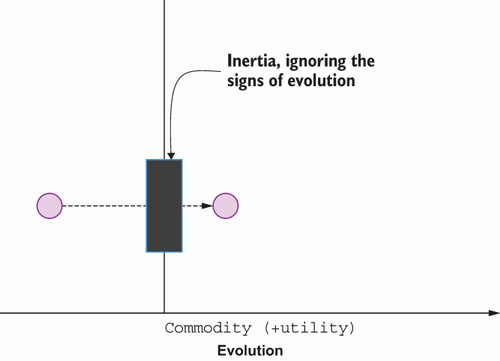
Figure 5.10 Visualizing inertia on a Wardley Map

Use the visual model to locate a component evolving from product to commodity while the organization remains unwilling or unable to recognize the shift. section 5.4.3

How Architecture Modernization: Socio-technical alignment of software, strategy, and structure covers it

How deep it goes
Defines the pattern, maps its product-to-commodity manifestation, and supplies diagnostic questions rather than implementation mechanics.
Examples
Uses Kodak, legacy systems, inefficient ways of working, and a product-to-commodity map annotation.
What it assumes
Assumes familiarity with building a Wardley Map while teaching how to recognize and discuss inertia on it.
What you can do after
Evaluate strategic exposure by mapping inertia, testing stakeholder attachment, and identifying components that may no longer differentiate.
How it connects
Connects inertia with Wardley Mapping, climatic forces, evolution, commodities, product phases, and competitive advantage.

Related concepts

This explainer was generated by Manning's knowledge graph from the text of Architecture Modernization: Socio-technical alignment of software, strategy, and structure. The section links point to the parts of the book it draws on.