A closed office space arranges work primarily through enclosed rooms or separated offices. It can protect deep concentration, especially when programmers are wrestling with implementation details, but isolation may become depressing. section 7.5.1
The most useful arrangement is often a compromise: closed subenvironments preserve flow, while hallways, shared areas, or flexible team compartments create chances for unplanned encounters without constant disruption. section 7.5.1
A building with two speeds
MIT’s Building 20 combined rearrangeable space, mismatched departments, and unusual neighbors, supporting both interdisciplinary discussion and solitary concentration. Bell Labs similarly made encounters likely along shared routes. section 7.5.1
Figure 7.6 The Salk Institute courtyard showcasing a mirrored structure containing strategically placed laboratories, utilities, office spaces overlooking the Pacific Ocean, and study areas. Photo courtesy of Adam Bignell, Unsplash.
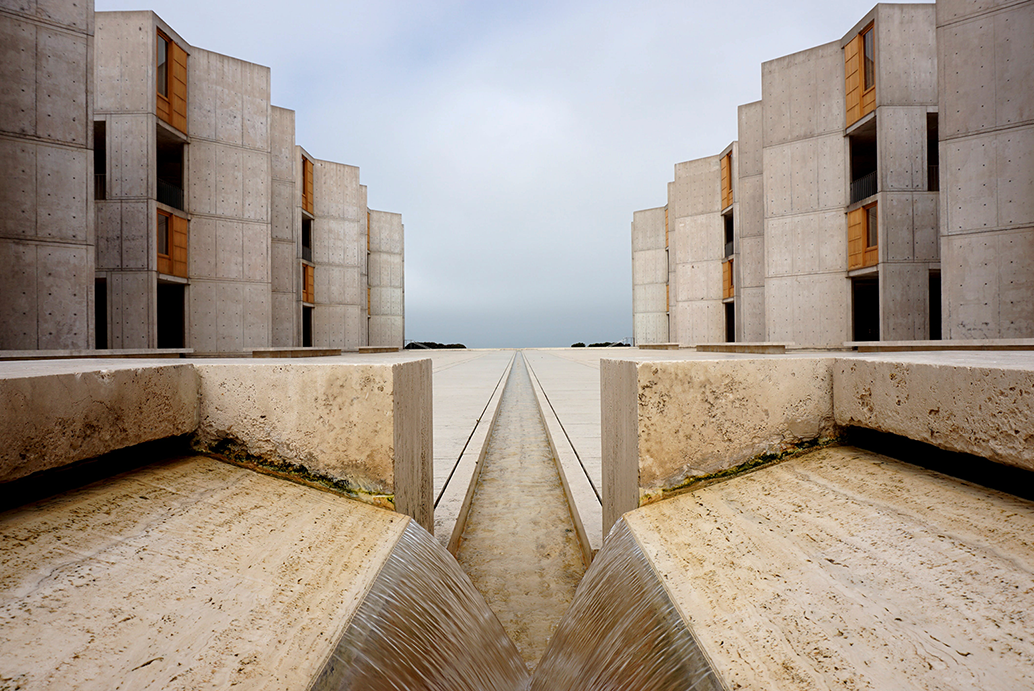
Use the Salk Institute courtyard as a visual prompt for considering how laboratories, offices, utilities, and study areas can be strategically placed. section 7.5.1
