Open space arranges work around shared, relatively unobstructed areas. It is often expected to encourage serendipitous creativity by disrupting boundaries and creating unexpected encounters, but noise can undermine creativity and concentration. The useful question is not whether openness is good or bad, but how much openness a task can tolerate. section 7.5.1
A more flexible workspace can combine:
- Long hallways or shared routes for accidental conversations. section 7.5.1
- Closed subenvironments where programmers can protect deep implementation work. section 7.5.1
- Rearrangeable areas that support both interdisciplinary discussion and solitary focus. section 7.5.1
Building 20 and Bell Labs
MIT’s Building 20 placed mismatched departments and unusual tenants together in a rearrangeable building, enabling unexpected exchanges without eliminating solitary work. Bell Labs used hallways and shared destinations to make encounters likely, while a programmer’s practical test remained simple: create incentives without becoming disruptive. section 7.5.1
Figure 7.6 The Salk Institute courtyard showcasing a mirrored structure containing strategically placed laboratories, utilities, office spaces overlooking the Pacific Ocean, and study areas. Photo courtesy of Adam Bignell, Unsplash.
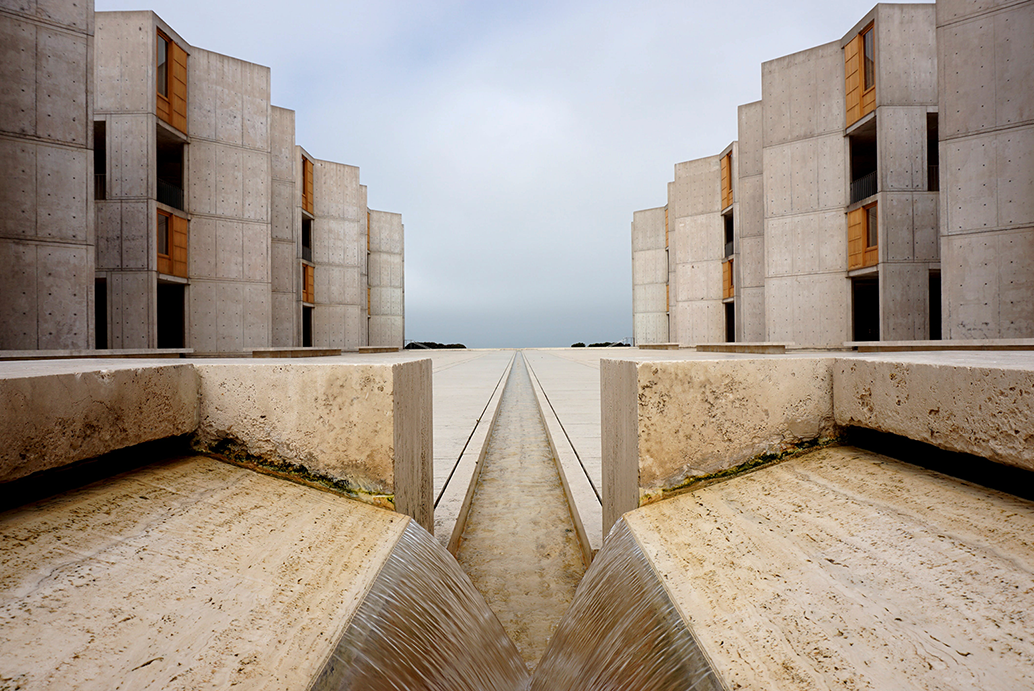
Use the Salk Institute courtyard as a visual prompt for discussing how shared circulation, separated work areas, and views can coexist. section 7.5.1
