Cloud-native architecture uses elastic, distributed, and automated cloud capabilities through APIs to build, release, and operate software. Its practical value lies in consuming standardized infrastructure rather than treating infrastructure operations as a strategic differentiator. section 2.3.5
A cloud-native platform exposes infrastructure through API-first, self-service interfaces. Cloud vendors can provide many distributed-service capabilities on demand, reducing maintenance work, accelerating experimentation, and recovering time for strategically valuable work. section 2.3.5
Apply the pattern by:
- Starting capabilities from APIs so teams can try them before committing to long-term operation. section 2.3.5
- Using Kubernetes where standardization is needed for distributed-service compute orchestration and extensibility. section 2.3.5
- Shifting undifferentiated infrastructure maintenance to capable cloud vendors when doing so protects strategic capacity. section 2.3.5
Figure 2.15 The components of a Kubernetes Cluster (Courtesy of https://kubernetes.io/docs/concepts/overview/components/)
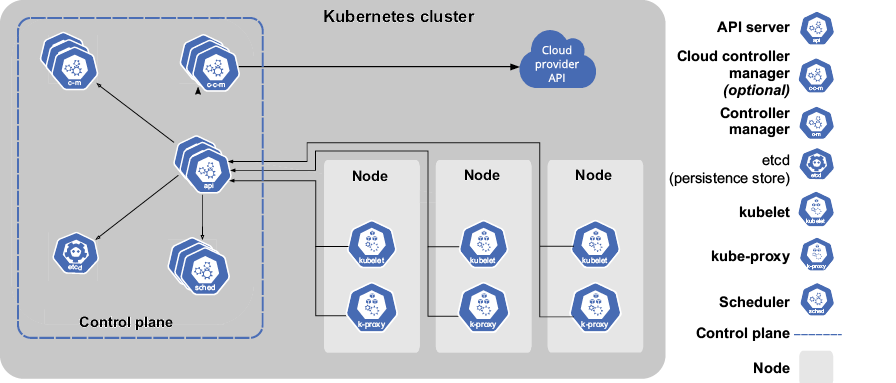
Use the Kubernetes cluster component diagram to inspect the standardized control-plane building blocks behind cloud-native platform operations. section 2.3.5





