Cloud security posture management (CSPM) continuously assesses cloud workload configurations for weaknesses and misconfigurations, then provides security best-practice recommendations for remediation. In Microsoft Defender for Cloud, it is a core capability for maintaining security hygiene and improving an Azure environment’s overall posture. section 6.1 section 6.2
CSPM is proactive: use findings from deployed resources to correct current issues, then incorporate the guidance into organizational processes and future deployment practices so the same misconfigurations are less likely to recur. Subscriptions must be onboarded to Microsoft Defender for Cloud before using these capabilities. section 6.2
Defender for Cloud separates posture capabilities from related security functions:
- CSPM assesses configurations and supplies remediation guidance. section 6.1
- Cloud workload protection monitors for suspicious activity and generates alerts for potential compromise. section 6.1
- DevOps security management helps secure code, source repositories, and deployment templates. section 6.1
Secure score and recommendations are available without additional cost after onboarding Azure subscriptions. The paid Defender CSPM plan adds advanced capabilities, including the cloud security graph, regulatory compliance dashboard, attack paths, cloud security explorer, and security governance for assigning and tracking remediation responsibility. section 6.2.4 section 6.9
Enable the Defender CSPM plan
An Owner can enable the paid CloudPosture pricing plan on an Azure subscription with `az security pricing create -n CloudPosture --tier 'standard'`. Successful output identifies the CloudPosture pricing resource and reports a Standard pricing tier, unlocking advanced CSPM capabilities such as the cloud security graph. section 6.2.4
CSPM also supports unified DevOps posture visibility. After onboarding Azure DevOps or GitHub through Defender for Cloud, a security connector stores selected configuration preferences and enables repository assessments, such as identifying absent multifactor authentication or least-privilege practices. section 11.4.1
Figure 6.1 The three major cloud security pillars to which most of Microsoft Defender for Cloud’s capabilities can be mapped back
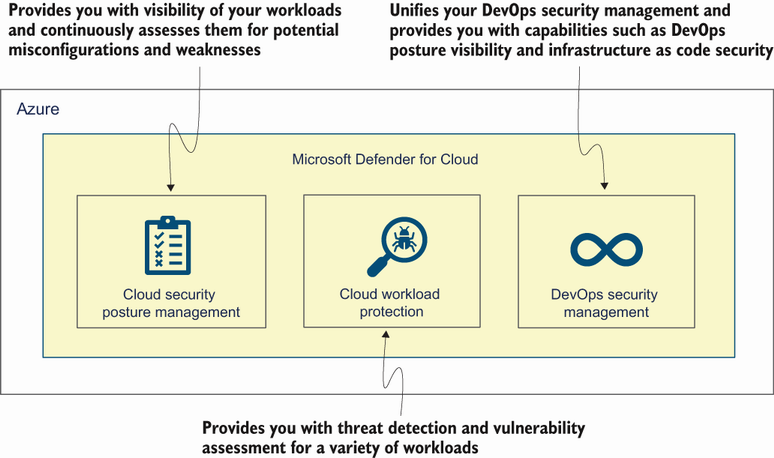
Use the pillar diagram to distinguish CSPM’s configuration-focused role from workload protection and DevOps security management. section 6.1
