liveBook · Manning

Code smell

As explained in "Looks Good to Me"

A code smell is a recognizable symptom in source code that suggests a possible design, maintainability, or implementation problem.

A code smell is a recognizable symptom in source code that suggests a design, maintainability, or implementation problem. In review, smells commonly appear as poor structure, weak readability, or anti-patterns. section 3.3.3 section 13.1.2

Treat code smells as review signals, not automatic reasons to stop delivery:

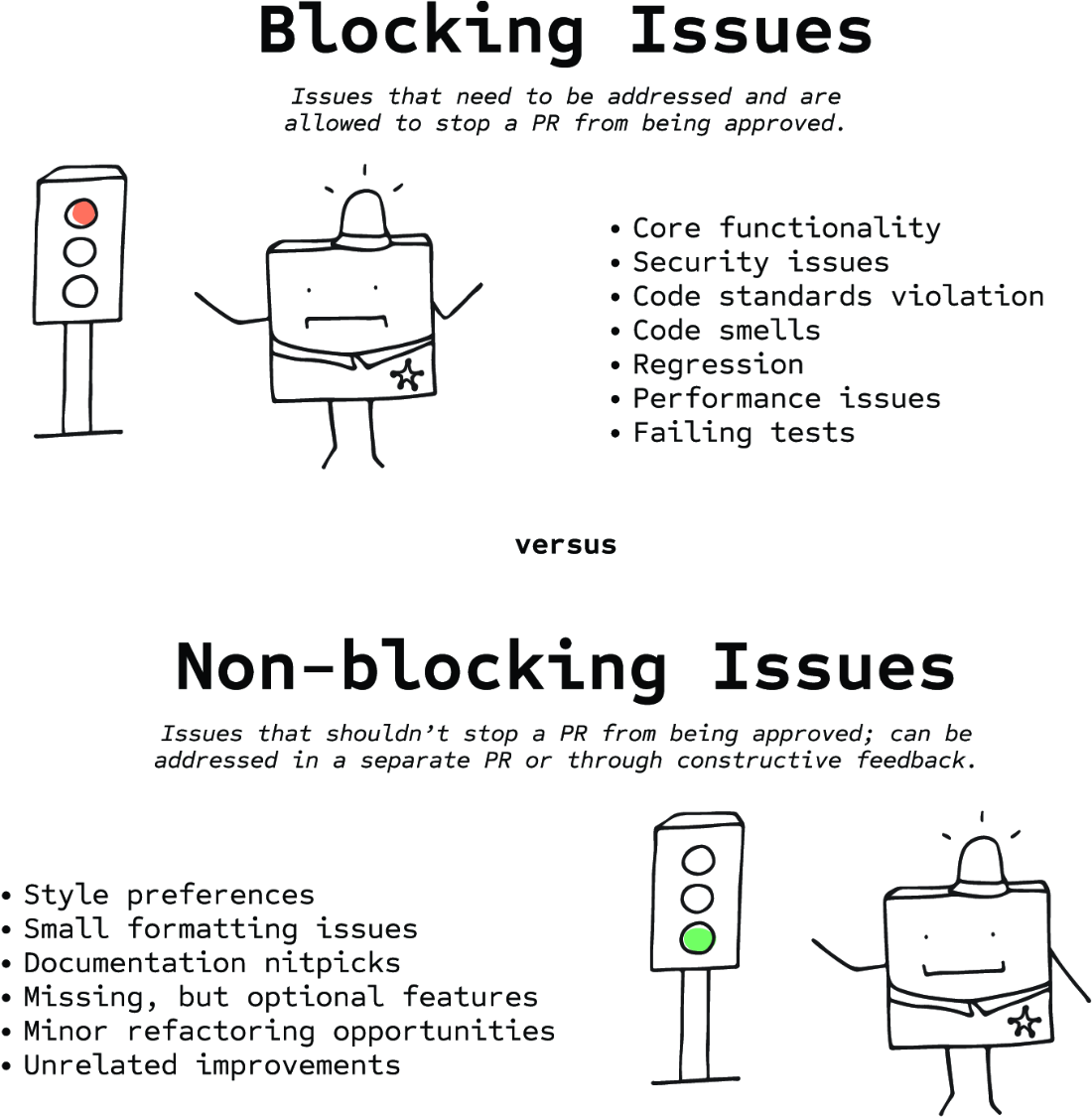
  • Block a pull request when the smell represents a critical maintainability problem; otherwise address it through constructive feedback, a minor update, or a separate pull request. section 3.3.3
  • Use AI-powered review as an early pass to detect and refactor more smells, while reserving human attention for solution design, architecture, and project alignment. section 13.1.2
  • Apply recurring feedback during development, similarly to a linter or formatter, so known issues create less review noise. section 13.1.2
Figure 3.3 Blocking vs. nonblocking issues
figure

Use the blocking-versus-nonblocking distinction to calibrate when a code smell should stop approval. section 3.3.3


How "Looks Good to Me" covers it

How deep it goes
Defines symptoms and review handling, then extends to automated detection and refactoring without cataloging specific smell patterns.
Examples
Uses pull-request approval decisions, AI review findings, refactoring suggestions, and recurring-review feedback as examples.
What you can do after
Diagnose code-quality signals, calibrate blocking decisions, and use automated feedback to refactor recurring problems earlier.
How it connects
Connects code smells with code review, pull requests, refactoring, linters, formatters, and AI-powered tools.

Also explained in

Compare how 2 books explain code smell →

Related concepts

This explainer was generated by Manning's knowledge graph from the text of "Looks Good to Me". The section links point to the parts of the book it draws on.