Command
A command is an instruction or representation of a requested operation that a system can execute, often with parameters and potentially changing state.
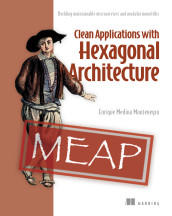
Clean Applications with Hexagonal Architecture
A command object encapsulates data representing a requested application operation.
- How it is used
- Represents validated state-changing input at the application boundary, separating adapters from use-case handlers.
- How deep it goes
- Works through construction, boundary validation, dispatch requirements, architecture rules, and behavioral tests.
- Examples
- Uses article creation and publishing commands with author IDs, article IDs, and a publication date.
- What you can do after
- Builds self-validating commands from scratch and tests their construction and architectural contracts.
Read how Clean Applications with Hexagonal Architecture explains command →
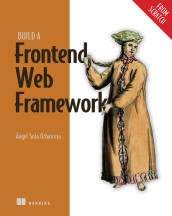
Build a Frontend Web Framework (From Scratch)
A command is a representation of an intended application operation, typically carrying the information needed to process that operation.
- How it is used
- Translates user interactions into application-domain requests that the state manager can process.
- How deep it goes
- Defines commands against events and implements named dispatch, payload delivery, handler registration, and after-command callbacks.
- Examples
- Uses to-do interactions, a remove-todo reducer, and a console greeting exercise with an after-command message.
- What you can do after
- Build it from scratch by mapping UI events to named commands and routing their payloads through a JavaScript dispatcher.
Read how Build a Frontend Web Framework (From Scratch) explains command →

Learn PowerShell in a Month of Lunches: Fourth Edition, Covers Windows, Linux, and macOS
A command is an executable instruction that a shell can invoke to perform an operation.
- How it is used
- Runs administrative operations interactively and provides the building block for repeatable PowerShell automation.
- How deep it goes
- Explains interactive execution, syntax anatomy, discovery, and repetition, while stopping short of comprehensive scripting internals.
- Examples
- Demonstrates command discovery, YAML module commands, and a CIM-based disk-space report tested in VS Code.
- What you can do after
- Apply commands interactively, discover unfamiliar commands with help, and convert reliable command lines into scripts.

Microservices Patterns, Second Edition
A system operation that mutates application data.
- How it is used
- Distinguishes data-changing system operations from queries and uses them to frame service boundaries and transaction management.
- How deep it goes
- Explains invocation, correctness challenges, and transactional implementation, including saga compensation and isolation trade-offs.
- Examples
- Uses order creation to illustrate product-price lookup, credit reservation, and order insertion.
- What you can do after
- Evaluate transactional approaches for commands local to one service or spanning multiple services.
Read how Microservices Patterns, Second Edition explains command →

Architecture Modernization: Socio-technical alignment of software, strategy, and structure
A command is an instruction requesting that a system or subsystem perform an action that may change state.
- How it is used
- Uses a command to capture the information needed to complete an inspection and initiate the next business action.
- How deep it goes
- Works through command scope and its requirements-based rationale, while deferring technical verification to a possible code probe.
- Examples
- Illustrates one Complete Inspection command carrying inspection results, images, and vehicle diagnostics.
- What you can do after
- Apply it via Domain Message Flow Modeling to choose command boundaries that fit the stated requirements.
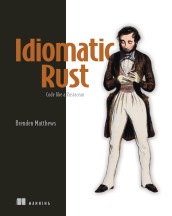
Idiomatic Rust
The command pattern encapsulates an action as an object or value so its execution can be separated from the receiver and controlled in order or timing.
- How it is used
- Separates command execution from its receiver and lets clients control execution order and timing.
- How deep it goes
- Defines a result-returning trait and demonstrates file commands, stopping short of implementing a complete undo/redo framework.
- Examples
- Demonstrates file-reading and file-writing commands stored in an ordered vector.
- What you can do after
- Build a simple Rust command abstraction with a shared trait, concrete file operations, and ordered client execution.
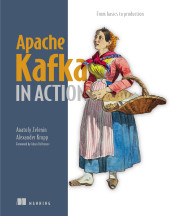
Apache Kafka in Action
A command is a message that requests another system to perform a specific action.
- How it is used
- Instructs an independent service to perform an action within a distributed business workflow.
- How deep it goes
- Defines commands, contrasts them with other message types, and demonstrates a notification payload without detailing command processing internals.
- Examples
- Uses promotion notifications, customer identifiers, and notify_customer payloads as concrete command examples.
- What you can do after
- Apply command messages to request actions from independent services through Kafka topics.
Also covered in
- Practices of the Python Pro
- Collaborative Software Design: How to facilitate domain modeling decisions
- Unit Testing Principles, Practices, and Patterns
- .NET MAUI in Action
- Crack Any Codebase with AIIn early access (MEAP)
- Acing the CCNA Exam: Volume 1 Fundamentals and Protocols
- Grokking Software ArchitectureIn early access (MEAP)
- Build and Orchestrator in Go (From Scratch)
- Kafka for Architects
- BDD in Action, Second Edition
- Fabulous Adventures in Data Structures and Algorithms
- Bootstrapping Microservices, Second Edition: With Docker, Kubernetes, GitHub Actions, and Terraform
What to know first
- eventA software event is an occurrence, state change, or notification that a system can detect, record, communicate, or handle.
- business logicBusiness logic is the domain-specific rules, computations, and decisions that determine how a software system processes operations and behaves.
- consistencyConsistency is the degree to which related data, behavior, or results agree with one another and conform to applicable rules or expectations.
- CRUDCRUD is the set of data-management operations for creating, reading, updating, and deleting records or resources.
Related concepts
- eventcontrasts with · A software event is an occurrence, state change, or notification that a system can detect, record, communicate, or handle.
- data transfer objectkind of · A data transfer object is a data-carrying structure that conveys selected information between software components or across boundaries without encapsulating substantial domain behavior.
- @Mock annotationused by · The Mockito @Mock annotation marks a field or parameter for initialization as a mock object used in testing.
- querycontrasts with · A query is a request or operation that retrieves information from a system or data source.
Questions about command
What is command?
A command is an instruction or representation of a requested operation that a system can execute, often with parameters and potentially changing state.
Which Manning books explain command?
Clean Applications with Hexagonal Architecture, Build a Frontend Web Framework (From Scratch), Learn PowerShell in a Month of Lunches: Fourth Edition, Covers Windows, Linux, and macOS, Microservices Patterns, Second Edition, Architecture Modernization: Socio-technical alignment of software, strategy, and structure, Idiomatic Rust and Apache Kafka in Action.
What should I know before learning command?
Manning books that teach command usually introduce event, business logic, consistency and CRUD first.
What is the difference between command and event?
A command is an instruction or representation of a requested operation that a system can execute, often with parameters and potentially changing state. A software event is an occurrence, state change, or notification that a system can detect, record, communicate, or handle.
What is command a kind of?
Command is a kind of data transfer object. A data transfer object is a data-carrying structure that conveys selected information between software components or across boundaries without encapsulating substantial domain behavior.
These guides are generated from the text of Manning books by Manning's knowledge graph and link to the sections they draw on. The full books are available on liveBook and at manning.com.