Commit coordination orders and validates writer changes so shared table metadata remains consistent. Engines construct metadata containing added or deleted files, schema updates, and snapshots, then atomically update the catalog pointer; concurrent changes cause a commit failure instead of a race or lost update. section 7.1.2
A coordinated write follows this sequence:
- Resolve the table and its latest metadata location through the catalog. section 7.1.2
- Construct new metadata describing file changes, schema changes, and snapshots. section 7.1.2
- Attempt an atomic catalog update and reject the commit when another writer has changed the table. section 7.1.2
Before standardized REST interactions, clients duplicated commit logic and conflict detection across languages, creating version mismatches, inconsistent behavior, and silent correctness bugs. The REST Catalog direction centralizes transactional responsibility in the catalog service and improves interoperability across engines. section 7.3.1 section 7.3
Figure 7.7 Using the REST Catalog specification, a client written in any language can talk to all catalogs, regardless of what language the catalog server is written in, improving interoperability.
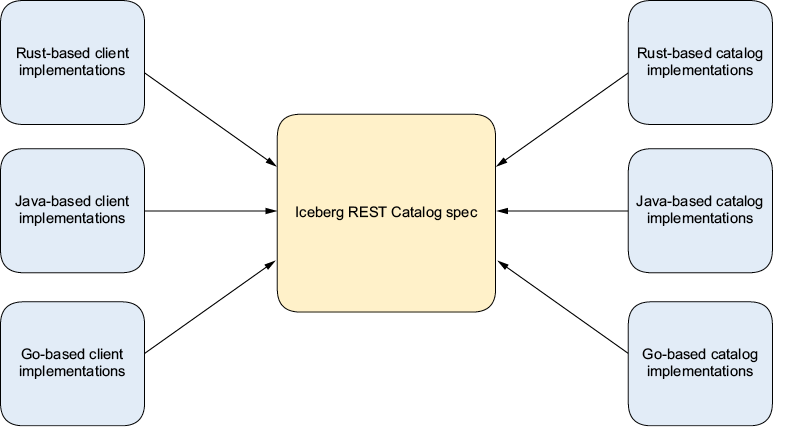
Use the interoperability diagram to compare language-independent clients with catalog services behind the REST interface. section 7.3
