Compliance due diligence (CDD) assesses whether a customer can be trusted and determines their risk level within the broader KYC process. section 7.0
Unlike customer identification, which verifies claimed identity, CDD evaluates customer metadata; unlike ongoing monitoring, it focuses on onboarding risk assessment. section 7.0
CDD can use metadata such as:
- Mobile device type and version used during signup. section 7.0
- Country or location associated with the customer. section 7.0
- Credit score and salary level for risk assessment. section 7.4
Automated onboarding risk assessment
A regulated entity can provide customer metadata to a tabular machine-learning model that estimates onboarding risk, while separate systems verify identity and monitor later transactions. section 7.0
Figure 7.1 The 3 different components of KYC along with the various types of KYC tasks listed per component.
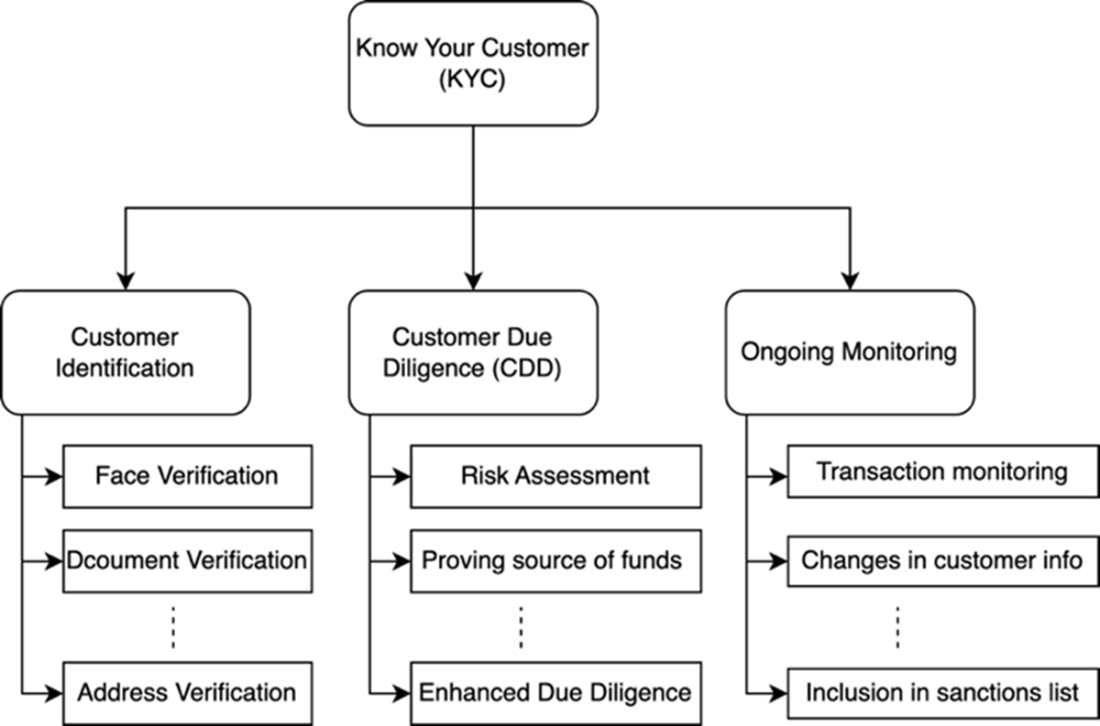
Use the KYC component map to distinguish CDD from customer identification and ongoing monitoring. section 7.0
