liveBook · Manning

Complicated subsystem team

As explained in Architecture Modernization: Socio-technical alignment of software, strategy, and structure

A complicated subsystem team owns and develops a subsystem that requires specialized knowledge or skills to operate or change.

A complicated subsystem team owns and develops a complex part of a system that requires a high level of specialist knowledge. Concentrating that expertise in one team encapsulates complexity so other teams can consume the capability without embedding those skills everywhere. section 11.2.1

Use this team type when a capability has unusually demanding specialist requirements:

  • Consider it for ultralow-latency software or domains requiring degree-level expertise, such as physics. section 11.2.1
  • Concentrate scarce expertise in a dedicated team instead of embedding the same skills across multiple stream-aligned teams. section 11.2.1
  • Balance encapsulated complexity against slower hiring and greater disruption when a specialist leaves. section 11.2.1
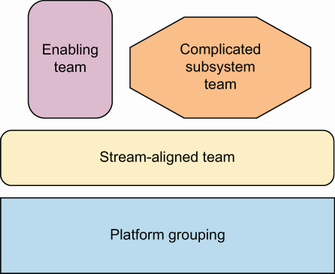
Figure 11.3 The four team types of Team Topologies

Place complicated subsystem teams alongside stream-aligned teams, platform groupings, and enabling teams when reasoning about an organization’s team topology. section 11.2.1

How Architecture Modernization: Socio-technical alignment of software, strategy, and structure covers it

How deep it goes
Defines the team’s purpose, gives specialist examples, and identifies hiring and retention risks.
Examples
Uses ultralow-latency software and physics-related capabilities as examples of complicated subsystems.
What you can do after
Evaluate whether scarce specialist knowledge should be concentrated in a dedicated team rather than embedded across teams.
How it connects
Relates to stream-aligned teams, platform groupings, enabling teams, cognitive load, and Conway’s law.

Related concepts

This explainer was generated by Manning's knowledge graph from the text of Architecture Modernization: Socio-technical alignment of software, strategy, and structure. The section links point to the parts of the book it draws on.