liveBook · Manning

Component

As explained in Think Like a CTO

A component is a distinct major part of a software system that contributes a defined capability or function.

A component is a distinct major part of a software system. Components can be reused to accelerate development, assessed for business-criticality and support needs, and shown as connected parts of an enterprise architecture. section 8.7 section 10.4 section 11.2.7

When reviewing an enterprise system:

  • Identify components critical to customer service and continuity, then ask who can help if each fails. section 10.4
  • Match support coverage to gaps in team experience or availability; avoid paying for coverage the team does not need. section 10.4
  • Map major components and their connections at a high level; leave implementation details for separate, more detailed maps. section 11.2.7

Mapping a profile service

A top-level diagram can show a File Microservice connected to the user-profile module for profile photos without specifying whether they communicate through an API, queue, or shared directory. section 11.2.7
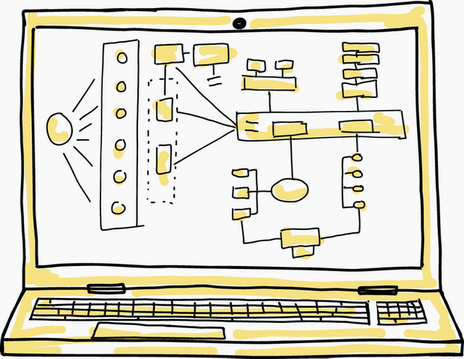
Figure 11.2 Architectural diagram

Use the architectural diagram as a visual example of major components and their connections. section 11.2.7


How Think Like a CTO covers it

How deep it goes
Defines components through business criticality and shows how to map and assess support needs, while leaving implementation logistics out of high-level diagrams.
Examples
Uses Linux, MySQL, Postgres, Firefox, Open Office, JQuery, Gson, and a File Microservice for profile photos.
What you can do after
Evaluate component risks and support gaps, and communicate system boundaries with a high-level architectural diagram.
How it connects
Connects components to open-source software, software licensing, support contracts, architectural diagrams, microservices, and APIs.

Also explained in

Compare how 10 books explain component →

Related concepts

This explainer was generated by Manning's knowledge graph from the text of Think Like a CTO. The section links point to the parts of the book it draws on.







