liveBook · Manning

Composability

As explained in Grokking Software Architecture

Composability is a system design principle in which components can be selected and assembled in various combinations to satisfy specific user requirements.

Composability means selecting and assembling components in different combinations to meet specific requirements. Like LEGO bricks, independent components connect through a shared contract. High cohesion and loose coupling make that reuse possible. section 3.6.2

Replacing duplicated scorecards with small, reusable components turns each new scorecard into a combination of proven parts plus its unique requirements. Reuse can save development time and carry forward reliability; standard contracts let components work together without requiring the system to care which components are chosen. section 3.6.2

Figure 3.11 Composability allows components to be assembled in various combinations.
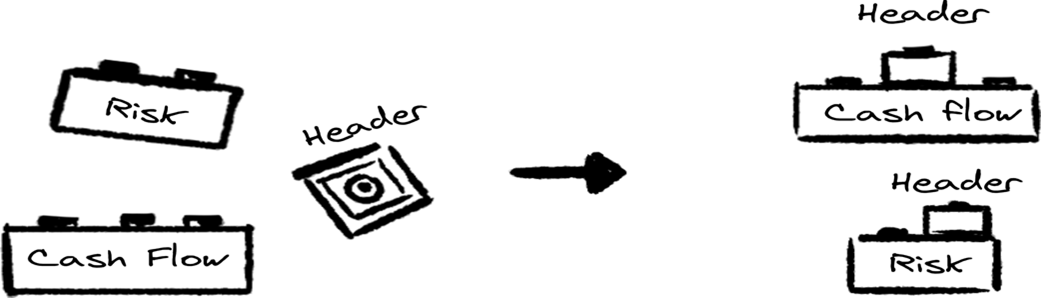
See how reusable components can be assembled in different combinations. section 3.6.2


How Grokking Software Architecture covers it

How deep it goes
Defines composability and explains reuse, reliability, and contracts, but does not descend into implementation details.
Examples
Uses LEGO bricks and reusable scorecard components, including a Header and CashFlowAnalysisComponent.
What it assumes
Builds on high cohesion and loose coupling without stating what background readers should already know.
What you can do after
Build it from scratch by creating reusable components that fit shared contracts and can be assembled as needed.
How it connects
Connects composability to high cohesion, loose coupling, and the Single Responsibility Principle.

Also explained in

Compare how 5 books explain composability →

Related concepts

This explainer was generated by Manning's knowledge graph from the text of Grokking Software Architecture. The section links point to the parts of the book it draws on.


