A Crossplane composite resource (XR) is a Kubernetes API resource that gives application teams a simplified interface for requesting a composed infrastructure capability. Platform teams define which underlying resources and cloud-provider configurations satisfy that request. section 5.2.2
The abstraction hides implementation choices such as whether a PostgreSQL request becomes a Google Cloud SQL instance, network configuration, and bucket. Crossplane compositions create those resources and can publish connection details in Kubernetes Secrets. section 5.2.2
A composite-resource workflow separates platform responsibilities from application delivery:
- Platform teams define Composite Resource Definitions and compositions that wire together managed resources for a cloud provider. section 5.2.2
- Application teams request domain-specific resources through the Kubernetes API without selecting the provider or every underlying component. section 5.2.2
- Crossplane provisions the composed resources, reports synchronization and readiness, and creates credentials for workloads to consume. section 5.2.3 section 5.3.1
Conference application infrastructure
A Conference deployment requests database and message-broker composite resources. Kubernetes output shows SQL, key-value, and Kafka resources with SYNCED and READY set to True; generated Secrets and service endpoints then supply application connection settings. section 5.3.1
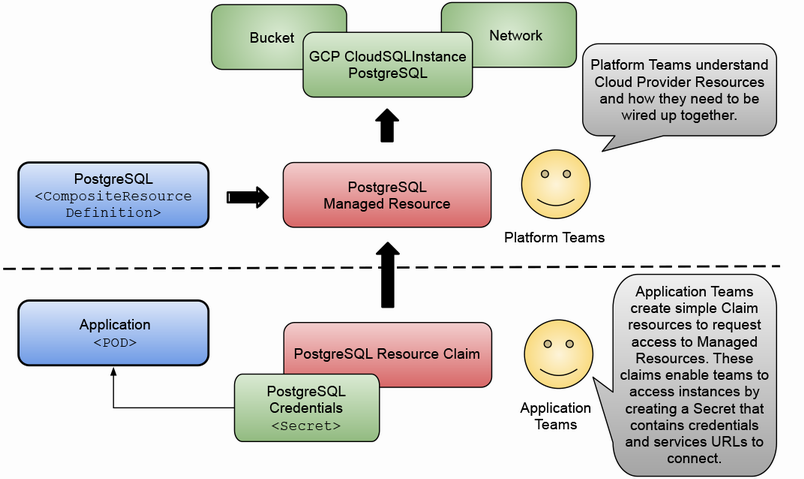
Trace how a PostgreSQL composite resource expands into Google Cloud infrastructure and supporting configuration. section 5.2.2
