A managed resource is a Kubernetes resource that represents infrastructure owned by an external cloud provider. A Crossplane provider reconciles its declared parameters with the corresponding cloud resource, making the Kubernetes object the operational interface for infrastructure. section 5.2.3 section 5.2.4
Managed resources provide several Kubernetes-native operational behaviors:
- Expose cloud infrastructure as ordinary Kubernetes resources, so standard Kubernetes tools can query and monitor it. section 5.2.4
- Continuously reconcile the desired state declared in the resource with the external infrastructure and report status back to Kubernetes. section 5.2.4
- Report manual changes made in the cloud provider as configuration drift instead of automatically deleting and recreating the remote resource. section 5.2.4
- Use provider-selected defaults for optional properties and write those late-initialized values back into the managed resource. section 5.2.4
Creating managed resources requires an installed and configured Crossplane provider, suitable cloud credentials, and permissions to list, create, and modify the target infrastructure. Providers expose their supported resource types through Kubernetes custom resource definitions. section 5.2.3
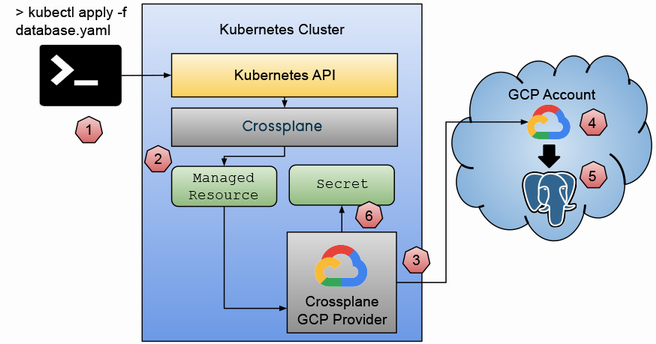
Follow the managed-resource lifecycle from declaration through provider reconciliation, status reporting, and ongoing observation. section 5.2.4
