liveBook · Manning

Compound AI system

As explained in The Art of AI Product Development

A compound AI system is an application architecture that combines multiple models with tools, databases, or other computational components.

A compound AI system combines multiple models with tools, databases, and sometimes human oversight to deliver an application outcome. It is more than a single model: components may classify inputs, generate text, transform requests into structured SQL, retrieve data, or route ambiguous cases to people. section 1.3.2

Conversational financial dashboard

A conversational add-on can turn a user request into a structured SQL query, retrieve the necessary database data, and route especially complex or ambiguous requests to a human agent. The surrounding interface must also explain limitations, manage errors, and collect feedback. section 1.3.2
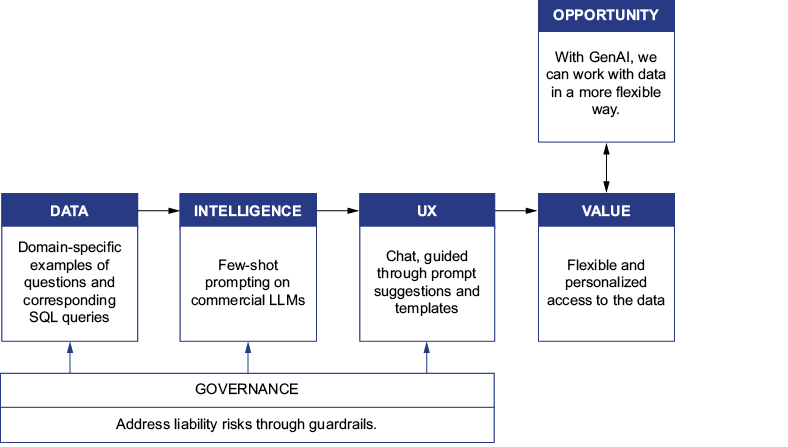
Figure 1.3 Mental model of a conversational assistant for financial data
A diagram of a company

AI-generated content may be incorrect.

Use the mental model to trace how a conversational assistant connects user requests, AI processing, data retrieval, and the interface. section 1.3.2

How The Art of AI Product Development covers it

How deep it goes
Defines component roles and oversight needs, but stops short of implementation internals.
Examples
Uses a conversational financial dashboard that transforms requests into SQL and escalates ambiguous cases.
What it assumes
Assumes basic AI awareness while requiring attention to models, data, interfaces, and delivery risks.
What you can do after
Evaluate architectures and identify technologies needed to build trustworthy AI-driven applications.
How it connects
Connects large language models, few-shot prompting, SQL, databases, human oversight, and user experience.

Related concepts

This explainer was generated by Manning's knowledge graph from the text of The Art of AI Product Development. The section links point to the parts of the book it draws on.