liveBook · Manning

Connection pooling

As explained in Grokking Software Architecture

A database connection pool is a managed collection of reusable database connections that avoids opening a new connection for each request.

Pool capacity can become an architectural bottleneck: one client's deeply nested data drove database pool saturation to 100%. section 14.4.2

A high-volume client

A client generated tens of thousands of deeply nested records. Slow queries and repeated deep data retrieval overwhelmed the system's connection-pool capacity assumptions. Query insights, request telemetry, and contextual logs helped pinpoint the cause. section 14.4.2

Figure 14.8 Tiered Data Access. An L1 local cache satisfies reads in microseconds from server memory, while an L2 shared Redis cache keeps the whole fleet synchronized without hammering the primary database vault.
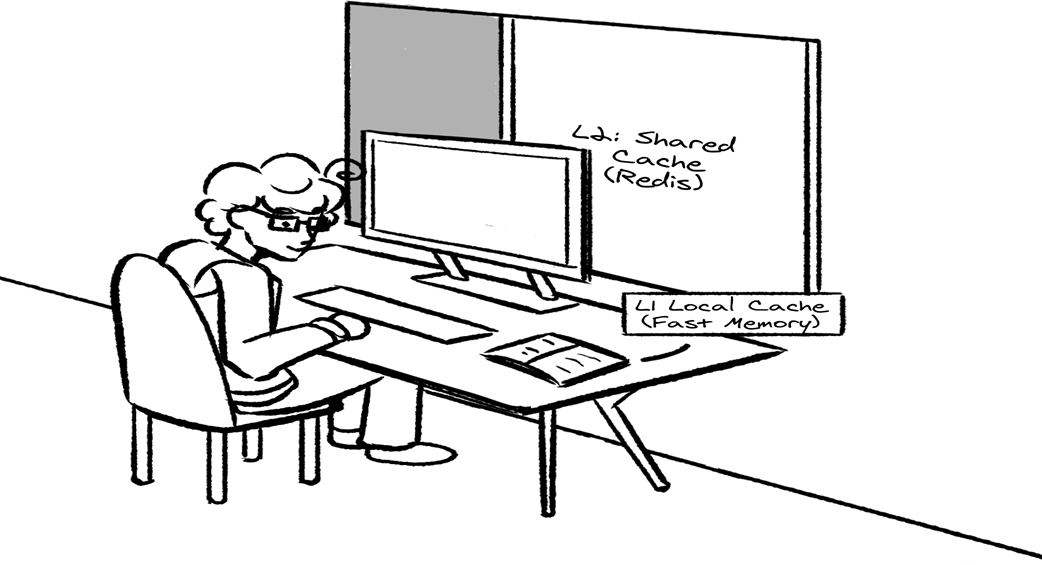
Tiered caching can reduce repeated reads against the primary database: local memory serves reads, while shared Redis serves the fleet. section 14.4.2

How Grokking Software Architecture covers it

How deep it goes
Identifies saturation and its workload causes but does not explain pool internals or configuration.
Examples
Uses a client's deeply nested records, slow queries, and saturated pool as a diagnostic case.
What you can do after
Diagnose database bottlenecks by combining query insights, request telemetry, and contextual logs.
How it connects
Links pool saturation to database queries, caching, and observability.

Also explained in

Compare how 11 books explain connection pooling →

Related concepts

This explainer was generated by Manning's knowledge graph from the text of Grokking Software Architecture. The section links point to the parts of the book it draws on.