A physical core is an independent CPU execution unit containing processing resources for one or more hardware threads. Its execution units run arithmetic, floating-point, and memory operations. section 8.2.1 section 8.2.3
A core’s practical behavior depends on the resources it contains and shares:
- A core may provide one hardware thread or multiple hardware threads through Simultaneous Multithreading (SMT). section 8.2.1
- L1 and L2 caches are associated with individual cores, while the L3 cache is shared across cores. section 8.2.1
- SMT threads share execution units, so they can improve utilization without providing the equivalent of additional physical cores. section 8.2.3 section 8.3
Four cores with and without SMT
A CPU without SMT can have four physical cores and one hardware thread per core. An SMT-enabled CPU can expose two threads per core, making eight logical processing units visible to the operating system while retaining four physical cores. The threads keep separate architectural states, but share the core’s execution resources. section 8.2.1 section 8.2.3
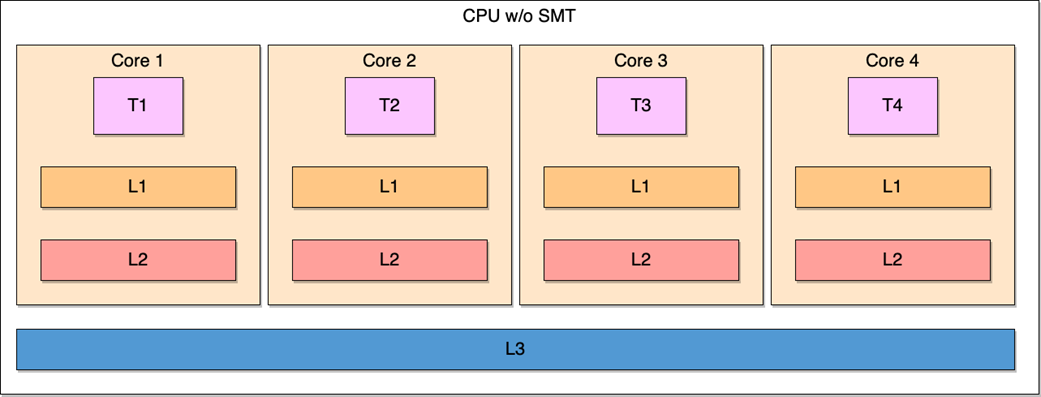
Compare the organization of physical cores, hardware threads, and shared cache levels visually. section 8.2.1
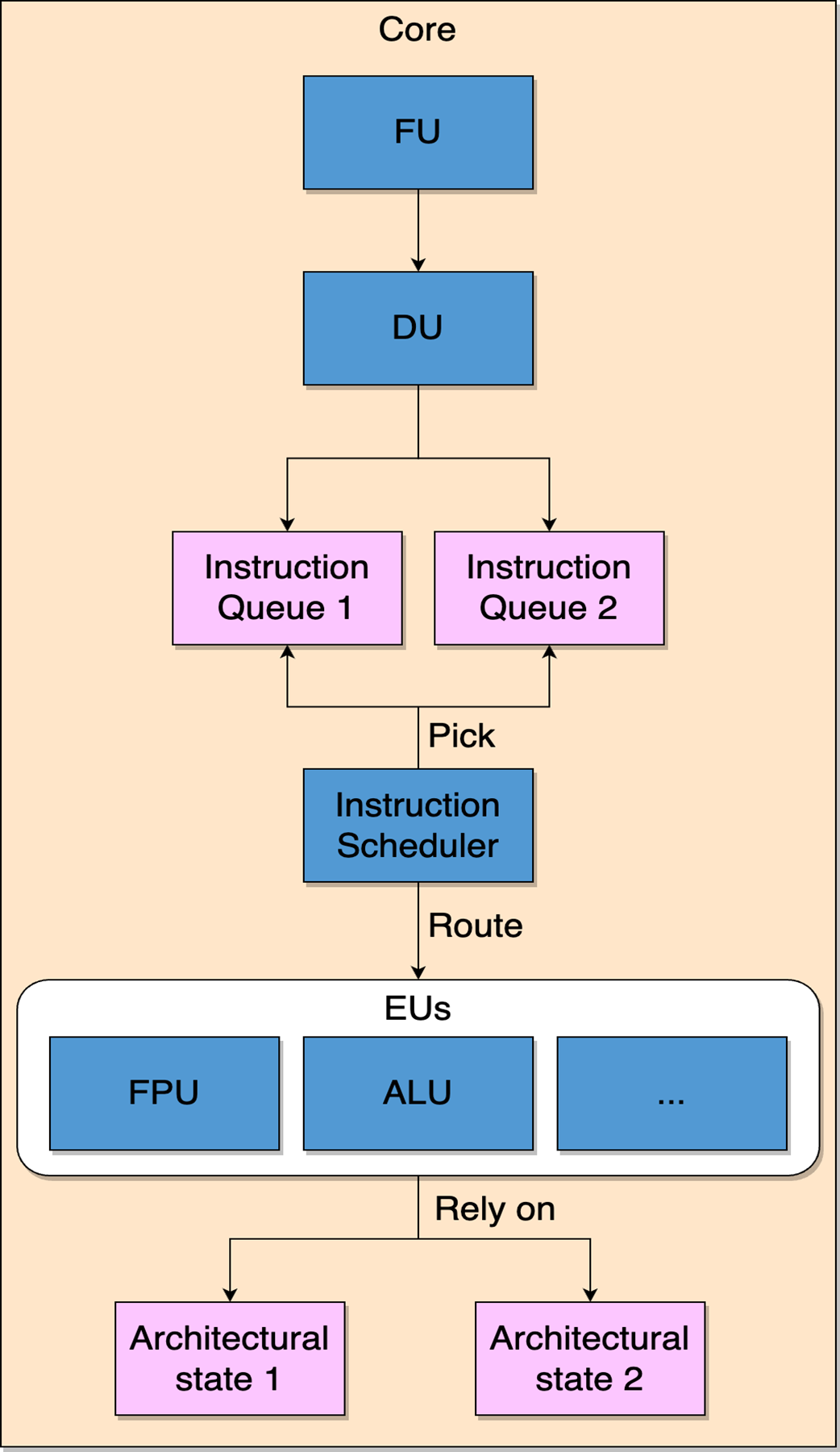
Inspect how an instruction scheduler selects work from SMT instruction queues and routes it to shared execution units. section 8.2.3

