A correlation path is one or more metadata-driven transitions from one signal type to another related signal. It connects observations so operators can reach actionable insight faster or with greater accuracy. section 11.1 section 11.6
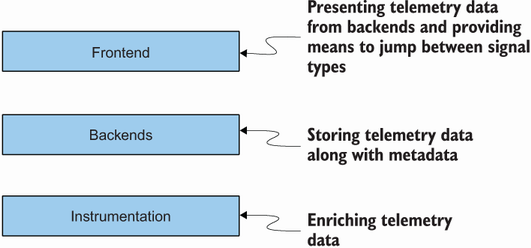
The correlation stack links instrumentation, backends, and frontend presentation; stronger integration increases the potential for automated transitions. section 11.1
From a metric to request details
An operator can follow a time series to related spans, then to log lines or profiles for the affected service. Other paths connect traces to representative metrics, traces to service logs, or logs to relevant metrics. section 11.1.1 section 11.6
Useful correlation paths depend on metadata and operational trade-offs:
- Use instrumentation and collection to add source metadata such as workload, namespace, cluster, or emitted span context. section 11.1
- Treat metrics, traces, and logs as complementary: aggregates reveal scale, traces show cross-service execution, and logs describe service-level events. section 11.1.1
- Expect uneven support and account for user experience, signal volume, cardinality, and sampling limitations. section 11.6
