A countermeasure is an action intended to reduce or eliminate a root cause without necessarily being a final solution. In API delivery, countermeasures are proposed process changes or APIOps practices tied to identified causes. section 2.7
Develop and manage countermeasures as a small, evidence-driven improvement experiment:
- List multiple options against the causes identified in root-cause analysis, involving colleagues from the affected functions. section 2.7
- Record each action in a countermeasures table with its owner, due date, expected benefit, expected effort, and implementation status. section 2.7
- Prioritize high-benefit, easy-to-implement actions; defer or remove low-benefit, difficult actions. section 2.7
- Apply the selected actions to a small problem subset, then compare measured results with the target condition and predicted causal theory. section 2.7 section 2.8
- Expand validated actions through stories, epics, standardization, and knowledge sharing with other teams and APIs. section 2.9
Improving API consistency
An organization investigating inconsistent APIs and lengthy design reviews might assign candidate countermeasures to one development team or one API first. It can track implementation, design-review time, and style-guide compliance, marking when each action begins. Improvement after that point supports the proposed cause-and-effect theory; successful actions can then be rolled out more widely. section 2.7 section 2.8 section 2.9
Figure 2.10 Countermeasures are the actions taken to address the root cause of the problem. A countermeasures table shows the plan for who will do what and when.
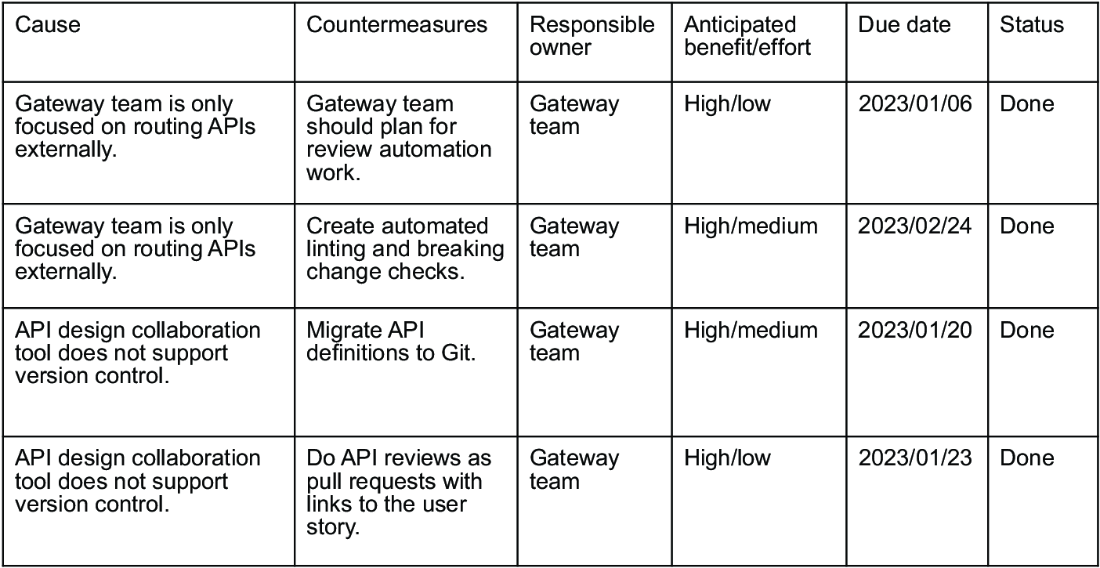
Use the countermeasures table to inspect proposed actions, their owners, schedules, priorities, and status. section 2.7
