liveBook · Manning

Coupon rate

As explained in Investing for Programmers

A coupon rate is the stated annual interest rate that determines a bond's periodic coupon payments relative to its principal or face value.

A coupon rate is the annual payment associated with holding a bond. It may be fixed or floating, and payment schedules often specify quarterly distributions. section 5.2

Interpret the coupon rate alongside the bond’s other terms:

  • Principal is repaid at the maturity date, while coupon payments provide the interim cash flow. section 5.2
  • The borrower’s default risk affects the interest rate: greater risk generally corresponds to a higher rate. section 5.2
  • Payment modalities define when and how often the lender receives coupon payments. section 5.2
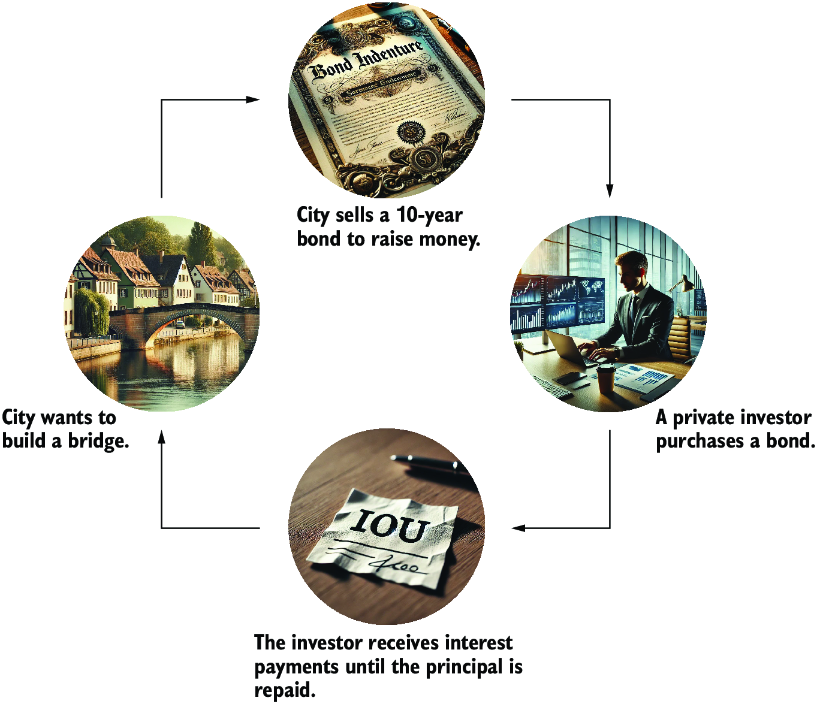
Figure 5.3 A plain vanilla bond
figure

Use the plain vanilla bond diagram to connect the coupon payment stream with the principal repayment at maturity. section 5.2

How Investing for Programmers covers it

How deep it goes
Defines annual coupon payments and fixed or floating rates, then stops short of advanced bond variations.
Examples
Uses a plain vanilla bond and quarterly coupon payments to illustrate recurring cash flow.
What you can do after
Evaluate a bond’s stated income by checking its rate type, payment schedule, maturity, and borrower risk.
How it connects
Connects coupon rates with bonds, principal, maturity dates, payment modalities, and credit risk.

This explainer was generated by Manning's knowledge graph from the text of Investing for Programmers. The section links point to the parts of the book it draws on.