A critical asset is a vital hardware device or software system whose loss, compromise, or failure could disrupt operations, expose sensitive data, or undermine business objectives. Identifying these assets helps organizations prioritize security work, allocate resources, and focus continuous monitoring where it matters most. section 6.2.1 section 8.1.1
Classify critical assets according to what they support:
- Critical hardware includes essential physical devices such as servers, firewalls, and medical equipment; an imaging clinic’s MRI machine is one example. section 6.2.1
- Critical software includes applications that process orders, handle confidential information, or support essential activities, such as databases, operating systems, and trading platforms. section 6.2.1
- Compare critical assets with total inventories to calculate critical-to-total ratios and reveal the concentration of operational risk. section 6.2.1
TechMed Solutions
A dashboard identified 10 unaccounted-for hardware systems and two software assets, creating possible gaps in patching and protection. TechMed Solutions set targets of securing 80% of critical hardware and 50% of critical software, while investigating the missing assets through regular audits. section 6.2.2
Figure 6.2 The left side shows TechMed Solutions’ asset management dashboard before managing hardware and software assets. The right side shows the dashboard after implementing hardware and software asset management.
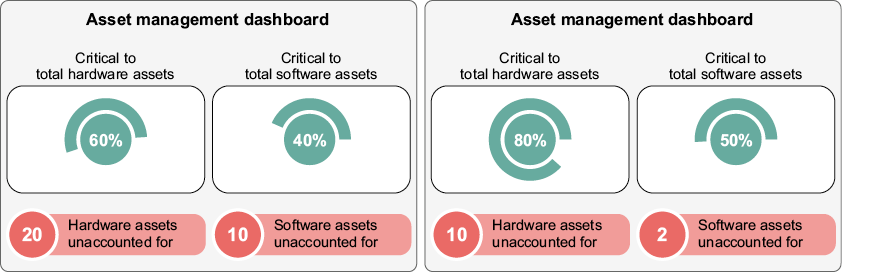
Compare the asset-management dashboard before and after hardware and software asset management to see how inventory visibility supports risk decisions. section 6.2.2
