liveBook · Manning

Crossover

As explained in Inside AI

Crossover is a genetic-algorithm operation that combines parts of two candidate solutions to create a new candidate.

Crossover combines parts of two strong candidate solutions to produce a new candidate, helping a genetic algorithm search for better solutions. section 2.5

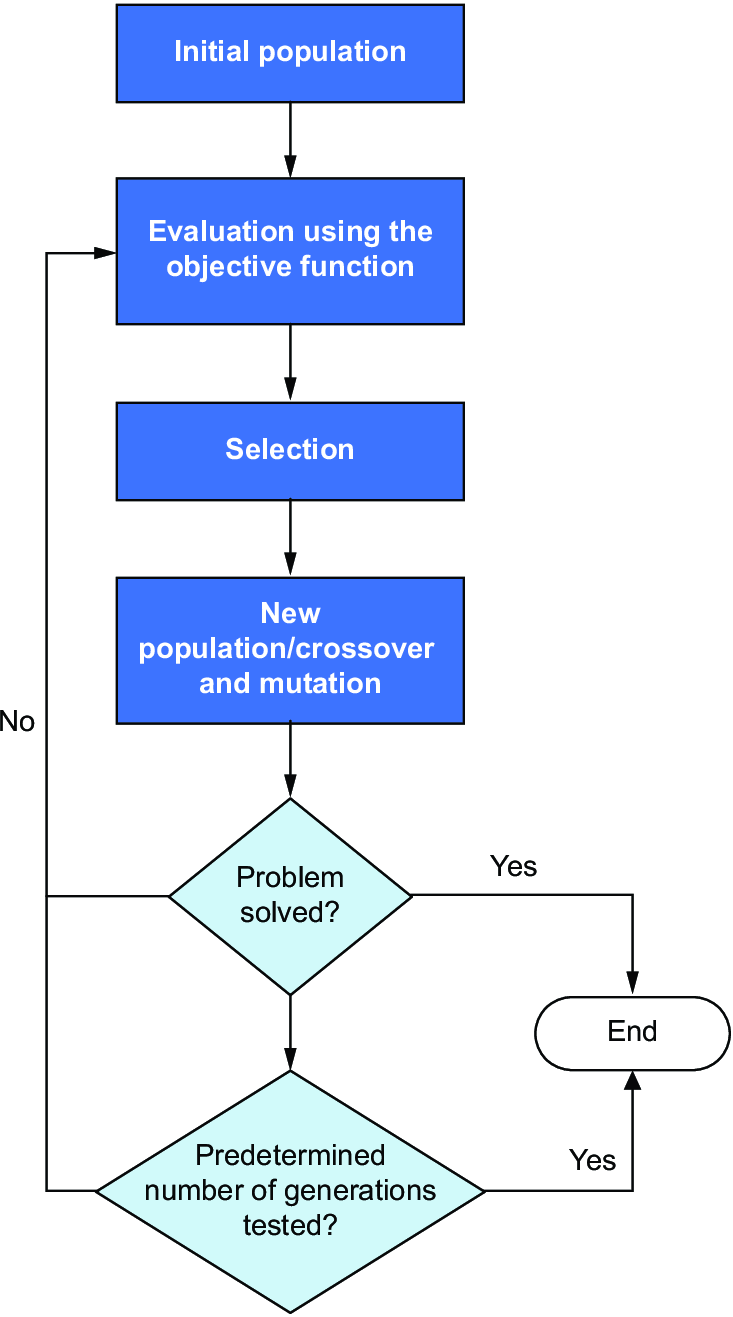
A typical crossover cycle works as follows:

  • Evaluate candidate solutions using measures such as delivery time and cost. section 2.5
  • Select better-performing candidates and combine useful parts from them. section 2.5
  • Apply mutation occasionally to introduce random alternatives, then repeat across generations until improvement stops or a cycle limit is reached. section 2.5

Supply-chain planning

One candidate can contribute a faster delivery route while another contributes a better resource allocation. Combining those parts may produce a more efficient distribution plan. section 2.5

Figure 2.2 Flowchart of a genetic algorithm
figure

Use the genetic-algorithm flowchart to place crossover within evaluation, selection, mutation, and repeated population improvement. section 2.5


How Inside AI covers it

How deep it goes
Explains crossover procedurally through selection, combination, mutation, repetition, and stopping conditions without implementation details.
Examples
Uses delivery routes, resource allocations, distribution plans, scheduling methods, and supply-chain costs as concrete examples.
What it assumes
Assumes candidate solutions and evaluation criteria, while introducing populations, fitness evaluation, selection, mutation, and generations.
What you can do after
Apply crossover within a genetic algorithm to combine promising candidate solutions during iterative optimization.
How it connects
Connects crossover to genetic algorithms, fitness evaluation, selection, mutation, optimization algorithms, and natural selection.

Also explained in

Compare how 7 books explain crossover →

Related concepts

This explainer was generated by Manning's knowledge graph from the text of Inside AI. The section links point to the parts of the book it draws on.




