Cryptocurrency is digital currency secured through cryptography, with transactions and new units managed by a blockchain-based protocol. A blockchain records immutable blocks linked by hashes. section 1.6
A small cryptocurrency protocol makes several mechanisms concrete:
- Immutability prevents changing existing blocks; new records are appended instead. section 1.6
- Hashing links each block to its predecessor and exposes changes to the chain. section 1.6
- Mining and proof of work help validate pending transactions before they enter the chain. section 1.6
A wallet payment
Luke pays Ana’s coffee shop with a digital wallet. The transaction becomes pending, miners compete to validate it, and the completed transaction joins other transactions in a new block. section 1.6
Figure 1.13 A simple representation of a blockchain, in which each block stores the previous block’s hash. This hash is used to compute the current block’s own hash, effectively connecting all these blocks in a chain.
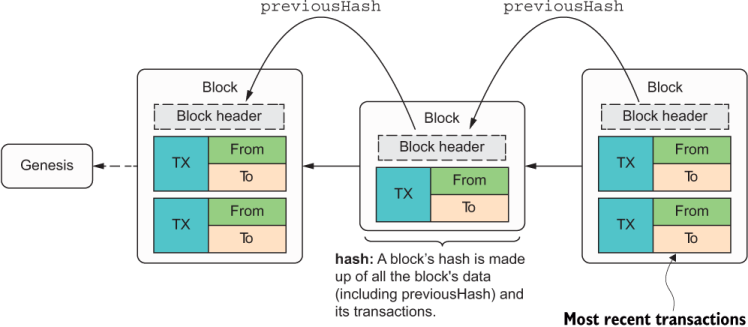
Trace how each block stores the previous block’s hash and uses it to compute its own chain link. section 1.6

