Return is the total reward accumulated across a sequence of actions or attempts. It captures the overall result, not just whether one individual action was good or bad. section 10.3 section 10.8
This perspective is useful when actions build toward a larger goal. A move that seems unfavorable now may still improve the eventual outcome, so the agent must balance immediate rewards with long-term rewards. section 10.3 section 10.7
Measuring a walking agent
Suppose an agent receives penalties when it falls or takes strides that are too long. Add those reward signals across its attempts to obtain cumulative reward. To measure average reward per action, divide that cumulative reward by the total number of actions. This reveals whether the agent generally chooses good actions, even when it does not complete the final goal. section 10.8
Figure 10.5 The self-driving car in the Parking-Lot Problem
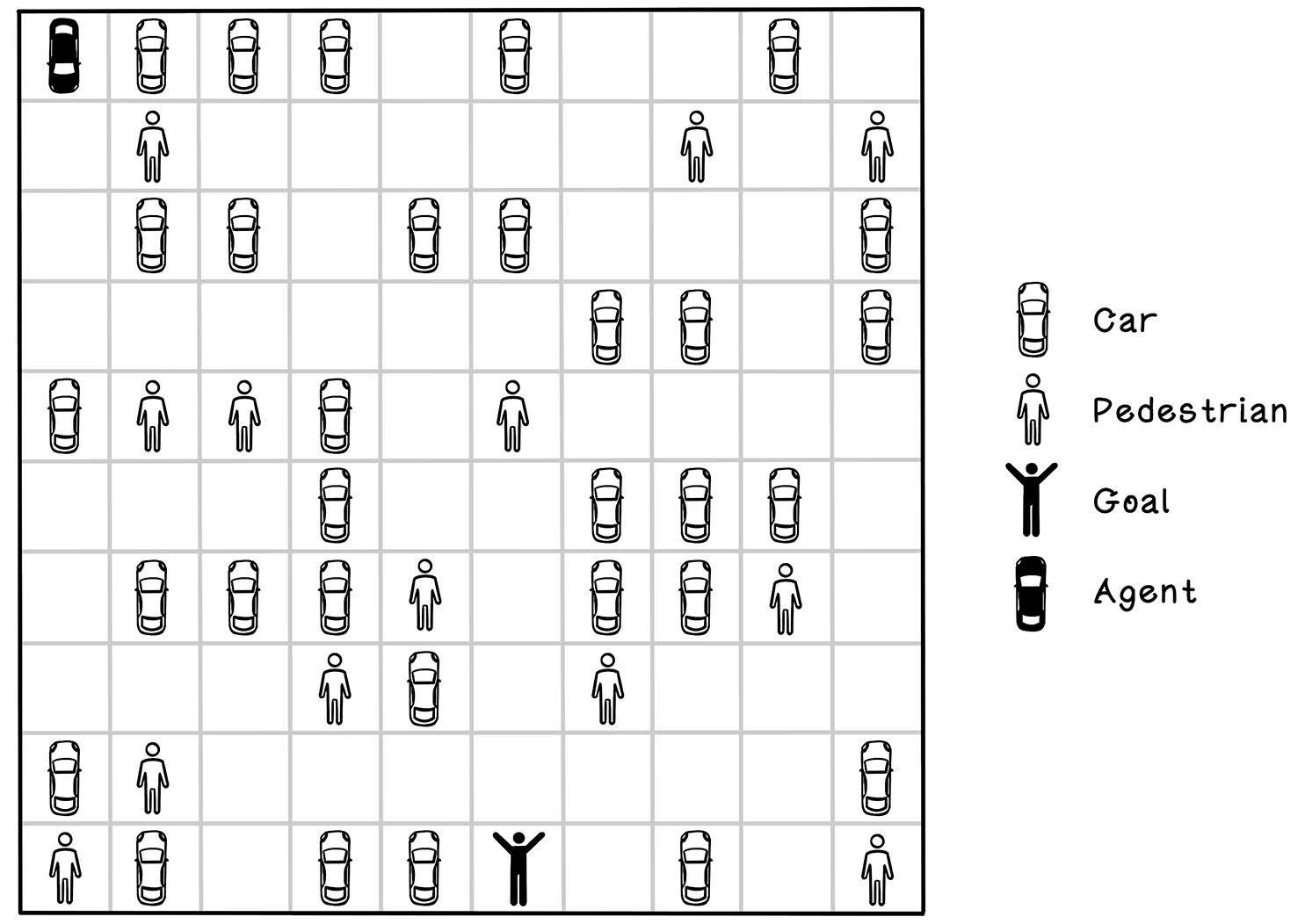
Use the parking-lot scene to see why the combined consequences of movement, collisions, and reaching the owner matter more than any single move. section 10.3



