Customer development is the disciplined work of learning what target customers need, testing an offering with them, and refining the business around that evidence. It turns prospects into customers as part of a go-to-market architecture linking vision, strategy, and tactics. section 16.2 section 14.1
A practical customer-development loop looks like this:
- Engage stakeholders in potential markets to learn about customers, business models, competition, and market conditions. section 16.2
- Form an initial view of the minimum feature set from the target-customer vision. section 14.1
- Show the MVP to early adopters, gather feedback and requirements, build the most valuable capabilities, and return with the result. section 14.1
- Use agile development to add capabilities incrementally, avoiding features customers do not value. section 14.1
The MVP rarely survives unchanged
A team starts with its best guess about the product, shows a minimally developed version to early adopters, and discovers that the real MVP differs from the initial vision. Repeated feedback and targeted additions turn that rough version into something customers can use, comment on, and pay for. section 14.1
Figure 16.1 The GTM machine showing the three major GTM components
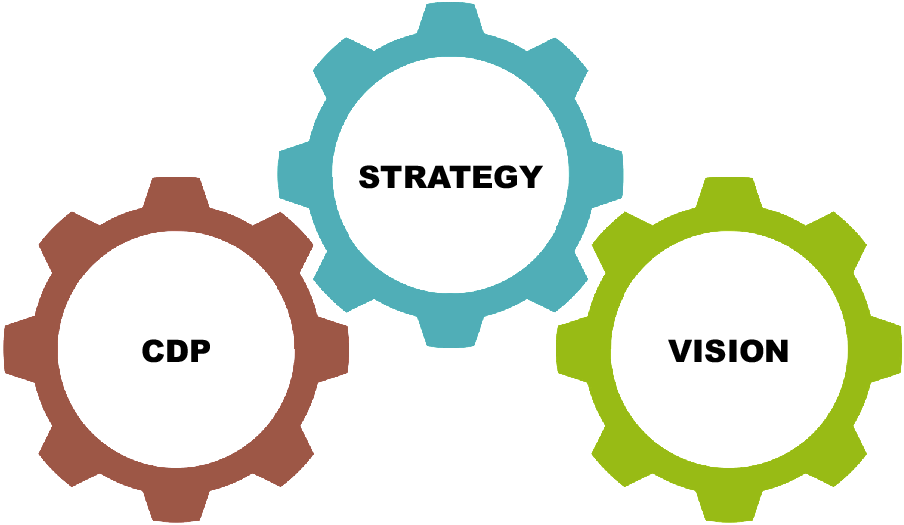
The GTM machine places customer development alongside vision and strategy, showing how the pieces interact to turn prospects into customers. section 16.2
