A startup can lose track of promising customers when every conversation lives in someone’s inbox. Customer relationship management (CRM) keeps those relationships and interactions in one shared system. The practical goal is simple: stay connected, organize the sales process, and improve business relationships. section 25.3.5
A useful CRM records and coordinates:
- Interactions with prospective customers and partners. section 25.3.5
- Target companies, key contacts, and marketing campaign audiences. section 25.3.5
- Each prospect’s position in the sales funnel, likely closing probability, and expected sale timing. section 25.3.5
- Customer conversations, discovery calls, demos, proposals, negotiations, and opportunities for upselling or referrals. section 25.1
The uncomfortable warning
A CRM only helps when salespeople keep it current. With up-to-date records, sales, marketing, finance, and leadership can see which prospects are moving, estimate revenue, and coordinate the work needed to close deals. Salesforce is a well-known example, although smaller, less expensive systems may also work. section 25.1 section 25.3.5
Figure 25.1 Diagram of a typical sales or purchase funnel. Original work by BronHiggs, based on a well-known concept. Licensed as CC by SA4.0.
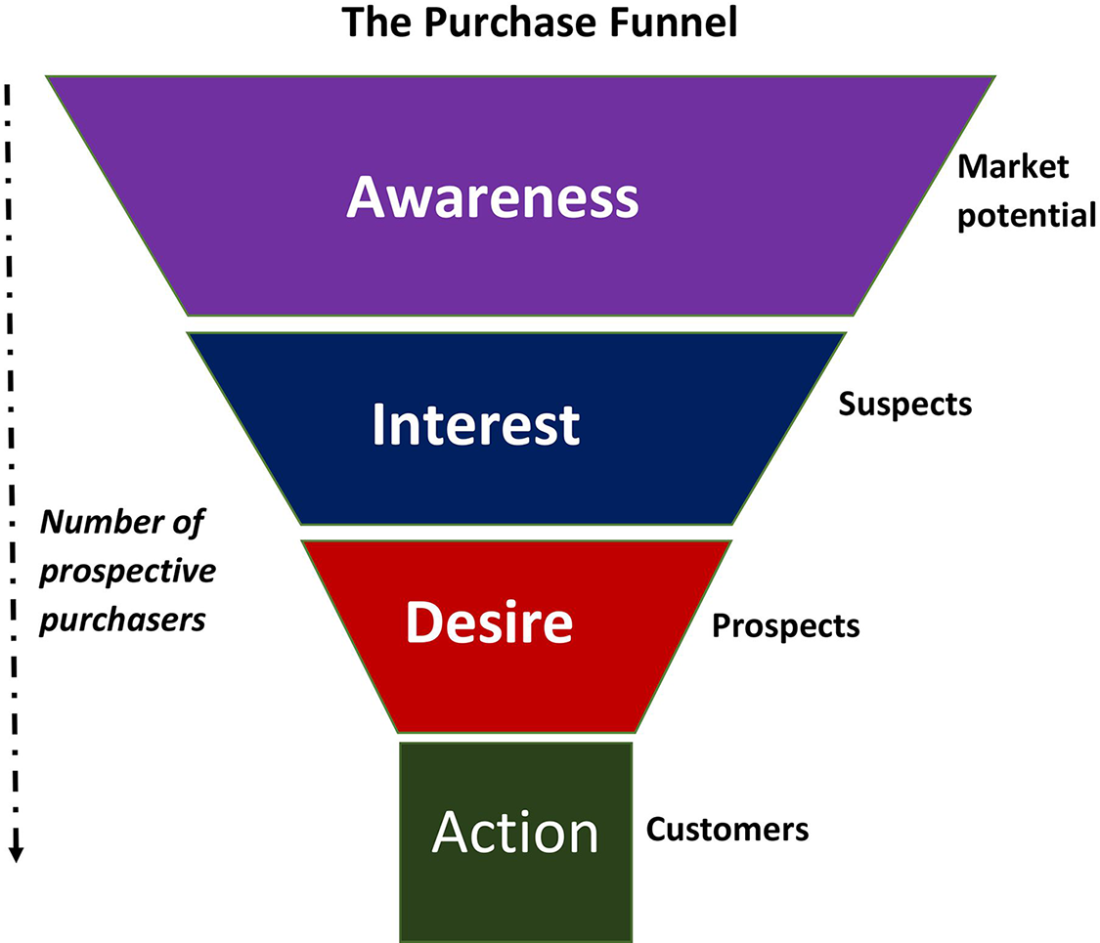
A sales funnel diagram makes the CRM’s organizing role visible: prospects move through stages, while the system records status and projected outcomes. section 25.3.5

