A data asset is a collection of data that an ML project relies on to develop models and operate a system. Its value depends not just on its contents, but on its structure, quality, accessibility, and suitability for the project’s objectives. Large, noisy, or confidential assets need both data engineering and careful assessment of what the data means. section 1.2 section 2.8
Turn assumptions about an asset into project evidence:
- Before committing to delivery, obtain a sample and document statistical properties, scale and history, and where the data lives. Ask about other sources, deficiencies, cleaning work, and possible supplementary data. section 2.4
- In sprint 0, verify that the available resources match the pre-project picture; establish privacy, security, and data-handling plans. section 4.1
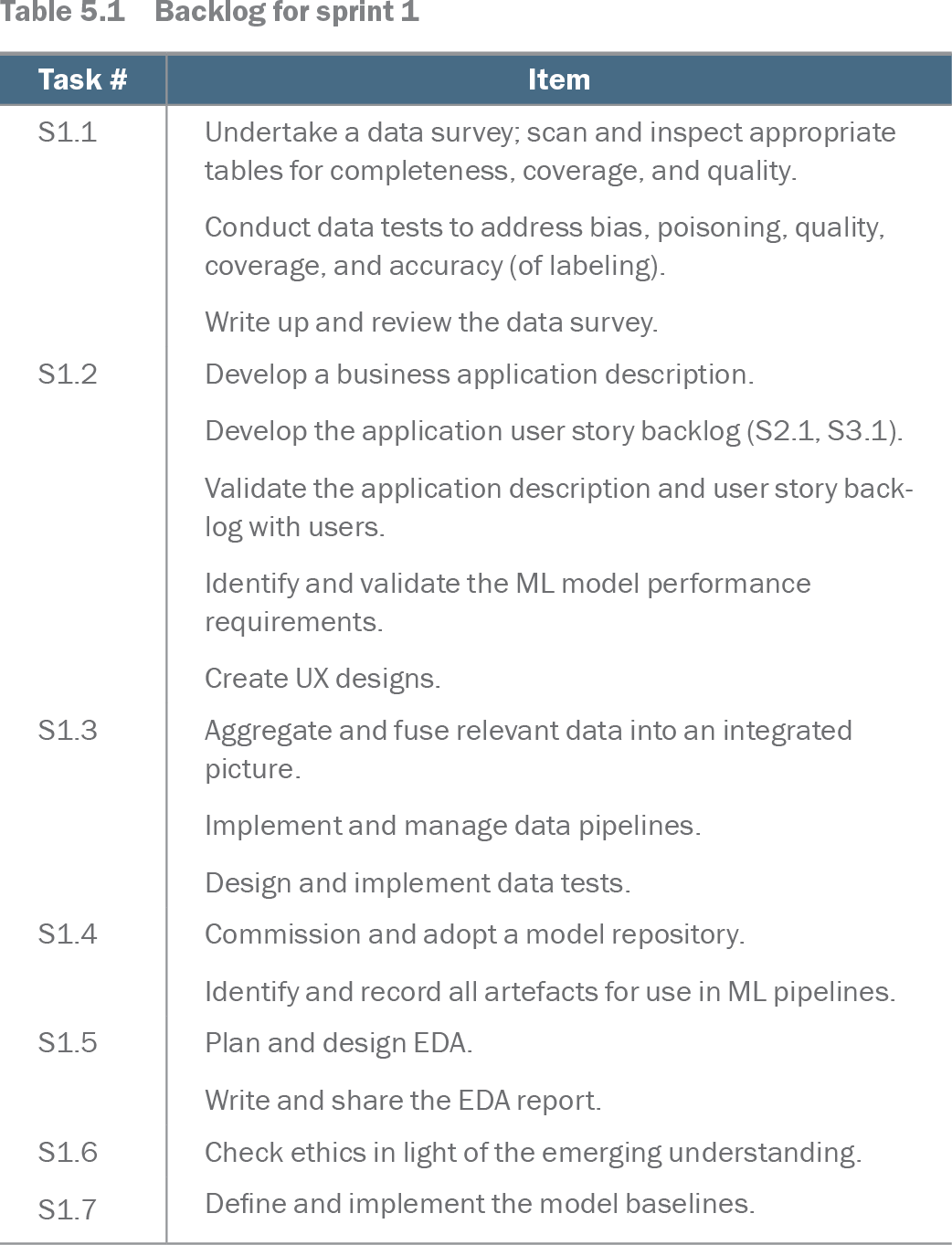
- In sprint 1, survey tables for completeness, coverage, and quality; test for bias, poisoning, and labeling accuracy; then aggregate relevant data and implement pipelines and tests. section 5.1
When the asset does not match the plan
A promised SQL endpoint may be absent, blocked by a firewall, or inaccessible with the supplied credentials. More seriously, the data may differ in content or character from what was expected. Resolve access problems with customer support; if the available data cannot support the agreed objectives, renegotiate them or stop rather than build on a false assumption. section 6.4
Table 5.1 Backlog for sprint 1 (view table figure)
The sprint 1 backlog turns investigation of a data asset into survey, testing, integration, and pipeline tasks. section 5.1