Machine learning system
A machine learning system is a software system that uses models trained on data, together with associated data, computation, and operational components, to perform tasks.

Machine Learning System Design
A software system that incorporates machine learning models together with the data, infrastructure, and operational components required to produce behavior in an application or production context.
- How it is used
- Frames ML system design as a blueprint for connecting components and guiding construction and maintenance.
- How deep it goes
- Provides high-level checklists, tool considerations, and practical rationale while deferring general system design and classic ML instruction.
- Examples
- Uses constant regression predictions and conditional rules to illustrate simpler starting points or alternatives.
- What you can do after
- Evaluate and understand whether an ML project is feasible, needs a complex model, and achieves its intended goal.
Read how Machine Learning System Design explains machine learning system →
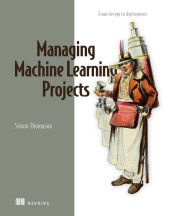
Delivering Machine Learning Projects: From design to deployment
A machine learning system is a deployed software system whose behavior depends on one or more machine learning models and their surrounding data and infrastructure.
- How it is used
- Frames model delivery as integration into business processes and production infrastructure.
- How deep it goes
- Sets out production-readiness and ownership checklists, including testing and ethical review, without detailing implementation.
- Examples
- Uses a bike shop initiative and a system-responsibility inventory to illustrate delivery and ongoing ownership.
- What you can do after
- Evaluate and understand production readiness and establish responsibility for deployed systems.
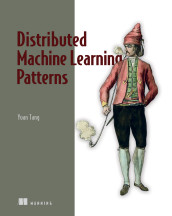
Distributed Machine Learning Patterns
A software system that collects data, trains or serves machine learning models, and supports the surrounding operational workflow.
- How it is used
- Handles growing data, computation, prediction traffic, and operational complexity through a coordinated distributed pipeline.
- How deep it goes
- Builds from component roles through complete implementation of ingestion, training, serving, and workflow composition.
- Examples
- Uses Fashion-MNIST, TensorFlow, Python, Kubernetes, Kubeflow, Docker, Argo Workflows, replicated servers, and an end-to-end architecture.
- What you can do after
- Build an end-to-end distributed pipeline that ingests data, trains models, serves predictions, and coordinates operational steps.
Read how Distributed Machine Learning Patterns explains machine learning system →

Machine Learning Platform Engineering
A software system that incorporates machine learning models and the data, computation, and operational components required to deliver their outputs.
- How it is used
- Structures the transition from ML experimentation to deployable, monitored, and maintainable production services.
- How deep it goes
- Connects platforms, pipelines, training, validation, serving, and monitoring while deferring implementation details to specialized workflows.
- Examples
- Uses an ID card detection system, YOLO object detection, and a movie recommendation system to illustrate varied production workflows.
- What you can do after
- Build it from scratch by assembling an ML platform, reproducible pipelines, validated models, serving infrastructure, and monitoring.
Read how Machine Learning Platform Engineering explains machine learning system →
Also covered in
What to know first
- language modelA language model is a computational model that represents patterns in linguistic sequences to assign probabilities, predict, generate, or evaluate language.
- applicationAn application is a software program or system that provides functionality or performs tasks for users or other software.
- classifierA classifier is a predictive model that assigns an input to one or more discrete classes or categories.
Related concepts
- batchingused by · Batching is the grouping of multiple items, requests, or operations so they can be processed together as a unit.
- data assetuses · A data asset is a collection of data maintained or controlled as a resource for analysis, model development, or system operation.
- data sourceuses · A data source is an origin, system, repository, or process from which data is obtained or made available for use or processing.
- applicationcontrasts with · An application is a software program or system that provides functionality or performs tasks for users or other software.
- data ingestionhas part · Data ingestion is the process of acquiring data from one or more sources and bringing it into a system for storage or processing.
- demand forecastused by · A demand forecast is an estimate or prediction of the quantity of a product, service, or resource that will be needed during a specified future period.
Questions about machine learning system
What is machine learning system?
A machine learning system is a software system that uses models trained on data, together with associated data, computation, and operational components, to perform tasks.
Which Manning books explain machine learning system?
Machine Learning System Design, Delivering Machine Learning Projects: From design to deployment, Distributed Machine Learning Patterns and Machine Learning Platform Engineering.
What should I know before learning machine learning system?
Manning books that teach machine learning system usually introduce language model, application and classifier first.
What is the difference between machine learning system and application?
A machine learning system is a software system that uses models trained on data, together with associated data, computation, and operational components, to perform tasks. An application is a software program or system that provides functionality or performs tasks for users or other software.
What are the parts of machine learning system?
Machine learning system includes data ingestion.
What is machine learning system also called?
Machine learning system is also called ML system.
These guides are generated from the text of Manning books by Manning's knowledge graph and link to the sections they draw on. The full books are available on liveBook and at manning.com.