A machine learning system combines models with data, computation, pipelines, and operational services to deliver reliable outputs in production. It spans the ML life cycle from problem formulation and experimentation through deployment, monitoring, and maintenance. section 1.0 section 1.4
Production ML systems must coordinate:
- Reproducible data preparation, training, validation, and pipeline execution. section 8.0
- Inference patterns such as batch prediction and real-time serving. section 10.1
- Scalability, resource management, hardware requirements, and model versioning. section 10.1
- Performance monitoring, drift detection, retraining, explainability, security, and privacy. section 10.1
Two production paths
An image-based ID card detection system exercises object-detection training, validation, tracking, and pipeline integration. A movie recommendation system applies the same production patterns to tabular data and recommendation workflows. section 1.4 section 8.0
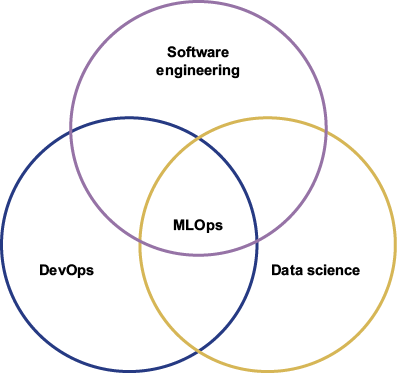
Use the skill-set map to relate software engineering, data science, and MLOps capabilities within an ML system. section 1.2
Figure 8.1 The mental map where we’re now focusing on the fourth and fifth step/component of our pipeline—model training (4) and evaluation (5)
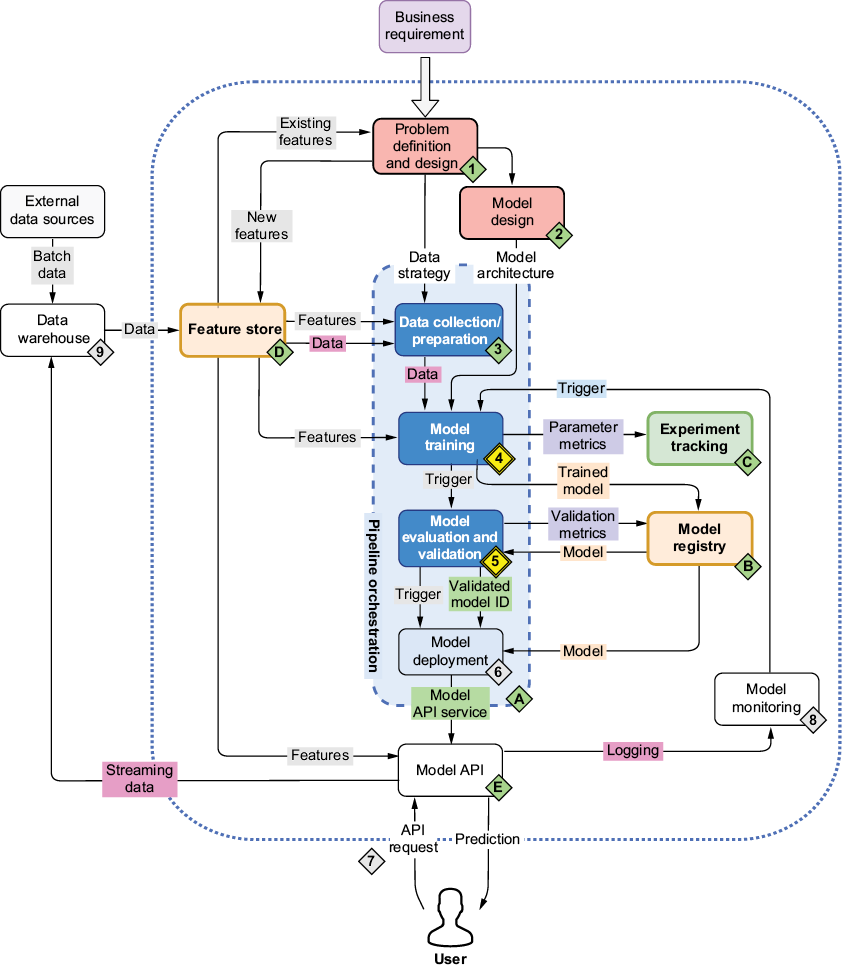
Use the pipeline map to locate model training and evaluation among the components of a production ML workflow. section 8.0



