A language model can reproduce biases present in the data used to train it. Data curation means selecting, organizing, documenting, and reviewing that data for its intended use. It is one part of reducing bias—not a guarantee that bias will disappear. section 3.2 section 3.18
Useful questions during curation include:
- What does the dataset contain, and where did the data come from? Publicly available material may have been collected without clear consent or provenance. section 3.18
- Whose experiences are represented? Poorly documented or unbalanced datasets can introduce or amplify bias. section 3.18
- What are the dataset’s known limitations and intended uses? Dataset cards can make these details, along with demographic coverage, easier to inspect. section 3.2
Curation also has legal and governance consequences. The EU AI Act’s provisions, phased in through 2026, place dataset suitability and training-data documentation among the obligations for developers of foundation and general-purpose AI models. Documentation supports scrutiny, but full disclosure of commercial training data remains rare. section 10.17 section 3.2
Figure 10.3 A dataset card for the databricks-dolly-15k dataset
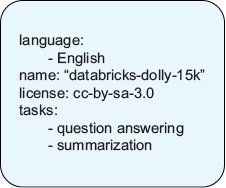
A dataset card for databricks-dolly-15k offers a concrete example of a dataset documentation artifact. section 10.17

