Fine-tuning
Fine-tuning is the continued training of a pretrained model on targeted data or objectives to adapt its parameters or behavior to a task, domain, or use.
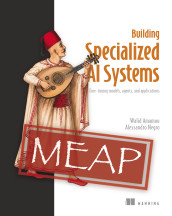
Building Specialized AI Systems
Fine-tuning is the process of adapting a pretrained model to a related task or specialized domain by continuing training with targeted data.
- How it is used
- Builds specialized language models for precision-demanding, domain-specific tasks where general-purpose behavior is inadequate.
- How deep it goes
- Explains transfer learning, prompt-completion training, iterative workflow, and parameter-efficient methods; defers Transformer internals and method selection details.
- Examples
- Uses customer-support ticket classification, credit-risk assessment, and financial analyst-report summarization with structured input-output pairs.
- What you can do after
- Build it from scratch by selecting a base model, preparing examples, training an adapter, evaluating results, and deploying iteratively.
Read how Building Specialized AI Systems explains fine-tuning →

LLMs in Production
Fine-tuning is the process of continuing model training on task-specific data to adapt a pretrained model to a particular behavior or domain.
- How it is used
- Uses fine-tuning to specialize pretrained models for tasks, domains, and desired behaviors without training from scratch.
- How deep it goes
- Explains model selection, data preparation, training loops, evaluation, resource trade-offs, and decisions about retraining.
- Examples
- Illustrates instruction tuning with translation and fine-tunes GPT-2 on a text dataset using Python training tools.
- What you can do after
- Apply fine-tuning via Hugging Face Transformers to adapt a pretrained model to a prepared dataset.

Natural Language Processing in Action, Second Edition
Fine-tuning is the continued training of a pretrained model on a narrower dataset or task so its parameters adapt to that target domain or behavior.
- How it is used
- Adapts pretrained transformers to classification tasks and domain-specific text generation.
- How deep it goes
- Explains end-to-end BERT fine-tuning and walks through dataset preparation, training, evaluation, and a GPT-2 Trainer workflow.
- Examples
- Uses labeled toxic comments for multi-label classification and a sentence corpus to adapt GPT-2 generation.
- What you can do after
- Apply it via Simple Transformers and Hugging Face Trainer to train and evaluate pretrained models.
Read how Natural Language Processing in Action, Second Edition explains fine-tuning →

Generative AI in Action
Task-specific fine-tuning is the adaptation of a pretrained model using data targeted at a particular task.
- How it is used
- Positions fine-tuning as a later enterprise adaptation option for specialized tasks, alongside prompt engineering and retrieval-augmented generation.
- How deep it goes
- Walks through model selection, data preparation, training, evaluation, and deployment, with a high-level explanation of LoRA.
- Examples
- Uses a Microsoft Teams emoji responder and JSONL prompt–response examples to demonstrate adaptation.
- What you can do after
- Apply it via the Azure OpenAI Python SDK or Azure AI Studio, then evaluate the adapted model against a baseline.
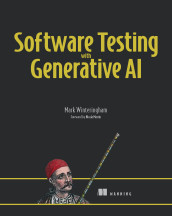
Software Testing with Generative AI
Fine-tuning is the process of adapting a pretrained model to a task or domain by training it further on targeted data.
- How it is used
- Deploys targeted training to embed testing or business-domain context into an LLM’s responses.
- How deep it goes
- Explains goals, data preparation, tokenization, tuning, metrics, testing, and iteration, while deferring many implementation nuances.
- Examples
- Uses London travel responses, project-code instruction records, Axolotl commands, and loss and learning-rate logs.
- What you can do after
- Operate/configure Axolotl to prepare data, run a LoRA fine-tune, and test the resulting domain-specific model.
Read how Software Testing with Generative AI explains fine-tuning →

The Art of AI Product Development
Fine-tuning is adapting a pretrained model by training it further on task- or domain-specific data.
- How it is used
- Addresses persistent domain, task, and instruction-following gaps in language-model products when prompting or retrieval alone falls short.
- How deep it goes
- Explains model selection, dataset creation, and evaluation for three objectives, while leaving technical engineering challenges to the engineering team.
- Examples
- Uses content-app topic classification and draft revision, plus sustainability reporting with Llama 3.2, to illustrate specialization.
- What you can do after
- Evaluate whether to pursue fine-tuning and guide model selection, task-specific data creation, and real-world evaluation.
Read how The Art of AI Product Development explains fine-tuning →
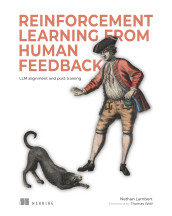
Reinforcement Learning from Human Feedback
Fine-tuning is further training of a pretrained model on a task-specific or behavior-specific objective.
- How it is used
- Establishes instruction-following behavior as a foundation for language-model post-training and RLHF.
- How deep it goes
- Explains supervised loss masking, data and batch choices, and KL-regularized RL objectives, with comparisons of generalization and forgetting.
- Examples
- Contrasts boiling-point responses and describes Tülu 3 training, tool trajectories, and arithmetic and navigation distribution-shift tests.
- What you can do after
- Operate/configure instruction tuning by choosing response masking, batch sizes, and training data suited to downstream tasks.
Read how Reinforcement Learning from Human Feedback explains fine-tuning →

Deep Learning with R, Third Edition
Fine-tuning is the continued training of a pretrained model, typically with a small learning rate, to adapt its learned representations to a new task.
- How it is used
- Adapts pretrained image and language models to classification or desired instruction-following behavior.
- How deep it goes
- Works through freezing, unfreezing, training, and evaluation; defers the effects of batch normalization on fine-tuning.
- Examples
- Uses Xception for cats versus dogs, RoBERTa for IMDb sentiment, and Gemma with instruction–response pairs.
- What you can do after
- Apply fine-tuning via R/Keras to a pretrained image classifier and a RoBERTa sentiment classifier.
Read how Deep Learning with R, Third Edition explains fine-tuning →

Deep Learning with Python, Third Edition
Adapting a pretrained model to a new task by continuing training, usually with a smaller learning rate or on additional data.
- How it is used
- Adapts pretrained vision and language models to classification and instruction-following tasks.
- How deep it goes
- Provides training workflows and code for vision and language models, while deferring batch normalization’s effect on fine-tuning.
- Examples
- Uses Xception on cats and dogs, RoBERTa on IMDb reviews, and Gemma with instruction-response pairs.
- What you can do after
- Apply it via Keras and KerasHub to adapt pretrained classifiers and prepare instruction-response training data.
Read how Deep Learning with Python, Third Edition explains fine-tuning →

Build a Large Language Model (From Scratch)
Further training of a pretrained model on a smaller task-specific dataset to improve downstream performance.
- How it is used
- Adapts foundation models for domain-specific or downstream tasks after broad language pretraining.
- How deep it goes
- Explains the two-stage workflow and model-loading step, but defers detailed optimization and parameter-update mechanics.
- Examples
- Uses labeled instruction-response data, sentence transformation, personal assistants, and text classifiers as concrete applications.
- What you can do after
- Apply it to adapt pretrained GPT models for instruction following or classification with smaller task-specific datasets.
Read how Build a Large Language Model (From Scratch) explains fine-tuning →

AI-Powered Search
Fine-tuning is additional training of a pretrained model on task-specific data to adapt its behavior or performance.
- How it is used
- Adapts pretrained models for domain-specific search, semantic similarity, and question answering.
- How deep it goes
- Walks through dataset preparation, model fine-tuning, holdout evaluation, and reader integration, while distinguishing weight updates from inference-time prompting.
- Examples
- Uses Stack Exchange outdoors question-answer pairs and the Semantic Text Similarity Benchmark as domain and similarity examples.
- What you can do after
- Apply fine-tuning to a question-answering model and use the Transformers pipeline to evaluate and deploy its reader.

Retrieval Augmented Generation, The Foundational Ideas
Fine-tuning is further training of a pretrained model on task-specific or domain-specific data.
- How it is used
- Adapts RAG retrieval and answer behavior to task-specific or domain-specific failures after pretrained components provide a starting point.
- How deep it goes
- Explains supervised objectives, which components update or stay frozen, and failure-driven training recipes; stops short of a full training implementation.
- Examples
- Uses REALM and canonical RAG training stages, a FiD synthesis failure, and RAFT examples mixing answer-bearing passages with distractors.
- What you can do after
- Evaluate/understand when to retain naive RAG and when to target the retriever, reader, or generator with fine-tuning.
Read how Retrieval Augmented Generation, The Foundational Ideas explains fine-tuning →
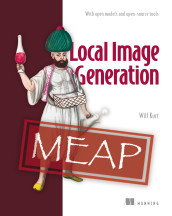
Local Image Generation
Fine-tuning is the continued training of a pretrained model on additional data or a specialized task to adapt its behavior.
- How it is used
- Uses extra training to turn a base diffusion model into a custom checkpoint for improved image-generation goals.
- How deep it goes
- Walks through data, OneTrainer setup, checkpoints, epoch-by-epoch samples, and result analysis without detailing training internals.
- Examples
- Compares monster, space-man, and cowboy prompts across training epochs, including grasshopper, sandworm, and crab outputs.
- What you can do after
- Operate/configure it with OneTrainer to create and evaluate an SD1.5 custom checkpoint from image-and-label training data.
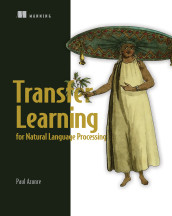
Transfer Learning for Natural Language Processing
Fine-tuning is adapting a pretrained model to a new task by updating some or all of its parameters.
- How it is used
- Adapts pretrained models to new NLP tasks, languages, and domains using target data.
- How deep it goes
- Explains layer freezing and learning-rate strategies, then demonstrates model adaptation and evaluation; discusses ULMFiT techniques before implementing them elsewhere.
- Examples
- Uses a tabular column-type classifier and BERT fine-tuning on the GLUE STS-B sentence-similarity task.
- What you can do after
- Apply it via transformers scripts to a GLUE task or suitably formatted custom data, and inspect saved evaluation results.
Read how Transfer Learning for Natural Language Processing explains fine-tuning →
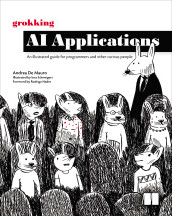
Grokking AI Applications
Fine-tuning is additional training of a pretrained model on more specific data or objectives to adapt its behavior.
- How it is used
- Adapts pretrained language models for specific tasks, domains, instructions, and conversational behavior.
- How deep it goes
- Explains supervised examples and parameter adjustment through backpropagation-like passes, but does not detail implementation procedures or training configurations.
- Examples
- Uses GPT-3, ChatGPT dialogue refinement, prompt-completion pairs, and specialized medical knowledge as examples.
- What you can do after
- Apply supervised fine-tuning to move a pretrained model toward desired task, domain, instruction-following, or dialogue outputs.
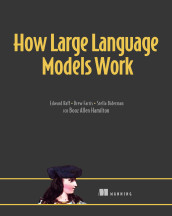
How Large Language Models Work
Fine-tuning is an additional training stage that adapts a pretrained model to a particular task or behavior using a smaller, task-relevant dataset.
- How it is used
- Uses a second training stage to constrain an LLM’s behavior for instruction following, domain knowledge, or application-specific goals.
- How deep it goes
- Explains SFT mechanics and RLHF objectives, but stops short of detailed optimization, implementation, and adversarial-machine-learning treatment.
- Examples
- Uses car sales, medical records, legal transcripts, repair manuals, code repositories, coding questions, and symbolic mathematics.
- What you can do after
- Apply it via SFT or RLHF to adapt a pretrained model, while selecting task data and checking privacy, reliability, and output risks.
Read how How Large Language Models Work explains fine-tuning →
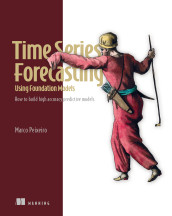
Time Series Forecasting Using Foundation Models
Fine-tuning is additional training of a pretrained model on task- or domain-specific data by updating some or all of its parameters.
- How it is used
- Specializes foundation forecasting models for a target dataset when zero-shot predictions may not be accurate enough.
- How deep it goes
- Explains parameter depth, training budgets, losses, validation, and overfitting, but does not disclose TimeGPT’s exact tuned-parameter counts.
- Examples
- Uses N-BEATS, TimeGPT, Lag-Llama, and Chronos on store-sales forecasting experiments.
- What you can do after
- Diagnose with validation metrics whether adapting a pretrained forecaster improves accuracy enough to justify its computational cost.
Read how Time Series Forecasting Using Foundation Models explains fine-tuning →
LLM Customization and Fine-Tuning
Further training a pretrained model on task- or domain-specific data to change its behavior.
- How it is used
- Positions fine-tuning as an enterprise adaptation option for behavior gaps, including domain conventions and brand voice.
- How deep it goes
- Develops a decision path from prompting to fine-tuning, with evaluation, cost crossover, and deployment considerations.
- Examples
- Uses earnings transcripts, Korean customer-service conversations, and clinical question-answer pairs to illustrate adaptation choices.
- What you can do after
- Evaluate whether fine-tuning fits a behavior gap and compare it with prompting or retrieval using held-out examples and cost assumptions.
Read how LLM Customization and Fine-Tuning explains fine-tuning →

Deep Learning with PyTorch, Second Edition
The process of adapting a pretrained model to a new task by continuing training on task-specific data.
- How it is used
- Uses fine-tuning to adapt pretrained models to task-specific data, including automatic segmentation of CT nodule candidates.
- How deep it goes
- Defines fine-tuning and works through dataset preparation, pretrained model setup, training, monitoring, and inference.
- Examples
- Uses CT slices and Segment Anything-generated masks to fine-tune SegFormer, and suggests a pretrained Vision Transformer exercise on CIFAR-10.
- What you can do after
- Apply it via Hugging Face Transformers to train a SegFormer for nodule segmentation and inspect predictions on unseen scans.
Read how Deep Learning with PyTorch, Second Edition explains fine-tuning →

Introduction to Generative AI, Second Edition
Fine-tuning is adapting a pretrained model through continued training for a particular task or behavior.
- How it is used
- Adapts pretrained language models to specific tasks, instruction-following, safety behavior, and tool use.
- How deep it goes
- Explains supervised examples and next-token prediction at an overview level, without a training procedure or implementation details.
- Examples
- Uses product-review sentiment ratings, safe responses to unsafe inputs, and Toolformer’s API calls as examples.
- What you can do after
- Evaluate and understand how fine-tuning steers a pretrained model and why example quality and labor conditions matter.
Read how Introduction to Generative AI, Second Edition explains fine-tuning →
LLM Evaluation and Alignment, The Foundational Ideas
Fine-tuning is the additional training of a pretrained model on a task-specific or domain-specific dataset.
- How it is used
- Uses supervised fine-tuning to turn pretrained text completion into instruction following and establish a starting policy for alignment.
- How deep it goes
- Explains training objectives, demonstration formats, data preparation, iteration, and imitation limits without detailing a fine-tuning implementation.
- Examples
- Illustrates SFT with earnings-report summaries, labeler-written demonstrations, and responses revised by an AI critic.
- What you can do after
- Evaluate how demonstration quality and coverage affect fine-tuning, and plan a critique-revise, train, and test cycle.
Read how LLM Evaluation and Alignment, The Foundational Ideas explains fine-tuning →

Data Analysis with LLMs
Fine-tuning is the process of further training an existing model on task-specific examples to adapt its behavior to a particular task.
- How it is used
- Specializes an existing model for a specific analysis task when simpler optimization methods may not suffice.
- How deep it goes
- Works through labeled-data format, model use, and a cost comparison, without showing a fine-tuning job submission in the supplied excerpts.
- Examples
- Uses labeled movie reviews, a JSON-lines chat interaction, and a ten-review accuracy and token-cost test.
- What you can do after
- Apply it via OpenAI chat models: prepare labeled examples, use a fine-tuned model ID, and assess whether its results justify its costs.

Build a Text-to-Image Generator (from Scratch)
Fine-tuning is adapting a pretrained model to a new task by updating selected parameters, often only the task-specific output layers.
- How it is used
- Applies pretrained models to specialized tasks when training from scratch would require excessive data, time, or computation.
- How deep it goes
- Explains freezing, head replacement, training, validation, and early stopping, but focuses on output-head adaptation rather than full-network retraining.
- Examples
- Uses ResNet50 to classify sample images, then adapts it to distinguish real images from AI-generated deepfakes.
- What you can do after
- Apply it via PyTorch and torchvision to build a specialized image classifier with frozen pretrained features and a trainable task head.
Read how Build a Text-to-Image Generator (from Scratch) explains fine-tuning →
Domain-Specific Small Language Models
Training a pretrained model further on task- or domain-specific data to adapt it to a narrower use case.
- How it is used
- Adapts pretrained models to narrower tasks or domains without developing a model from scratch.
- How deep it goes
- Works through data preparation, full-parameter training, and question-answering inference; contrasts full fine-tuning with parameter-efficient methods.
- Examples
- Demonstrates DistilBERT question answering and GPT-2 code generation; identifies antibody generation as a domain-specific application.
- What you can do after
- Apply it via Hugging Face Transformers to prepare a dataset, train a pretrained question-answering model, and extract an answer span.
Read how Domain-Specific Small Language Models explains fine-tuning →
Build a DeepSeek Model (From Scratch)
Fine-tuning is continued training of a pretrained model on a targeted dataset to adapt its behavior or capabilities.
- How it is used
- Uses supervised fine-tuning to shape assistant behavior and transfer teacher reasoning into smaller models.
- How deep it goes
- Explains dataset preparation and placement in training pipelines, but does not detail an SFT implementation.
- Examples
- Compares SFT on teacher-generated traces with direct RL on the same Qwen2.5-32B architecture.
- What you can do after
- Evaluate supervised fine-tuning’s role and trade-offs in staged post-training and teacher–student distillation.
Read how Build a DeepSeek Model (From Scratch) explains fine-tuning →

Building Reliable AI Systems
Fine-tuning is the adaptation of a pretrained model by further training it, typically on task- or domain-specific data.
- How it is used
- Adapts pretrained models when prompting or retrieval alone cannot deliver sufficient domain-specific behavior.
- How deep it goes
- Details data preparation, model selection, managed training jobs, monitoring, and evaluation, alongside cost and reliability trade-offs.
- Examples
- Uses a branded e-commerce support assistant, medical exam performance, and biased customer-service logs to illustrate applications and risks.
- What you can do after
- Apply it via the OpenAI Python SDK to upload examples, run and monitor a fine-tuning job, and use the resulting model.
Read how Building Reliable AI Systems explains fine-tuning →
Understanding AI
Fine-tuning is the continued training of a pretrained model on a smaller, task- or behavior-specific dataset to adapt its outputs.
- How it is used
- Transforms a prediction-focused foundation model into a conversational assistant that interprets input as instructions.
- How deep it goes
- Explains curated prompt-response training and its behavioral effect, while deferring training mathematics and update mechanics.
- Examples
- Contrasts a concert-review summary prompt treated as text continuation with one answered as an assistant request.
- What you can do after
- Evaluate/understand why an assistant responds to a prompt differently from a raw foundation model.
Rearchitecting LLMs
Fine-tuning that adapts a model for a particular specialization or domain.
- How it is used
- Adapts model behavior to domain tasks and output formats, optionally after pruning and knowledge recovery.
- How deep it goes
- Develops an adapter-training workflow from model loading and configuration through training, merging, and evaluation baselines.
- Examples
- Uses clinical JSON extraction and a three-function calling specialist to illustrate behavioral adaptation.
- What you can do after
- Apply it via LoRA to specialize a model for function calling and merge the trained adapter.
Data Storytelling with Altair and AI
Fine-tuning is the additional training of a pretrained machine-learning model on targeted data to adapt its parameters to a task or domain.
- How it is used
- Adapts LLM-generated data-story titles, annotations, and commentaries to particular audiences, scenarios, and domains.
- How deep it goes
- Defines targeted retraining and walks through dataset construction, JSONL conversion, API job creation, and generation without explaining LLM internals.
- Examples
- Demonstrates audience-specific titles and commentary using household chores and popular-sports percentages, plus CSV-to-JSONL conversion.
- What you can do after
- Apply it via the OpenAI API to train and call an audience-specific model for new data commentary.
Read how Data Storytelling with Altair and AI explains fine-tuning →

Starting Data Analytics with Generative AI and Python
Fine-tuning is the further training of a pretrained model on targeted data to adapt its behavior or performance.
- How it is used
- Adapts pretrained language models to nuanced or domain-specific NLP tasks when labeled-data resources are limited.
- How deep it goes
- Explains benefits, requirements, alternatives, and overfitting risk, but stops short of procedural training details.
- Examples
- Uses BERT on Hugging Face as an NLP fine-tuning example and contrasts it with zero-shot learning and training from scratch.
- What you can do after
- Evaluate whether adapting a pretrained model suits a task by weighing data quality, model relevance, resources, and overfitting risk.
Read how Starting Data Analytics with Generative AI and Python explains fine-tuning →
Transformers in Action
Fine-tuning is the adaptation of a pretrained model by further optimizing its parameters for a specific task or behavior.
- How it is used
- Adapts pretrained language models to specific tasks, conversational styles, and preferences after general pretraining.
- How deep it goes
- Explains the supervised loss objective and walks through data formatting, trainer configuration, training, and comparison with a base model.
- Examples
- Uses Alpaca instruction prompts, ProsocialDialog conversations, and OPUS-100 English–Spanish translation pairs.
- What you can do after
- Apply fine-tuning via TRL’s SFTTrainer, prepare supervised examples, and compare adapted model outputs with a baseline.
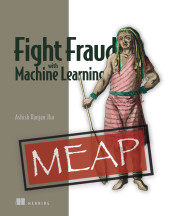
Fight Fraud with Machine Learning
Fine-tuning is adapting a pretrained machine-learning model by training it further on task-specific data.
- How it is used
- Adapts a pretrained GPT model to answer conversational prompts using labeled question-and-answer data.
- How deep it goes
- Explains the supervised data format and its contrast with pretraining, then defers further improvement to reinforcement learning.
- Examples
- Uses manually labeled question-and-answer pairs and a diagram contrasting unsupervised text data with supervised pairs.
- What you can do after
- Evaluate/understand why labeled answers make a pretrained GPT respond to prompts instead of only continuing text.
Read how Fight Fraud with Machine Learning explains fine-tuning →
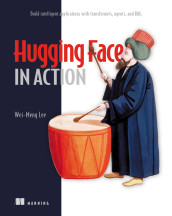
Hugging Face in Action
Fine-tuning is the adaptation of a pretrained model by continuing training on data for a particular task or domain.
- How it is used
- Adapts pretrained models for specialized tasks such as sentiment analysis, object detection, classification, and language generation.
- How deep it goes
- Explains dataset preparation, model and device setup, training configuration, evaluation, saving, and inference without deriving optimization mathematics.
- Examples
- Uses yelp_polarity reviews, DistilBERT sequence classification, training logs, saved checkpoints, and positive or negative review predictions.
- What you can do after
- Apply it via Hugging Face Trainer to train, evaluate, save, reload, and use a task-specific classification model.
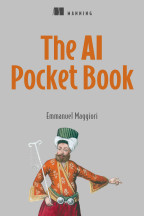
The AI Pocket Book
Additional training applied to an existing model to adapt or improve its behavior using new examples.
- How it is used
- Positions fine-tuning as a late-stage customization choice after prompt improvements, especially for specialized outputs or smaller self-hosted models.
- How deep it goes
- Explains parameter adjustment, continued training, dataset size, overfitting, and validation, but defers detailed prevention techniques.
- Examples
- Uses intended-style documents, manually written prompt-output examples, and smaller self-hosted models as concrete cases.
- What you can do after
- Evaluate and select a fine-tuning strategy using validation data, test data, and checks for overfitting.

Build AI Drug Discovery Pipelines
Fine-tuning is the continued training of a pretrained model on task-specific data, usually with its parameters initialized from pretraining.
- How it is used
- Applies pretrained protein representations to antibody classification with limited task-specific training.
- How deep it goes
- Defines the transfer-learning strategy and model components, but defers fine-tuning implementation details.
- Examples
- Uses ESM-2, labeled HIV-1 and SARS-CoV-2 antibody sequences, and classification metrics as its concrete examples.
- What you can do after
- Evaluate/understand how pretrained protein knowledge can be adapted for antibody classification.
Read how Build AI Drug Discovery Pipelines explains fine-tuning →

Machines that Think
Fine-tuning is the continued adjustment of a pretrained model on narrower data or objectives for a particular task or behavior.
- How it is used
- Uses continued training to specialize pretrained models and reinforce desired or fairer behavior.
- How deep it goes
- Contrasts full and partial parameter adaptation and explains their risks, without a training procedure or implementation.
- Examples
- Uses curated examples of refusals, safer redirection, tone, and response formats to illustrate supervised fine-tuning.
- What you can do after
- Evaluate fine-tuning by distinguishing learned behavioral tendencies from guarantees and weighing specialization against forgetting.

Microsoft Azure in Action
Fine-tuning is the process of further training a pretrained model on task-specific data to adapt its behavior or vocabulary.
- How it is used
- Adapts a general-purpose model to specialist review vocabulary when off-the-shelf recommendations fall short.
- How deep it goes
- Walks through data preparation, wizard submission, job inspection, and deployment; defers real-world production monitoring.
- Examples
- Uses a JSONL file pairing customer reviews with desired book recommendations for a recommendation engine.
- What you can do after
- Apply it via Azure AI Foundry’s Fine-Tuning wizard to submit labeled data, inspect a job, and deploy an inference endpoint.
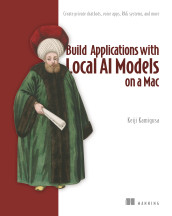
Build Applications with Local AI Models on a Mac
Fine-tuning is the process of further training a pretrained model on selected examples to adapt its behavior or capabilities.
- How it is used
- Uses fine-tuning to adapt a pretrained chatbot model’s behavior or domain knowledge when prompts or retrieval may not be enough.
- How deep it goes
- Outlines data preparation, training, export, deployment, and iteration without detailing training internals.
- Examples
- Uses support-ticket summaries and beginner-friendly explanations as input-output training pairs.
- What you can do after
- Apply fine-tuning via Unsloth, export to GGUF, and deploy a custom model locally with Ollama.
Read how Build Applications with Local AI Models on a Mac explains fine-tuning →
Applied Reinforcement Learning
Further training of a pretrained model on data or objectives suited to a particular task or use.
- How it is used
- Aligns a general-purpose language model’s signal with a task-specific schema for portfolio management.
- How deep it goes
- Explains training on thousands of schema examples and reports measured results, but gives no training procedure.
- Examples
- Uses a portfolio signal schema, oracle agreement, and comparisons between fine-tuned, base, and naive signals.
- What you can do after
- Evaluate whether task-specific tuning improves signal agreement and downstream portfolio performance.
Read how Applied Reinforcement Learning explains fine-tuning →
AI Agents and Applications
Fine-tuning is the additional training of a pretrained model on a narrower or task-specific dataset to adapt its behavior.
- How it is used
- Adapts pretrained language models for specialized tasks, domains, terminology, workflows, and response behavior.
- How deep it goes
- Defines curated training and major tradeoffs, but stops short of dataset schemas, training code, and evaluation procedures.
- Examples
- Uses BioMistral, LexiGPT, BloombergGPT, Code Llama, and Claude Code as specialized-model examples.
- What you can do after
- Apply it via a fine-tuning API or open-source toolkit to adapt a model for specialized behavior.

Machine Learning System Design
The process of continuing training on an existing model to adapt its parameters to new data or a related task.
- How it is used
- Uses pretrained models as a deep-learning baseline for adapting existing capabilities to related tasks.
- How deep it goes
- Explains when to choose fine-tuning and what to compare, but does not detail optimization steps or parameter-freezing mechanics.
- Examples
- Uses ImageNet pet-breed recognition and PhotoStock CLIP relevancy scoring as concrete adaptation examples.
- What you can do after
- Apply it by adapting a pretrained model or its components and evaluating the result against simpler baseline options.
Read how Machine Learning System Design explains fine-tuning →
The Complete Obsolete Guide to Generative AI
Fine-tuning is continued training of a pretrained model on task- or domain-specific data to specialize its behavior.
- How it is used
- Specializes pretrained language models when general off-the-shelf behavior does not suit a task or domain.
- How deep it goes
- Outlines datasets, architecture adaptation, gradient optimization, and iterative training, but defers practical dataset construction and execution.
- Examples
- Uses positive-versus-negative sentiment labels and legal or medical domain datasets as specialization examples.
- What you can do after
- Evaluate/understand when fine-tuning may specialize a model and why it requires proprietary data and substantial hardware.
Read how The Complete Obsolete Guide to Generative AI explains fine-tuning →

Causal AI
Fine-tuning is the process of adapting a pretrained model by continuing parameter training on task-specific or domain-specific data.
- How it is used
- Aligns pretrained language models with node-specific causal Markov kernels for generating intervention-relevant text.
- How deep it goes
- Explains model selection, tokenization, dataset splitting, training configuration, generation, and Pyro integration, but not parameter-update mathematics.
- Examples
- Uses GPT-2 for King actions and BART models for Prince actions, Kingdom fate, and Prince-to-King inference.
- What you can do after
- Builds task-specific causal text generators with Hugging Face Transformers, then samples and scores their outputs inside Pyro.

Knowledge Graphs and LLMs in Action
Fine-tuning is adapting a pretrained model by continuing its training on targeted data or objectives.
- How it is used
- Improves domain-specific extraction, schema understanding, and query generation when prompting alone is insufficient.
- How deep it goes
- Explains dataset preparation, annotation reuse, trade-offs, and selective component replacement without detailing optimization internals.
- Examples
- Uses entity-relation extraction, schema-aware agents, and knowledge-graph query planning as application examples.
- What you can do after
- Build task-specific LLM components for more stable extraction or more efficient graph-aware querying.
Read how Knowledge Graphs and LLMs in Action explains fine-tuning →
AI Agents in Action
A fine-tuned model is a pretrained model further trained on additional data for a narrower behavior or domain.
- How it is used
- Refines training toward a particular use case or domain, informing model selection for domain-specific agents.
- How deep it goes
- Defines use-case refinement and gives ChatGPT and domain-selection examples, without detailing training procedures.
- Examples
- Uses ChatGPT’s public-internet training and RLHF, and considers smaller fine-tuned models for domain-specific agents.
- What you can do after
- Evaluate whether a domain-specific fine-tuned model may suit an agent as well as or better than a larger general model.
Machine Learning Algorithms in Depth
Fine-tuning is adapting a pretrained model to a target task by continuing training, typically with task-specific output parameters.
- How it is used
- Adapts pretrained transformer models to language-processing tasks such as question answering and language inference.
- How deep it goes
- Defines task adaptation through an additional output layer but stops short of training mechanics, optimization, or implementation details.
- Examples
- Uses BERT-based question answering and language inference as concrete fine-tuning applications.
- What you can do after
- Apply pretrained BERT with an added output layer to multiple language-processing tasks.
Read how Machine Learning Algorithms in Depth explains fine-tuning →

Data Without Labels
Fine-tuning is the adaptation of a pretrained model's parameters to optimize performance on a target task.
- How it is used
- Adapts a pretrained DBN to supervised classification or regression after unsupervised representation learning.
- How deep it goes
- Explains layer-wise pretraining, joint weight adjustment, objectives, benefits, and training difficulties without detailing optimizer implementation.
- Examples
- Uses DBNs for speech recognition, image recognition, dimensionality reduction, feature learning, and classification.
- What you can do after
- Apply supervised fine-tuning to adjust a pretrained DBN for classification or regression using labeled data.

Machine Learning Platform Engineering
Fine-tuning is the additional training of a pretrained model on task-specific data to adapt its behavior to a new task or domain.
- How it is used
- Applies pretrained models to domain-specific production tasks such as identity-card detection.
- How deep it goes
- Defines adaptation and dataset splits, then connects training with evaluation and retraining without detailing optimization internals.
- Examples
- Uses YOLOv8, COCO, identity cards, passports, and separate training, testing, and validation images.
- What you can do after
- Apply it via YOLOv8 to train a custom detector for objects absent from its original classes.
Read how Machine Learning Platform Engineering explains fine-tuning →

Outlier Detection in Python
Fine-tuning is the continued training of a pretrained model, usually on a new task or domain, by adjusting some or all of its parameters.
- How it is used
- Applies pretrained neural networks to related tasks with less retraining than training a model from scratch.
- How deep it goes
- Explains reused embeddings, selective layer retraining, benefits, and weaker transferability for tabular data.
- Examples
- Uses cat-versus-dog classification adapted to distinguishing different types of dogs.
- What you can do after
- Apply it via a pretrained neural network by retraining a final layer or adding a task-specific layer.
Build an Advanced RAG Application (From Scratch)
Fine-tuning is the adaptation of an already trained model by continuing parameter optimization on data for a specific task or domain.
- How it is used
- Positions fine-tuning as the application-specific adaptation stage for language models and LLM-powered systems.
- How deep it goes
- Explains pre-training, parameter adjustment, and compute demands, but stops short of implementation procedures or hyperparameter guidance.
- Examples
- Names chatbots, text summarization, content generation, sentiment analysis, and RAG as application contexts for model adaptation.
Read how Build an Advanced RAG Application (From Scratch) explains fine-tuning →
AI Governance
Fine-tuning is the additional training of a pretrained model on task-specific or organization-specific data to adapt its behavior or capabilities.
- How it is used
- Adapts pretrained models to specific domains using tailored data.
- How deep it goes
- Connects fine-tuning to safety degradation and poisoning risks, but does not detail training procedures.
- Examples
- Cites adversarial examples against GPT-3.5 Turbo and benign medical, financial, and legal datasets used with Llama-2 variants.
- What you can do after
- Operate/configure it with validated, cleaned data and safety retesting after fine-tuning.

Financial AI in Practice
Fine-tuning adapts a pretrained model by continuing training on task-specific or domain-specific data.
- How it is used
- Adapts a pretrained model’s behavior, such as writing in a financial platform’s distinctive style.
- How deep it goes
- Explains the goal, data curation, PEFT trade-offs, and a conceptual LoRA recipe, but not a complete training workflow.
- Examples
- Uses 200 analyst-written input-output examples to adapt summaries of AlphaStream community posts.
- What you can do after
- Apply it via Hugging Face Transformers and PEFT to customize a pretrained model with LoRA.
Also covered in
- Build a Reasoning Model (From Scratch)
- Essential GraphRAG
- First-Party Data Activation
- Spring AI in Action
- Inside Deep Learning: Math, Algorithms, Models
- Deep Learning with JAX
- Machine Learning for Tabular Data: XGBoost, Deep Learning, and AI
- Inside AI
- Grokking AI Algorithms, Second Edition
- Build AI-Enhanced Web Apps
- Data Pipelines with Apache Airflow, Second Edition
- Effective Conversational AI
What to know first
- language modelA language model is a computational model that represents patterns in linguistic sequences to assign probabilities, predict, generate, or evaluate language.
- foundation modelA foundation model is a broadly trained machine-learning model whose learned capabilities can be reused or adapted for a range of downstream tasks.
- parameterA parameter is a value or named input that specifies or influences the behavior, computation, or output of a function, model, or system.
- GPT modelA GPT model is a generative, autoregressive Transformer language model in the family developed by OpenAI.
Related concepts
- retrieval-augmented generationcontrasts with · Retrieval-augmented generation is a technique that retrieves relevant information from external sources and supplies it as context to a generative model when producing an output.
- prompt engineeringcontrasts with · Prompt engineering is the deliberate design and refinement of inputs, instructions, and context to guide an AI model’s behavior or outputs.
- custom modelproduces · A custom model is a machine-learning model trained, adapted, or configured for a particular domain, task, or set of requirements.
- reinforcement learningcontrasts with · Reinforcement learning is a machine-learning paradigm in which an agent learns behavior or a decision policy through interaction with an environment and evaluative feedback, such as rewards.
- regressionproduces · A regression is an unintended deterioration or loss of previously established behavior, performance, or capability following a change.
- behavior gapaddresses · A model limitation in which it knows the relevant fact but responds in an undesired format, tone, or level of detail.
Questions about fine-tuning
What is fine-tuning?
Fine-tuning is the continued training of a pretrained model on targeted data or objectives to adapt its parameters or behavior to a task, domain, or use.
Which Manning books explain fine-tuning?
Building Specialized AI Systems, LLMs in Production, Natural Language Processing in Action, Second Edition, Generative AI in Action, Software Testing with Generative AI, The Art of AI Product Development, Reinforcement Learning from Human Feedback, Deep Learning with R, Third Edition and 44 more.
What should I know before learning fine-tuning?
Manning books that teach fine-tuning usually introduce language model, foundation model, parameter and GPT model first.
What is the difference between fine-tuning and retrieval-augmented generation?
Fine-tuning is the continued training of a pretrained model on targeted data or objectives to adapt its parameters or behavior to a task, domain, or use. Retrieval-augmented generation is a technique that retrieves relevant information from external sources and supplies it as context to a generative model when producing an output.
What is fine-tuning also called?
Fine-tuning is also called fine-tune or finetuning.
These guides are generated from the text of Manning books by Manning's knowledge graph and link to the sections they draw on. The full books are available on liveBook and at manning.com.