A data label tells a machine-learning model what an example means or what it should learn from it. For images, the label may be a caption: an ideal prompt describing the image rather than a mysterious sticker slapped on afterward. section 13.2.2 section 13.2.3
Choose the labeling approach to match the training task:
- Use simple class labels when the model only needs to distinguish categories, such as “hotdog” and “not a hot dog.” section 13.2.3
- Use descriptive captions when training Flux or Stable Diffusion, including the subject, relevant visual details, and a chosen trigger phrase. section 13.2.2 section 13.2.3
- Treat labeling as a quality bottleneck: even a small collection of 25 images takes care to label well, while larger fine-tuning projects need broader coverage. section 13.2.3 section 15.2
Captioning a dog dataset
Create a dataset in AI-Toolkit, add the images, and caption each one. A trigger phrase such as “Keats the dog” identifies the learned concept, while added description helps distinguish it from familiar ideas such as “black and white dog.” section 13.2.2 section 13.2.3
Figure 13.6 Our new dataset with images of Keats waiting to be captioned!
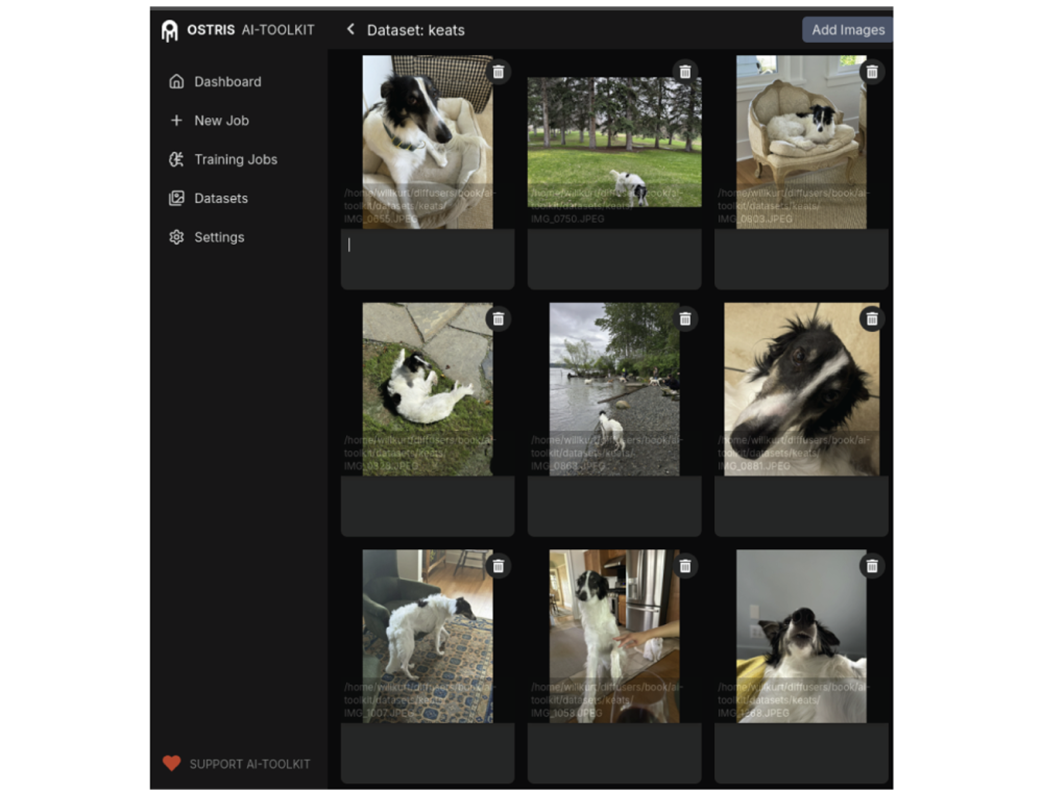
Use the dataset view to see the practical result of adding images before their captions are complete. section 13.2.2