A data lake stores large collections of structured, semistructured, and unstructured data as files in distributed storage, enabling varied downstream analytics at relatively low cost. Common contents include clickstream events, application logs, IoT readings, and social media data; files may use Parquet, ORC, or CSV. section 1.4 section 2.2
A file-centered lake trades warehouse-style control for flexibility and scale:
- Reduces storage costs and preserves raw data without requiring rigid schemas or proprietary warehouse formats. section 1.4 section 1.0
- Makes interactive analytics, schema enforcement, schema changes, and consistent cross-team views harder when datasets remain loosely organized files. section 1.4 section 2.2
- Risks becoming a data swamp when abundant files are difficult to query, govern, coordinate, or trust. section 1.4
A dedicated table format such as Apache Iceberg adds logical table structure, centralized metadata, transactional guarantees, schema evolution, and consistent snapshots above the underlying files. This shift supports lakehouse architectures that retain lake flexibility while enabling warehouse-style analytics. section 2.2 section 1.7
Figure 2.2 Parts of a lakehouse table: metadata files describe the files that make up the table, and data files hold the data.
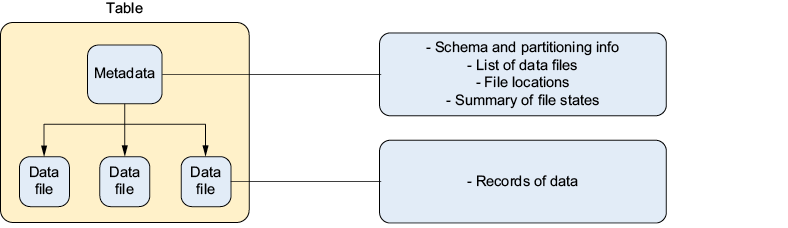
Shows how metadata files describe the data files composing a lakehouse table. section 2.2


