Data modality is the form in which data is represented. In fraud detection, identifying the modality helps determine what evidence is available, which models fit the problem, and where deployment constraints matter. section 1.5
Common modalities used to describe fraud-detection data include:
- Structured data: tabular values such as decimal and binary fields. section 1.5
- Unstructured data: natural text, images, or image-only document evidence. section 1.5 section 1.5.4
- Semi-structured data: evidence combining elements of structured and unstructured data. section 1.5
Digital document forgery
Forged passports, driving licenses, or bills rely on image manipulation. Because the evidence consists only of images, detection uses computer vision and deep learning to identify distortions across pixels. section 1.5.4
Figure 1.14 Three ways of categorizing online fraud: the industry or sector in which fraud is perpetrated, the nature of the fraudulent attack, and the modalities of data involved.
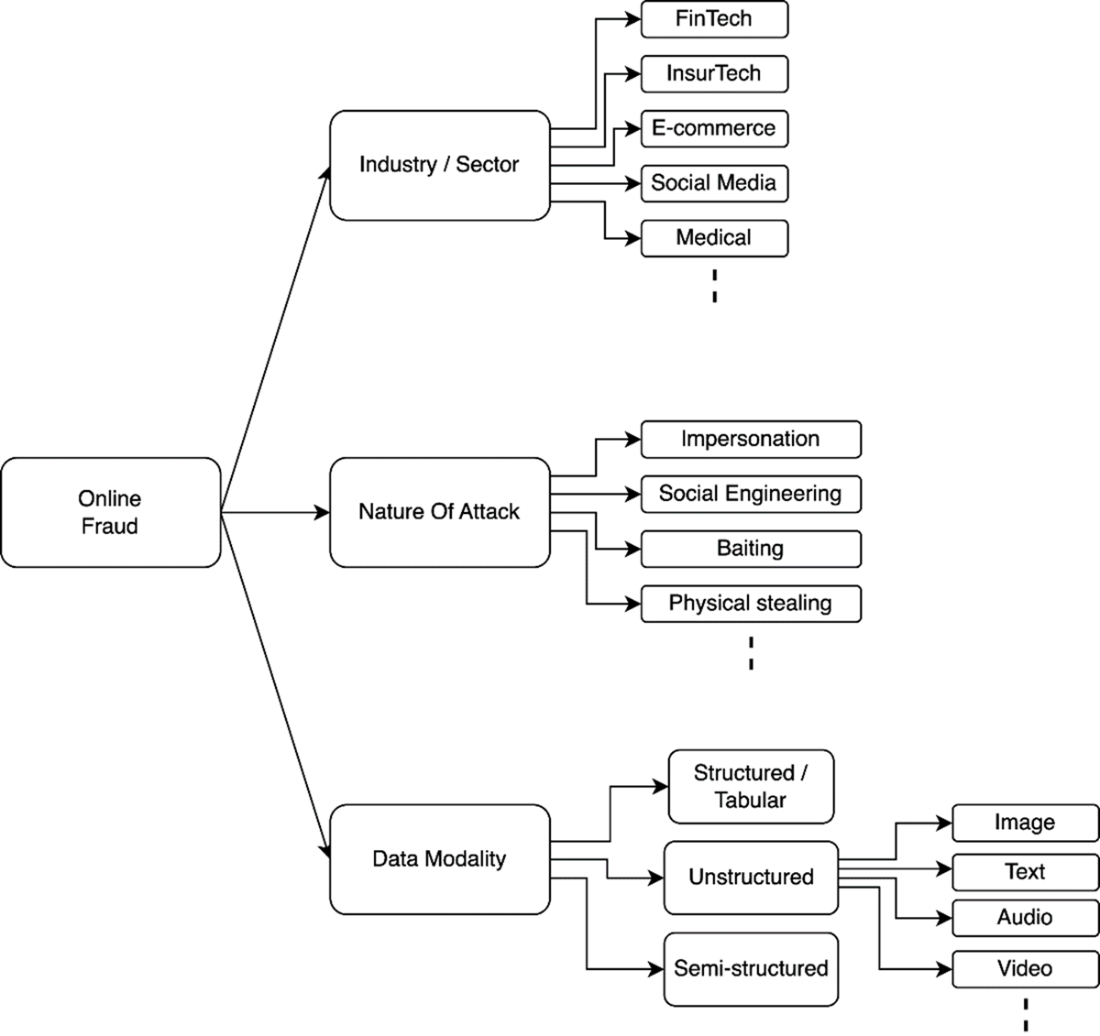
Use the categorization figure to compare data modality with the industry and attack-nature lenses for analyzing online fraud. section 1.5




