User experience
User experience is a person’s overall perceptions and responses resulting from interacting with or using a product, service, or system.

Design for Developers
The overall quality of a person's interaction with a website or web application, including usability, responsiveness, and emotional impact.
- How it is used
- Guides decisions about whether a website meets user needs and feels effective throughout research, design, development, and testing.
- How deep it goes
- Defines the interaction and its emotional effect, then develops a practical research-to-iteration process rather than limiting UX to visual polish.
- Examples
- Uses an unfamiliar microwave control and a website scanner’s waiting queue to show how interaction and delay affect people.
- What you can do after
- Practice/perform user-centered planning, test task flows and visual responses, and refine a web experience using feedback.

The Art of AI Product Development
User experience is the design of how people access, understand, control, and respond to a product's functionality and outputs.
- How it is used
- Frames user experience as the means of delivering AI value while guiding users and managing uncertainty.
- How deep it goes
- Offers design choices, prototyping guidance, feedback practices, and team responsibilities rather than interface implementation code.
- Examples
- Uses a financial chatbot with overly broad requests and a demand dashboard with a confidence interval.
- What you can do after
- Apply UX design choices to guide users, expose uncertainty, preserve control, and improve an AI product through feedback.
Read how The Art of AI Product Development explains user experience →

Architecture Modernization: Socio-technical alignment of software, strategy, and structure
User experience is the overall experience a person has while interacting with a product or system, including usability and perceived value.
- How it is used
- Frames UX as a business and architectural modernization concern for both customer-facing products and employee tools.
- How deep it goes
- Explains UX through failure cases and discovery practices, while stopping short of detailed interface-design or implementation instructions.
- Examples
- Uses duplicate rental-car bookings, constrained case entry, inefficient agent tools, and a Citibank payment error to expose UX costs.
- What you can do after
- Practice/perform user-centered discovery to identify UX risks, distinguish interface issues from deeper constraints, and guide modernization priorities.
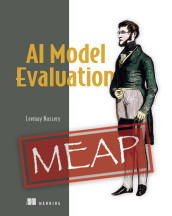
AI Model Evaluation
User experience is the overall experience a user has when interacting with a product, including its usefulness, quality, and responsiveness.
- How it is used
- Connects AI model evaluation to the quality of users’ interactions with a product.
- How deep it goes
- Explains evaluation approaches and latency trade-offs while stopping short of building scalable engineering systems.
- Examples
- Uses a voice assistant, a movie recommender favoring blockbusters, and a streaming chatbot to illustrate experience gaps.
- What you can do after
- Evaluate user experience by connecting offline diagnostics to user studies, online experiments, and downstream metrics.

Effective Platform Engineering
User experience is the overall quality of a user's interaction with a product or service, including its ease, effectiveness, and pleasantness.
- How it is used
- Centers engineering-platform design on the continuous, self-serve experience delivered to development teams.
- How deep it goes
- Explains experience through product principles, lifecycle optimization, user testing, domain boundaries, and platform failure modes.
- Examples
- Uses Kubernetes, Terraform, Git, self-service APIs, alpha-users, and cross-team coordination as experience indicators.
- What you can do after
- Evaluate platform changes through self-service, user feedback, measurable value, observability, and the friction created by team boundaries.
Read how Effective Platform Engineering explains user experience →
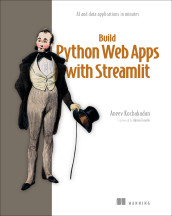
Build Python Web Apps with Streamlit
User experience is the overall experience of a person when interacting with a software product, including its usability, behavior, and perceived quality.
- How it is used
- Guides app planning and implementation by keeping user needs, preferences, and usability central to design decisions.
- How deep it goes
- Provides a workflow, sketches, implementation choices, and iteration, but stops short of a formal usability theory.
- Examples
- Uses a unit-converter mock, Streamlit widgets, and removal of a Convert button to demonstrate visible experience improvements.
- What you can do after
- Build it from scratch by sketching, implementing, testing, and refining an app around observed user needs.
Read how Build Python Web Apps with Streamlit explains user experience →
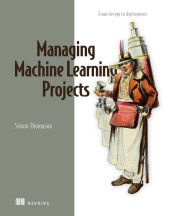
Delivering Machine Learning Projects: From design to deployment
UX design is the design of user interfaces and interactions to support users' needs and the effects of system use.
- How it is used
- Uses UX design during sprint 1 to turn business understanding, user stories, and model requirements into an effective application design.
- How deep it goes
- Explains UX through workflow tasks and validation checkpoints but stops short of detailed interface methods or interaction specifications.
- Examples
- Uses UX designs, application descriptions, user-story backlogs, validation conversations, and ML-project story cards as concrete artifacts.
- What you can do after
- Apply it by creating an application description and user-story backlog, validating them with users, and documenting UX designs.
Read how Delivering Machine Learning Projects: From design to deployment explains user experience →

Build AI-Enhanced Web Apps
User experience is the overall quality of a person's interaction with a product, including its usability, clarity, responsiveness, and satisfaction.
- How it is used
- Guides the design of generative AI interfaces that remain readable, responsive, navigable, accurate, and engaging during model interaction.
- How deep it goes
- Explains formatting, navigation, streaming, validation, and bias auditing, while stopping short of detailed implementation code.
- Examples
- Uses chat message boxes, Markdown rendering, automatic scrolling, collapsible sections, keyword highlighting, streaming responses, and GPT-4 throughput comparisons.
- What you can do after
- Apply via streaming, Markdown rendering, navigation controls, validation processes, and bias audits when building generative AI web applications.
Read how Build AI-Enhanced Web Apps explains user experience →

Natural Language Processing in Action, Second Edition
User experience is the overall quality of a person's interaction with a product or interface, including usability, satisfaction, and effectiveness.
- How it is used
- Evaluates chatbot performance through user satisfaction, engagement, learning, and goal accomplishment alongside NLU performance and organizational impact.
- How deep it goes
- Distinguishes superficial activity counts from HEART metrics and begins applying adoption measures to meaningful chatbot journeys.
- Examples
- Uses chatbot starts, questions, thank-yous, subscriptions, multi-message interactions, and a math education lesson funnel.
- What you can do after
- Evaluate chatbot UX by selecting meaningful events and organizing them into HEART metric families.
Read how Natural Language Processing in Action, Second Edition explains user experience →

Architecting Accessibility
User experience is a person's overall perceptions and responses resulting from interacting with a product or system.
- How it is used
- Frames accessibility as a way to help all users achieve their goals without barriers.
- How deep it goes
- Connects user experience to team roles and lifecycle decisions, without detailing specific interaction methods.
- What you can do after
- Evaluate product decisions for whether they reduce barriers and help users achieve their goals.
Read how Architecting Accessibility explains user experience →
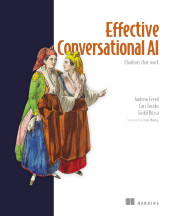
Effective Conversational AI
User experience is the overall quality of a person's interaction with a product, service, or system, including how natural and easy the interaction feels.
- How it is used
- Uses user experience to guide conversational AI design toward useful, low-effort interactions and successful goal completion.
- How deep it goes
- Compares burdensome and improved flows and links complexity to business metrics, without detailing a full evaluation method.
- Examples
- Uses claim-status calls to contrast unnecessary choice with immediate answers, and a banking chatbot to illustrate missed personalization.
- What you can do after
- Evaluate conversational flows by spotting user burden and tracking opt-outs, escalations, task completion, and satisfaction.
Read how Effective Conversational AI explains user experience →

The Design of Web APIs, Second Edition
End-user experience is the overall quality of an application interaction as perceived by the people who use it.
- How it is used
- Connects API design decisions to the quality of applications experienced by end users.
- How deep it goes
- Defines UX broadly and works through API-driven failures and improvements, without prescribing a UX measurement method.
- Examples
- Uses timeline crashes, confusing errors, money-transfer changes, and an SMS API’s operations and responses.
- What you can do after
- Evaluate/understand it by tracing API choices to application friction, error feedback, responsiveness, and reliability.
Read how The Design of Web APIs, Second Edition explains user experience →

Generative AI in Action
User experience is the overall perception and interaction quality a person has when using a product or system.
- How it is used
- Shapes how users interact with enterprise GenAI systems and participate in responsible handling of generated outputs.
- How deep it goes
- Explains design interventions and architectural relationships, but stops short of detailed interaction specifications or implementation code.
- Examples
- Uses review-and-edit workflows, citations, AI disclosure, predetermined responses, input/output limits, and embedded guidance.
- What you can do after
- Apply user-centric safeguards that help people inspect, correct, understand, and responsibly use AI-generated content.
Also covered in
- Code Like a Pro in Rust
- Cloud Observability in Action
- Practices of the Python Pro
- .NET MAUI in Action
- Grokking Software ArchitectureIn early access (MEAP)
- Latency
- Build High Value Software SystemsIn early access (MEAP)
- Writing for Developers: Blogs that get read
- The Coder CafeIn early access (MEAP)
- Lead Developer Career Guide
- Coding with AI
- Fast by DefaultIn early access (MEAP)
What to know first
- contractA contract is an agreed specification of the conditions, expectations, rights, or obligations that govern behavior or interactions between parties or software components.
- JavaScriptJavaScript is a high-level, dynamically typed programming language standardized as ECMAScript and used for web and general-purpose programming.
- language modelA language model is a computational model that represents patterns in linguistic sequences to assign probabilities, predict, generate, or evaluate language.
- natural language interfaceA natural language interface enables interaction with a system through human-language text or speech.
Related concepts
- prompt engineeringproduced by · Prompt engineering is the deliberate design and refinement of inputs, instructions, and context to guide an AI model’s behavior or outputs.
- pipelinecontrasts with · A pipeline is an ordered sequence of connected processing stages through which data or work flows, with each stage passing or transforming its output for subsequent stages.
- authorizationconfigured by · Authorization is the determination of which actions or resources an identity or other entity is permitted to access under defined permissions or policies.
- ai teampart of · An AI team is a cross-functional group that combines the artificial-intelligence, data, and domain capabilities needed to develop an AI product.
- data modalitycontrasts with · A data modality is a distinct form or channel in which information is represented or conveyed, such as text, images, audio, or structured data.
- developer experienceincludes · Developer experience is the overall quality and effectiveness of developers’ interactions with the tools, systems, resources, and workflows involved in building and maintaining software.
Questions about user experience
What is user experience?
User experience is a person’s overall perceptions and responses resulting from interacting with or using a product, service, or system.
Which Manning books explain user experience?
Design for Developers, The Art of AI Product Development, Architecture Modernization: Socio-technical alignment of software, strategy, and structure, AI Model Evaluation, Effective Platform Engineering, Build Python Web Apps with Streamlit, Delivering Machine Learning Projects: From design to deployment, Build AI-Enhanced Web Apps and 5 more.
What should I know before learning user experience?
Manning books that teach user experience usually introduce contract, JavaScript, language model and natural language interface first.
What is the difference between user experience and pipeline?
User experience is a person’s overall perceptions and responses resulting from interacting with or using a product, service, or system. A pipeline is an ordered sequence of connected processing stages through which data or work flows, with each stage passing or transforming its output for subsequent stages.
What kinds of user experience are there?
Kinds of user experience include developer experience.
What is user experience part of?
User experience is part of ai team. An AI team is a cross-functional group that combines the artificial-intelligence, data, and domain capabilities needed to develop an AI product.
These guides are generated from the text of Manning books by Manning's knowledge graph and link to the sections they draw on. The full books are available on liveBook and at manning.com.