User experience is how natural, easy, and valuable an interaction feels to the person using it. In conversational AI, a good experience saves time and effort; a poor one can frustrate users, prompt them to leave, or send them to support. section 1.1.1 section 8.0
Design and assess the interaction from the user’s perspective:
- Use available context and reasonable assumptions to help users reach their likely goal without unnecessary questions. section 1.1.1
- Watch for rising opt-outs and support escalations, falling task completions, and lower satisfaction scores as signs of excessive complexity. section 8.1.2
A claim-status call
After finding a caller’s claim, a virtual assistant asked whether to read or fax the details. Many callers asked for an agent, though few wanted a fax. The improved flow read the claim details first and offered a fax afterward, reducing friction while preserving the option. section 8.1.2
Figure 1.1 A painful chat experience with a process-oriented bot that puts cognitive burden on the user. The AI has not provided any value in three conversational turns.
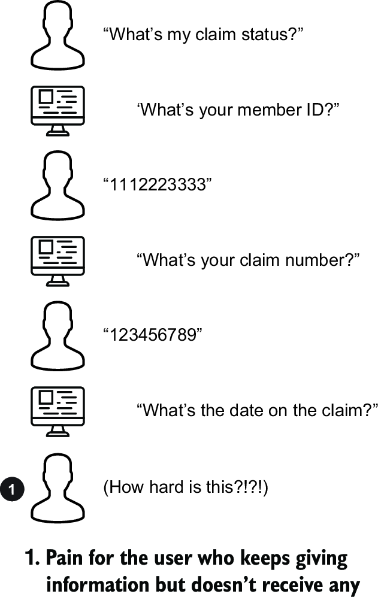
See how a process-oriented flow can burden users without providing value across several turns. section 1.1.1
Figure 1.2 A delightful experience that uses context and reasonable assumptions to complete the user’s goal quickly. The context could be loaded from a log-in process (chat) or from the caller phone number (voice).
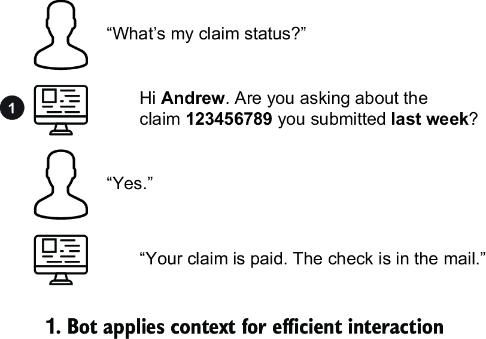
Compare a context-aware flow that uses reasonable assumptions to complete the user’s goal more quickly. section 1.1.1










