Authorization
Authorization is the determination of which actions or resources an identity or other entity is permitted to access under defined permissions or policies.

Authorization in Action
Authorization is the process of determining and enforcing what an authenticated identity is permitted to access or do.
- How it is used
- Uses authorization to enforce digital relationships and enable controlled access to resources.
- How deep it goes
- Explains access decisions, policy models, identity dependencies, and architectural separation, with examples of governance and operational challenges.
- Examples
- Illustrates authorization with a time-limited contractor, retailer access failures, and multi-tenant customer data.
- What you can do after
- Evaluate authorization boundaries and understand how identity, context, and policies affect access decisions.
Spring Security in Action, Second Edition
Authorization is the process of determining whether an authenticated entity has permission to perform an action or access a resource.
- How it is used
- Separates identity verification from permission decisions across endpoints, methods, and reactive application layers.
- How deep it goes
- Traces authorization from the post-authentication filter through authorities, endpoint matchers, expressions, and method-security annotations.
- Examples
- Uses READ and WRITE users, HTTP Basic requests, endpoint restrictions, 403 responses, and a method protected by @PreAuthorize.
- What you can do after
- Apply it via Spring Security by configuring SecurityFilterChain rules and protecting methods with expression-based authorization.
Read how Spring Security in Action, Second Edition explains authorization →

ASP.NET Core in Action, 3e
Authorization is the process of determining whether an authenticated subject has permission to perform an operation or access a resource.
- How it is used
- Controls access to web pages, actions, APIs, and individual resources according to user identity, claims, and policies.
- How deep it goes
- Explains middleware, policy configuration, custom requirements and handlers, and resource-based checks, with examples of denied requests and UI precautions.
- Examples
- Uses airport boarding and lounge access, recipe ownership, and a minimal API recipe-deletion endpoint.
- What you can do after
- Apply authorization using ASP.NET Core policies, attributes, handlers, and IAuthorizationService to protect endpoints and resources.
Read how ASP.NET Core in Action, 3e explains authorization →

Secure APIs
An access authorization control determines which authenticated subjects are permitted to perform particular actions on protected resources.
- How it is used
- Protects API endpoints, resources, operations, and fields from authenticated identities lacking the required permissions.
- How deep it goes
- Explains authentication, authorization, BOLA, BFLA, BOPLA, roles, attributes, implementation, and automated tests.
- Examples
- Uses blog posts, payments, healthcare appointments, registrations, admin endpoints, internal APIs, and cross-user automated tests.
- What you can do after
- Diagnose/debug with two-user, role, attribute, and token tests that detect unauthorized resource or operation access.

Architecting an Apache Iceberg Lakehouse
Access control is the restriction of data or system operations to authorized users or services according to defined permissions.
- How it is used
- Uses access control to govern shared Iceberg data across storage, catalogs, query engines, teams, and consumption tools.
- How deep it goes
- Explains layered enforcement, RBAC, ABAC, credential vending, and auditability, but notes that row- and column-level standards remain unsettled.
- Examples
- Demonstrates healthcare records, business-unit isolation, public-cloud auditing, Azure ACLs, Dremio field-level controls, and brand-specific analytics policies.
- What you can do after
- Operate/configure layered permissions by aligning storage policies, catalog authorization, identity providers, query-engine enforcement, credentials, and audit logs.
Read how Architecting an Apache Iceberg Lakehouse explains authorization →

Fundamentals of Cybersecurity
An access control system is a system that evaluates access requests and enforces rules governing which subjects may perform actions on protected objects.
- How it is used
- Determines which resources an authenticated subject may access and which actions they may perform.
- How deep it goes
- Explains authorization through subjects, objects, rules, permissions, and privileges, without detailing a software implementation.
- Examples
- Uses HR records, customer accounts, visitor admission, and single sign-on tokens to distinguish identity checks from access decisions.
- What you can do after
- Evaluate/understand whether a request has appropriate permissions and why access must be reviewed, limited, and monitored.
Read how Fundamentals of Cybersecurity explains authorization →

Grokking Software Architecture
The process of determining whether an identity has permission to perform an action or access a resource.
- How it is used
- Uses authorization to establish identity-based boundaries for users and services, including internal requests.
- How deep it goes
- Explains permission boundaries and flow selection with architectural examples, while stopping short of configuring complex cloud IAM policies.
- Examples
- Illustrates restricted access with a valet key, an Orders table, and a service presenting a token to another service.
- What you can do after
- Evaluate authorization boundaries and distinguish permission checks from identity verification.
Read how Grokking Software Architecture explains authorization →

Generative AI in Action
Access control is the practice of restricting access to systems, resources, or data according to identity, policy, or authorization.
- How it is used
- Protects enterprise data, production infrastructure, and model assets from unauthorized access in generative AI applications.
- How deep it goes
- Recommends role-based and document-level controls and identifies supporting security practices, but does not provide a configuration procedure.
- Examples
- Uses Azure OpenAI document access with Azure AI Search security filters and model repository access as concrete scenarios.
- What you can do after
- Evaluate access-control needs for enterprise retrieval, production resources, and model assets alongside other security measures.
.NET in Action, Second Edition
Authorization is the process of determining which actions or resources an authenticated or anonymous principal is permitted to access.
- How it is used
- Restricts which authenticated API users may read or modify catalog data.
- How deep it goes
- Works through action attributes, named policies, and a claim-checking handler; does not develop broader Identity account management.
- Examples
- Uses catalog GET, POST, PATCH, and DELETE actions plus a preferred_username claim check.
- What you can do after
- Apply it via ASP.NET Core policies and an authorization handler to separate catalog readers from a designated editor.
Read how .NET in Action, Second Edition explains authorization →

AI Governance
Authorization determines which actions or resources an entity is permitted to access.
- How it is used
- Controls agent tool calls and document retrieval according to permitted access.
- How deep it goes
- Compares enforcement approaches and specifies role- and attribute-based policy conditions, while distinguishing authorization from broader workflow safety.
- Examples
- Uses a claims-tool policy and coding-agent hooks to illustrate conditional access and pre-execution controls.
- What you can do after
- Apply it via Cerbos policies or coding-agent hooks to restrict operations and require approval for sensitive actions.

Django in Action
Authorization is the process of determining which actions or resources an authenticated user is permitted to access.
- How it is used
- Protects multiuser Django views by deciding which authenticated users may perform or view an action.
- How deep it goes
- Demonstrates decorator-based login restriction and relationship checks inside a view, while deferring custom middleware.
- Examples
- Uses protected generic pages and musician profiles accessible only to owners or bandmates.
- What you can do after
- Apply it via Django’s @login_required decorator and custom view logic for ownership or membership rules.

Build AI-Enhanced Web Apps
Authorization is the process of determining which authenticated users or principals are permitted to access resources or perform actions.
- How it is used
- Controls access to AI features and data while limiting abuse and commercial model costs.
- How deep it goes
- Defines authorization and illustrates route protection, quotas, and data isolation; defers detailed Clerk configuration to an appendix.
- Examples
- Uses a protected chat route, a ten-message daily quota, and filtered shared vector storage to illustrate policies.
- What you can do after
- Apply it using Clerk middleware to protect a Next.js chat route and Upstash Redis to limit daily messages.
Read how Build AI-Enhanced Web Apps explains authorization →

Apache Kafka in Action
Access control is the enforcement of rules that determine which principals may access particular data or perform particular operations.
- How it is used
- Restricts authenticated Kafka clients to permitted actions on resources such as topics and consumer groups.
- How deep it goes
- Explains ACL fields and rule-check order with service permissions, but does not supply configuration commands.
- Examples
- Uses checkout, payment-processing, and analytics services to distinguish topic, consumer-group, and prefixed-topic permissions.
- What you can do after
- Operate/configure Kafka ACLs around each service’s required actions and monitor unauthorized-access signals.
Grokking Relational Database Design
The restriction of data or system operations according to the permissions granted to users or processes.
- How it is used
- Protects database confidentiality by limiting who can view, modify, or delete data.
- How deep it goes
- Defines MAC and RBAC, then works through role creation, grants, user assignment, and default-role activation.
- Examples
- Uses a high school records database and a retail database with product, purchase, review, and related tables.
- What you can do after
- Apply RBAC through SQL by creating roles, granting table permissions, creating users, and assigning roles.
Read how Grokking Relational Database Design explains authorization →

Amazon Web Services in Action, Third Edition: An in-depth guide to AWS
Authorization is the process of determining whether an authenticated identity may perform a requested action on a resource.
- How it is used
- Restricts which authenticated IAM identity may perform AWS API actions, including changes to managed resources.
- How deep it goes
- Defines authorization against authentication and demonstrates IAM group permissions and overriding Deny policies, but defers access inside databases to their engines.
- Examples
- Shows shared permissions through an IAM group and an RDS policy that allows management while denying destructive actions.
- What you can do after
- Apply it via AWS IAM identity policies to restrict service-management actions while recognizing that data access needs separate controls.

ScyllaDB in Action
Authorization is the process of determining whether an authenticated identity has permission to perform a requested operation.
- How it is used
- Limits ScyllaDB actions to designated users and application roles after authentication.
- How deep it goes
- Explains authorizer migration, configuration, role creation, grants, inheritance, and permission inspection; defers application connection details.
- Examples
- Uses a reviews API role granted SELECT and MODIFY on the reviews keyspace, plus Docker and cqlsh commands.
- What you can do after
- Operate/configure it by enabling enforced authorization and assigning inherited, keyspace-scoped permissions to application logins.
API Design Patterns
Authorization is the determination of whether an authenticated user is permitted to perform a requested operation.
- How it is used
- Applies authorization during collection listing so each requester sees only permitted resources.
- How deep it goes
- Explains requester-dependent filtering and contrasts it with 403 responses, without detailing broader access-control mechanics.
- Examples
- Uses ChatRoom and nested Message collections to illustrate different requester-visible results.
- What you can do after
- Apply it by returning only authorized resources when listing a collection containing mixed-access items.

Data-Driven Cybersecurity
Authorization is the process of determining and granting permitted access to resources or operations after an identity or entity has been established.
- How it is used
- Controls who may reach organizational resources and supports decisions about protecting sensitive data.
- How deep it goes
- Defines four access-control models and explains permission maintenance, but does not provide implementation instructions.
- Examples
- Illustrates failed access control through a patient-data incident with violation counts, response-time targets, and remediation.
- What you can do after
- Operate/configure it through role-aligned permissions, regular audits, and corrective action after access violations.
Spring AI in Action
Authorization is the determination of whether an authenticated subject has permission to perform a requested operation or access a resource.
- How it is used
- Protects generative AI retrieval and tool invocations from users lacking authority to access particular documents or answers.
- How deep it goes
- Implements metadata filtering, HTTP Basic authentication, in-memory users, and method-level role checks while deferring broader expression details.
- Examples
- Uses premium game-rule metadata, secured game-complexity tools, and authenticated HTTP requests from premium and nonpremium users.
- What you can do after
- Apply it via Spring Security to authenticate users, assign roles, filter premium content, and block unauthorized tool execution.

Kafka for Architects
Access control is the enforcement of rules governing which subjects can access particular resources or data attributes.
- How it is used
- Controls which Kafka participants may access resources as part of an enterprise security design.
- How deep it goes
- Defines ACL fields and common permission pitfalls, while leaving detailed setup instructions to external documentation.
- Examples
- Uses producer and consumer topic permissions and a prefix-matched producer ACL.
- What you can do after
- Apply common producer and consumer permissions with kafka-acls while accounting for additional access needs.

Grokking Web Application Security
Access control is the enforcement of rules governing which principals may access particular resources or perform particular actions.
- How it is used
- Frames access control as a defense against exploitable authorization flaws in web applications.
- How deep it goes
- Defines authentication, authorization, RBAC, and ABAC, then details enforcement placement, trusted inputs, denial responses, and tests.
- Examples
- Uses resource-ownership scenarios and an illegal post-edit unit test.
- What you can do after
- Apply it via RBAC and ABAC rules, server-side checks, explicit denial responses, and unit tests.
Read how Grokking Web Application Security explains authorization →
Building Distributed Applications that Work
Authorization is the process of determining which actions or resources an authenticated principal is permitted to access.
- How it is used
- Restricts online-shop purchases while leaving catalog browsing open.
- How deep it goes
- Defines permission checks and shows UI registration, middleware, and a page attribute; leaves protocol details at a high level.
- Examples
- Uses an open product catalog, restricted ordering, an admin-only page, and ASP.NET Core authorization calls.
- What you can do after
- Operate/configure it by registering ASP.NET Core authorization, adding its middleware, and protecting a UI page with [Authorize].
Read how Building Distributed Applications that Work explains authorization →
Spring in Action, Sixth Edition
Authorization is the process of determining which actions or resources an authenticated entity is permitted to access.
- How it is used
- Controls which web requests authenticated users may access by matching paths to security requirements.
- How deep it goes
- Defines path rules, role checks, rule precedence, and richer SpEL conditions with configuration examples.
- Examples
- Uses /design and /orders role checks, public routes, and a role-plus-weekday condition.
- What you can do after
- Configure URL access rules with role checks, permit-all behavior, or SpEL conditions.
Read how Spring in Action, Sixth Edition explains authorization →
Terraform in Depth: Infrastructure as Code with Terraform and OpenTofu
Authorization is the process of determining which operations an authenticated identity is permitted to perform.
- How it is used
- Controls which CI/CD identities can assume cloud roles and who can access Terraform state.
- How deep it goes
- Explains the authentication–authorization distinction and AWS role restrictions, while leaving vendor-specific configuration details to each platform.
- Examples
- Uses a GitHub Actions workflow assuming an AWS role, an Azure service-principal mapping, and restricted production-state access.
- What you can do after
- Operate/configure it by restricting cloud-role assumption to intended workflows and limiting state access to necessary users and systems.
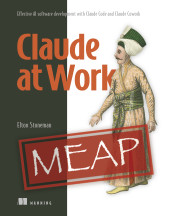
Claude at Work
Authorization is the process of granting or restricting a verified user or client permission to perform specified operations.
- How it is used
- Controls which operations an AI connector may perform on a user’s behalf.
- How deep it goes
- Explains MCP connector behavior and user controls, stopping short of permission-system internals.
- Examples
- Uses email search and drafting, ticket reading and updates, and approval before an email write.
- What you can do after
- Configure connector actions to allow, require confirmation, or block operations.
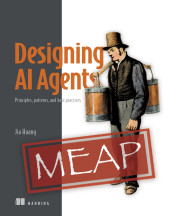
Designing AI Agents
Authorization is a decision about whether a proposed operation is permitted under applicable policy and delegated objectives.
- How it is used
- Governs agent-proposed operations against policy, delegated objectives, and current task state.
- How deep it goes
- Explains tool filtering, runtime policy checks, authoritative state, and atomic reservations; identifies task-specific policy as an additional gate rule.
- Examples
- Uses a customer-service coupon and a compensation task with a 100-yuan cap to illustrate proposal-specific decisions.
- What you can do after
- Evaluate/understand whether an agent’s proposed action meets task policy and budget limits.
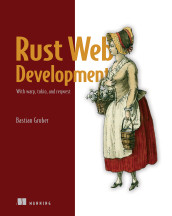
Rust Web Development
Authorization is the process of determining whether an authenticated user or other entity has permission to access a resource or perform an action.
- How it is used
- Protects web-service routes and resource modifications by checking account privileges.
- How deep it goes
- Walks through token validation, account ID propagation, database ownership fields, and handler checks; leaves middleware adjustments to the project.
- Examples
- Uses question and answer ownership and a protected question-update route to illustrate authorization.
- What you can do after
- Apply authorization using Warp filters and account ownership checks in a Rust web service.
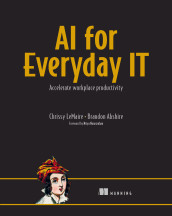
AI for Everyday IT
Access control is the restriction and management of who or what may access systems, data, or resources and which actions they may perform.
- How it is used
- Restricts AI functions to permitted data and actions while protecting sensitive documents and application resources.
- How deep it goes
- Specifies least-permission practices such as read-only database accounts and directory limits, without detailing an authorization model.
- Examples
- Uses read-only database accounts, restricted directories, and approved secure tools for sensitive document processing.
- What you can do after
- Operate/configure AI functions with minimum permissions, bounded database or file access, and human review for sensitive data.
Spring Microservices in Action
The process of determining whether a client is permitted to perform a requested action.
- How it is used
- Separates permission checks from identity verification when securing microservice requests.
- How deep it goes
- Defines authorization, distinguishes it from authentication, and sketches OAuth2 configuration while excluding infrastructure and network security.
- Examples
- Uses Jim's payroll access and EagleEye client registration to distinguish identity, permission, and resource access.
- What you can do after
- Configure OAuth2 client registration and token-based checks across Spring microservices.
Read how Spring Microservices in Action explains authorization →

MongoDB 8.0 in Action, Third Edition
Access control is the enforcement of rules governing which identities may access resources or perform operations.
- How it is used
- Controls which actions authenticated users and services may perform on Atlas resources and MongoDB deployments.
- How deep it goes
- Explains RBAC roles, privilege inheritance, built-in roles, and custom-role scoping, but does not detail every built-in permission.
- Examples
- Uses built-in database roles, a multi-role access example, and Atlas CLI commands for custom privileges.
- What you can do after
- Configure access by assigning roles or creating custom privileges scoped to the required resources.
Read how MongoDB 8.0 in Action, Third Edition explains authorization →
ActiveMQ in Action
Authorization is the process of determining which actions an authenticated identity is permitted to perform.
- How it is used
- Controls which operations authenticated identities may perform on ActiveMQ broker destinations.
- How deep it goes
- Defines access rights and traces certificate identities through groups to destination authorization, while only summarizing message-level policy.
- Examples
- Uses certificate-to-user mappings and publisher and consumer groups to illustrate broker destination authorization.
- What you can do after
- Evaluate/understand how certificate identities and group membership feed ActiveMQ destination authorization.
Bootstrapping Microservices, Second Edition: With Docker, Kubernetes, GitHub Actions, and Terraform
Authorization is the process of determining which actions or resources an authenticated participant is permitted to access.
- How it is used
- Protects application and data access from malicious use, including in microservices applications.
- How deep it goes
- Names authorization as a security technique but does not specify policies, implementation, or enforcement.
- What you can do after
- Understand authorization's role in protecting access within application security.
The Design of Web APIs, Second Edition
Access control consists of rules and mechanisms that determine which subjects may access particular API resources or operations.
- How it is used
- Restricts API operations, resources, and returned data according to application access and end-user permissions.
- How deep it goes
- Works through gateway and implementation checks, response choices, and documentation guidance without specifying authorization algorithms.
- Examples
- Uses bank transfers, account reads, permission-dependent transaction fields, and a hospital patient-conditions exercise.
- What you can do after
- Apply it via API gateway scopes and implementation checks, documenting restrictions and choosing 403 or 404 according to disclosure needs.
Read how The Design of Web APIs, Second Edition explains authorization →
Acing the Certified Kubernetes Administrator Exam, Second Edition
Authorization is the process of determining which actions an authenticated subject may perform on protected resources.
- How it is used
- Controls which authenticated subjects may access Kubernetes API resources.
- How deep it goes
- Links authentication to RBAC permissions and identifies roles and bindings as access controls.
- Examples
- Demonstrates listing kube-system pods and limiting a user to viewing pods.
- What you can do after
- Configure permissions for users, groups, and Service Accounts using roles and bindings.
Read how Acing the Certified Kubernetes Administrator Exam, Second Edition explains authorization →
Software Architecture Decision-Making
Access control is the enforcement of rules governing which identities or processes may access particular resources or operations.
- How it is used
- Uses access control to focus architectural rigor on permissions whose failure could affect data, money, compliance, or operations.
- How deep it goes
- Evaluates access control through reversibility, detectability, blast radius, and failure cost without specifying implementation procedures.
- Examples
- Uses internal pricing or billing support systems, permissions, audit trails, and financial reconciliation as examples.
- What you can do after
- Evaluate access-control rigor against failure consequences rather than applying uniform standards across a system.
Read how Software Architecture Decision-Making explains authorization →
WordPress Power Toolkit: Harness AI to build next-level websites
A permission is an authorization specifying an action that a person may or may not perform on a website or with protected content.
- How it is used
- Controls what collaborators, contributors, and subscribers may do on a website, and whether media or content may be used.
- How deep it goes
- Defines role capabilities, custom roles, and media-permission concerns, then points to setup screens and external guidance rather than detailing implementation.
- Examples
- Uses WordPress user roles, consent for people shown in videos, YouTube embedding controls, and robots.txt access rules.
- What you can do after
- Configure WordPress access by assigning roles, and evaluate whether publishing or embedding media requires permission.
Read how WordPress Power Toolkit: Harness AI to build next-level websites explains authorization →

Digital Twins in Action
Access control is the restriction and authorization of access to resources or actions according to identities, roles, or policies.
- How it is used
- Uses authorization to restrict digital twin actions across cloud resources and application components.
- How deep it goes
- Defines access models and demonstrates policy evaluation, while leaving a full treatment of governance and security beyond scope.
- Examples
- Illustrates permissions with a GraphQL API querying a DynamoDB table and a Cedar policy for updating an HVAC twin.
- What you can do after
- Apply authorization through IAM policies and Cedar-agent policy evaluation.
Kubernetes in Action, Second Edition
A file permission is an access right specifying whether a user class may read, write, or execute a filesystem object.
- How it is used
- Restricts access to files mounted from Secret and ConfigMap volumes by setting read, write, and execute rights.
- How deep it goes
- Defines permission categories and default modes, then covers configuration, decimal and octal notation, symbolic links, and group ownership.
- Examples
- Uses default mode 0644, configured mode 0740, and a Secret key mode of 0640.
- What you can do after
- Configure mounted-file permissions with defaultMode and inspect target-file permissions with ls -lL.
Read how Kubernetes in Action, Second Edition explains authorization →
Also covered in
- Software Security for Developers
- Privacy-Preserving Machine Learning
- Infrastructure as Code, Patterns and Practices: With examples in Python and Terraform
- Just Use Postgres!
- Azure Security
- AI Agents for Offensive SecurityIn early access (MEAP)
- Enterprise RAGIn early access (MEAP)
- Pro Angular 16
- First-Party Data Activation
- Designing AI SystemsIn early access (MEAP)
- LLMs in Production
- Retrieval Augmented Generation, The Foundational IdeasIn early access (MEAP)
What to know first
- authenticationAuthentication is the process of verifying the claimed identity of a user, service, device, or other entity.
- language modelA language model is a computational model that represents patterns in linguistic sequences to assign probabilities, predict, generate, or evaluate language.
- contractA contract is an agreed specification of the conditions, expectations, rights, or obligations that govern behavior or interactions between parties or software components.
- OAuthOAuth is an authorization framework that enables a client to obtain limited, delegated access to protected resources without receiving the resource owner's credentials.
Related concepts
- authenticationcontrasts with · Authentication is the process of verifying the claimed identity of a user, service, device, or other entity.
- Spring Securityimplemented by · Spring Security is a framework for securing Java and Spring applications through authentication, authorization, access control, and related security mechanisms.
- role-based access controlincludes · Role-based access control is an authorization model that assigns permissions to roles and grants users or other principals access through their assigned roles.
- principle of least privilegeconfigured by · The principle of least privilege is a security principle that grants each user, process, or other subject only the permissions necessary for its authorized tasks.
- securitypart of · Security is the protection of systems, information, and resources against unauthorized access, use, disclosure, alteration, disruption, or destruction.
- discretionary access controlincludes · Discretionary access control is an access-control model in which resource owners or authorized principals determine who may access resources and which actions they may perform.
Questions about authorization
What is authorization?
Authorization is the determination of which actions or resources an identity or other entity is permitted to access under defined permissions or policies.
Which Manning books explain authorization?
Authorization in Action, Spring Security in Action, Second Edition, ASP.NET Core in Action, 3e, Secure APIs, Architecting an Apache Iceberg Lakehouse, Fundamentals of Cybersecurity, Grokking Software Architecture, Generative AI in Action and 30 more.
What should I know before learning authorization?
Manning books that teach authorization usually introduce authentication, language model, contract and OAuth first.
What is the difference between authorization and authentication?
Authorization is the determination of which actions or resources an identity or other entity is permitted to access under defined permissions or policies. Authentication is the process of verifying the claimed identity of a user, service, device, or other entity.
What kinds of authorization are there?
Kinds of authorization include role-based access control and discretionary access control.
What is authorization part of?
Authorization is part of security. Security is the protection of systems, information, and resources against unauthorized access, use, disclosure, alteration, disruption, or destruction.
These guides are generated from the text of Manning books by Manning's knowledge graph and link to the sections they draw on. The full books are available on liveBook and at manning.com.