Discretionary access control (DAC) lets a resource owner—typically its creator—decide who may use an object and which actions they may perform. Owners can grant or revoke permissions for users or groups, making DAC flexible for sharing files, data, and other resources. section 10.2.1 section 10.6
DAC supports quick, practical sharing but places responsibility on individual owners. A careless or malicious owner may share sensitive information with unauthorized users, producing inconsistent permission management and security risk. section 10.2 section 10.2.1
A DAC decision commonly follows this pattern:
- Identify the resource owner or creator. section 10.2.1
- Grant or revoke access for particular users or groups. section 10.2.1
- Specify permitted actions such as read, write, or execute. section 10.8
- Review and monitor access because permissions can become excessive or misused. section 10.0 section 10.5
Data science project
A data owner assigns junior analysts read-only access to sensitive customer data, senior analysts read/write access for cleaning and transformation, and a project manager access only to summary reports. This supports least privilege while preserving each person’s workflow. section 10.2.1
Figure 10.1 Summary of access control models arranged by decision authority
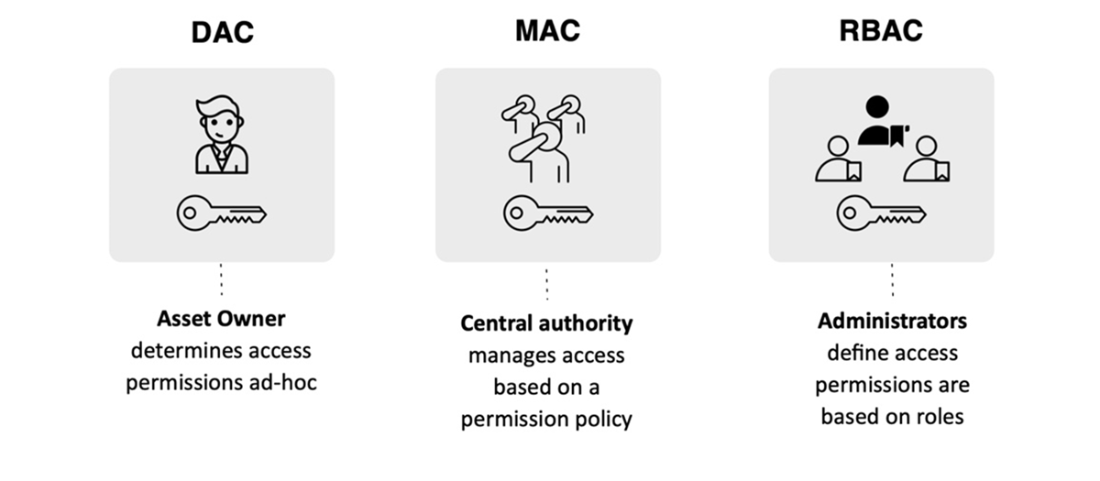
Compare DAC with mandatory access control and role-based access control by examining who makes access decisions and how permissions are assigned. section 10.2
