liveBook · Manning

Data representativeness

As explained in Data Without Labels

Representativeness is the degree to which data captures the relevant population, business need, and variation without systematic bias.

Data representativeness is the degree to which data captures the relevant business need and its population without systematic bias. A nonrepresentative dataset can produce a model that fails on new, unseen data. section 1.2.3

Assess representativeness alongside other data-quality attributes:

  • Check validity against the scope, properties, characteristics, and variations being analyzed. section 1.2.3
  • Check accuracy against trusted business-reported numbers, using key performance indicators where appropriate. section 1.2.3
  • Check availability and consistency before deciding whether the data can support the use case. section 1.2.3
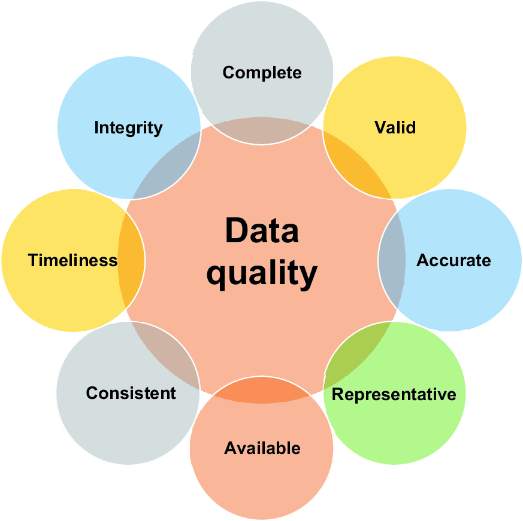
Figure 1.5 Data quality is of paramount importance; attributes of good-quality data are shown.
figure

Use the data-quality overview to place representativeness alongside validity, accuracy, availability, and consistency. section 1.2.3


How Data Without Labels covers it

How deep it goes
Defines representativeness and its prediction consequences, but stops short of sampling procedures or bias metrics.
Examples
Uses biased datasets and business-reported KPIs as practical illustrations of representation failure and data checking.
What you can do after
Evaluate whether captured data reflects the business need and can support predictions on new, unseen data.
How it connects
Connects representativeness with data quality, validity, accuracy, availability, consistency, and unseen-data prediction.

Also explained in

Compare how 2 books explain data representativeness →

Related concepts

This explainer was generated by Manning's knowledge graph from the text of Data Without Labels. The section links point to the parts of the book it draws on.