The data storytelling arc gives a data story a narrative path: establish background, raise interest with a hook or problem, reveal the main insight, invite reflection, and propose next steps. section 5.2 section 5.6
Build the story through five moments:
- Background: provide the context, characters, setting, or conditions needed to understand the data. section 5.2 section 11.6
- Raising interest: explain the problem or opportunity and use a notable observation as a hook. section 5.2 section 11.6
- Main point: reveal the insight that gives the data story its central message. section 5.2 section 5.2.1
- Thinking: leave the audience time to consider the implication, often through a question. section 5.6 section 11.6
- Next steps: turn the insight into a resolution, call to action, or proposed response. section 5.2.1 section 11.6
From one homelessness chart to a slide story
Organize the homelessness case study into five parts: use background slides for context and supporting material, a slide explaining the problem, a main-point slide with the chart, a thinking slide with a question, and next-step slides with the proposed responses. section 11.6
Figure 5.10 A mapping of the data storytelling arc and the DIKW pyramid
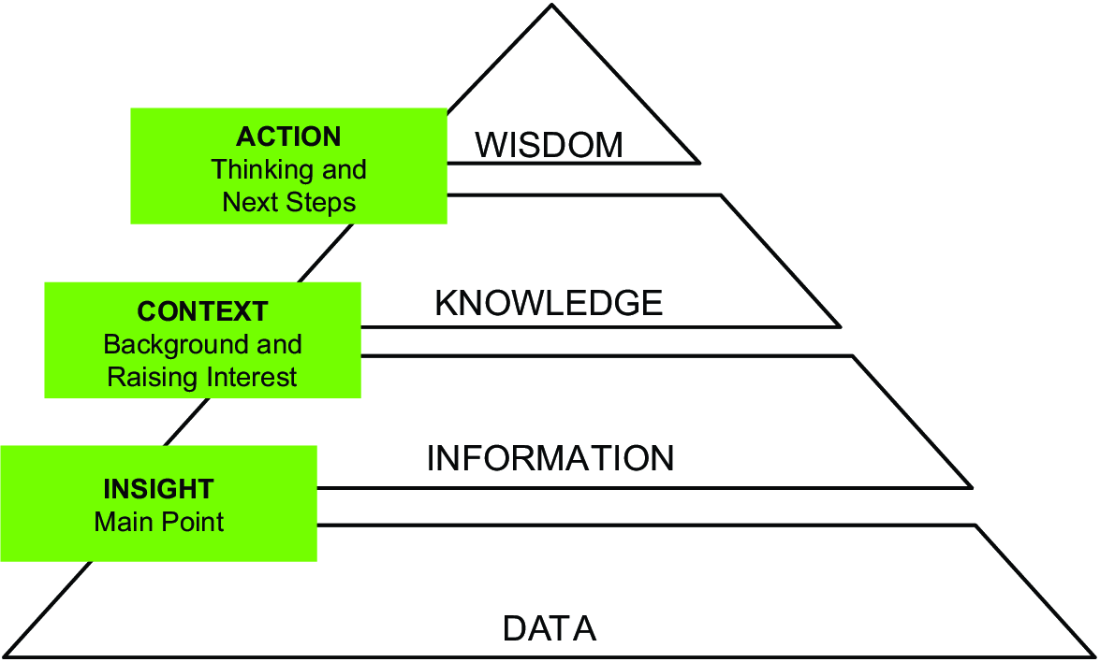
Use the DIKW mapping to connect extracted insights with the main point, contextual information with background and interest, and wisdom with the call to action. section 5.2.1
