A dataset card is concise documentation that tells people what a dataset contains, why it exists, how it was collected, and how it should be used. It also records limitations, demographic coverage, bias risks, and concerns for downstream users. The goal is to make dataset creators and consumers more reflective and to support safer, more transparent decisions. section 3.2 section 10.17
A useful dataset card can help readers ask:
- What does the dataset include, and which people or demographics does it represent? section 3.2 section 10.17
- What limitations, inaccurate or harmful material, personal information, or missing context might affect its use? section 10.17
- What uses are recommended, and what uses should downstream developers avoid? section 3.2 section 10.17
Dataset cards are a lighter, less burdensome form of transparency than full datasheets. They cannot guarantee that a dataset is safe or complete, especially for large language model training collections assembled from many poorly documented sources. They instead provide a practical record for evaluating risks and deciding how additional training or auditing should address them. section 10.17 section 3.2
A concrete dataset card
Figure 10.3 shows a dataset card for the databricks-dolly-15k dataset, illustrating how standardized metadata can accompany a shared dataset. section 10.17
Figure 10.3 A dataset card for the databricks-dolly-15k dataset
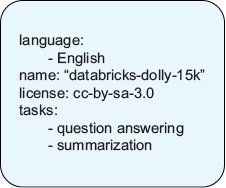
Inspect the dataset-card example to see the documentation format applied to a named dataset. section 10.17
