Decentralization moves architectural decisions into the teams that implement and are affected by them. It avoids the delays and weak buy-in that can follow centralized decisions while grounding choices in the reality of the code. section 3.4.2
Two arrangements put decisions in teams:
- Embed architects in teams. section 3.4.2
- Have team members make architectural decisions. section 3.4.2
The trade-off is organizational alignment: teams need well-informed decisions that fit across the organization. An architecture advice process can help address this. Avoid both a centralized bottleneck and implicit architecture, which can leave a non-trivial application slow to develop and poorly structured. section 3.4.2
Figure 3.18 The four options for who does architecture: benevolent dictator, architect in the team, architecture done by team members, and implicit architecture - image from https://architectelevator.com/architecture/organizing-architecture/
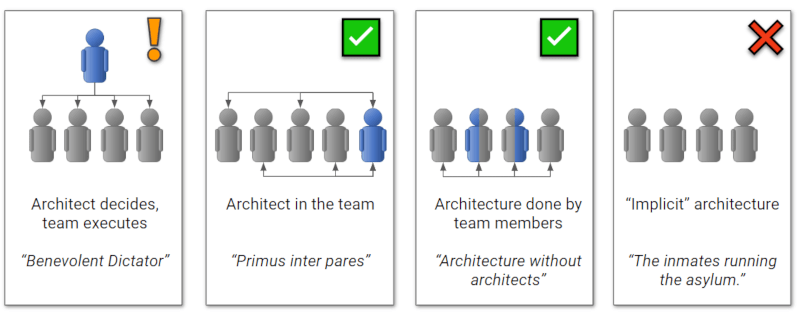
Compare centralized leadership, an architect embedded in a team, team-led architecture, and implicit architecture. section 3.4.2

