At 3 a.m., an agent freezes customer accounts using permissions it was given. If no one can identify who authorized that decision, where its limits were, or who answers for its effects, technical access has outpaced architectural governance. section 1.1
Delegation makes an agent’s decision-making authority explicit: what it may decide independently, when it must escalate, and how its actions can be audited. API keys or permissions alone do not establish a clear authority chain. section 1.1 section 2.3.2
Keep responsibility attributable by identifying who:
- Authorizes the autonomy and owns the business mandate it serves. section 2.1.2
- May change or suspend its limits, and who intervenes when those limits are reached. section 2.3.2 section 2.1.2
- Remains accountable for the system’s effects; these responsibilities may belong to different people, but must not be vague. section 2.1.2
Figure 1.1 Deterministic and agentic fraud response flows, showing the shift from human approval to delegated system authority and the move from hours-long governance cycles to autonomous action in seconds.
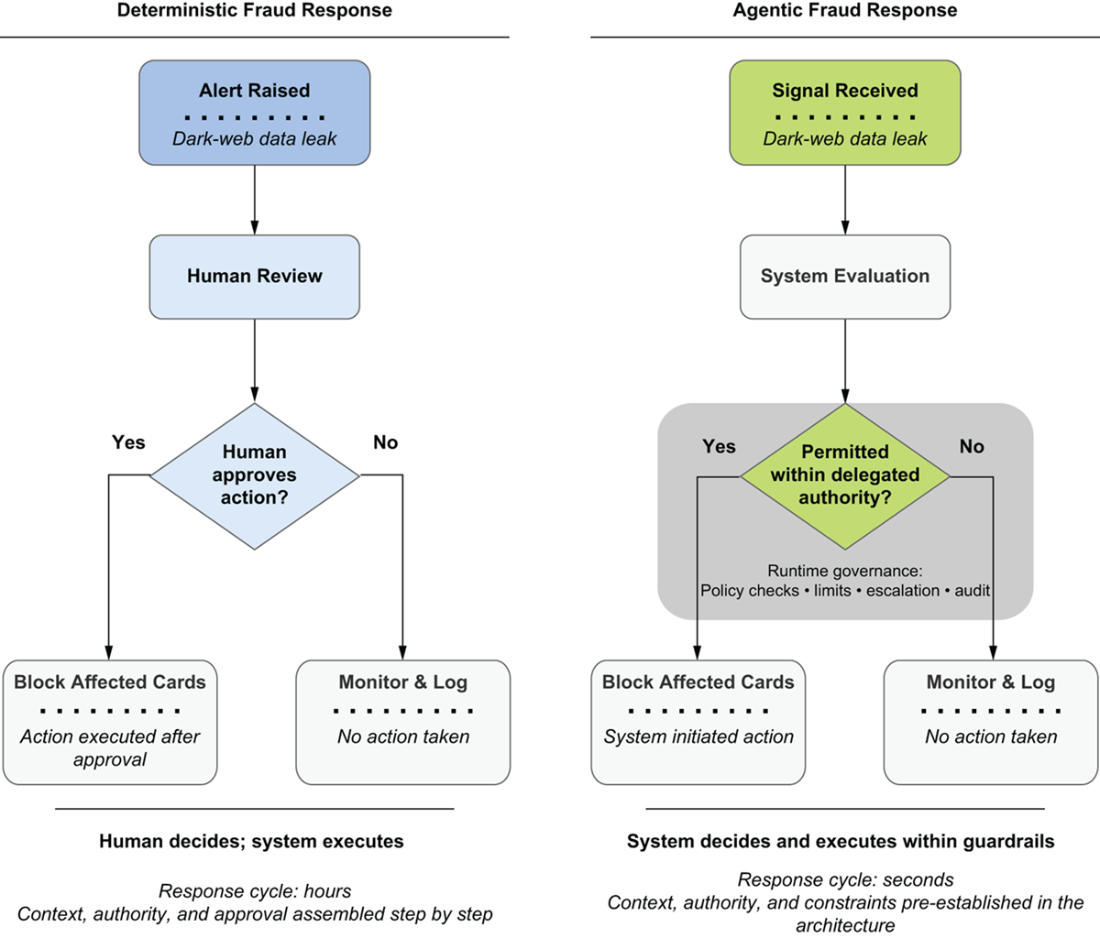
Compare human approval with delegated system authority in a fraud-response flow. section 1.1