liveBook · Manning

Denormalization

As explained in Effective Data Analysis

Denormalization is the deliberate combination or duplication of related data to reduce separation between tables and simplify analytical access.

Denormalization deliberately combines related data into cohesive analytical tables. Unlike normalized source structures designed to minimize duplication, denormalized tables reduce joins and calculations, making frequent analyses easier to read and interpret. section 11.4.2

Effective denormalization depends on:

  • Selecting sources according to recurring queries and the information most valuable for analysis. section 11.4.2
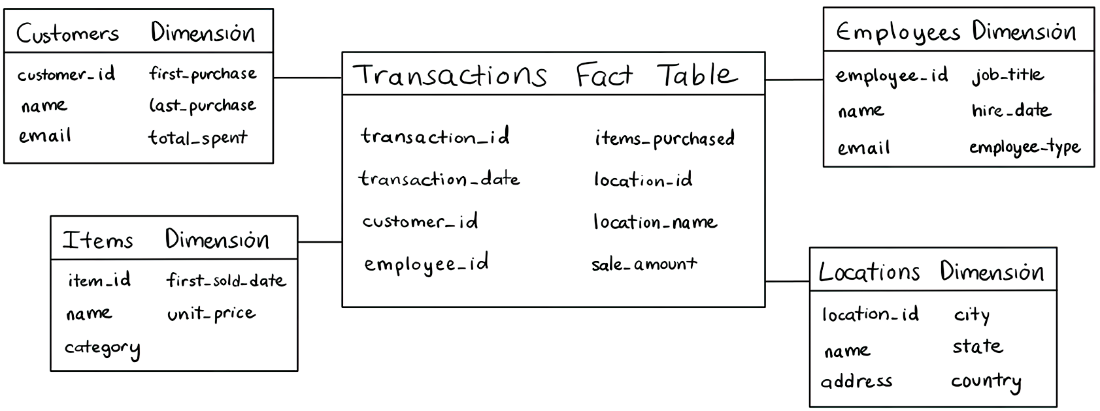
  • Organizing resulting tables into a star schema, with a central fact table connected to dimension tables. section 11.4.2
  • Using facts such as sales transactions or page views alongside attributes such as customers or users. section 11.4.2
Figure 11.21 Star schemas have fact tables at the center connected to dimensions with related attributes.
figure

A star-schema diagram shows how a central fact table connects to dimensions containing related attributes. section 11.4.2


How Effective Data Analysis covers it

How deep it goes
Defines denormalization and sketches star schemas, fact tables, and dimensions, but stops short of detailed implementation.
Examples
Uses sales transactions and page views as facts, with customer and user attributes as dimensions.
What you can do after
Apply it by selecting sources to combine according to recurring queries and valuable derived information.
How it connects
Connects denormalized data to normalization, star schemas, fact tables, dimension tables, and analytical queries.

Also explained in

Compare how 6 books explain denormalization →

Related concepts

This explainer was generated by Manning's knowledge graph from the text of Effective Data Analysis. The section links point to the parts of the book it draws on.



