A deployment gate is a review point that keeps proposed agent changes out of live traffic until they are approved. It keeps humans involved in major changes and provides a place to roll back regressions. section 1.2.3 section 1.1.2
In an offline improvement loop, a proposed change is evaluated and passes the gate before reaching the running agent. Removing the gate enables faster online changes, but limits safe changes to cheap, reversible artifacts such as prompts and memory. section 1.2.3
A support-prompt change
A judge prefers a prompt variant that leads with a direct yes or no. The winning prompt passes the gate before replacing the current prompt, so the next customer question uses it. section 1.2.1
Figure 1.4 One turn of the improvement loop, run offline on the support-agent task. The agent acts, a judge signals the gap, a search proposes prompt variants, and the judge picks the winner, and the winner passes a deploy gate before reaching the running agent on the next task.
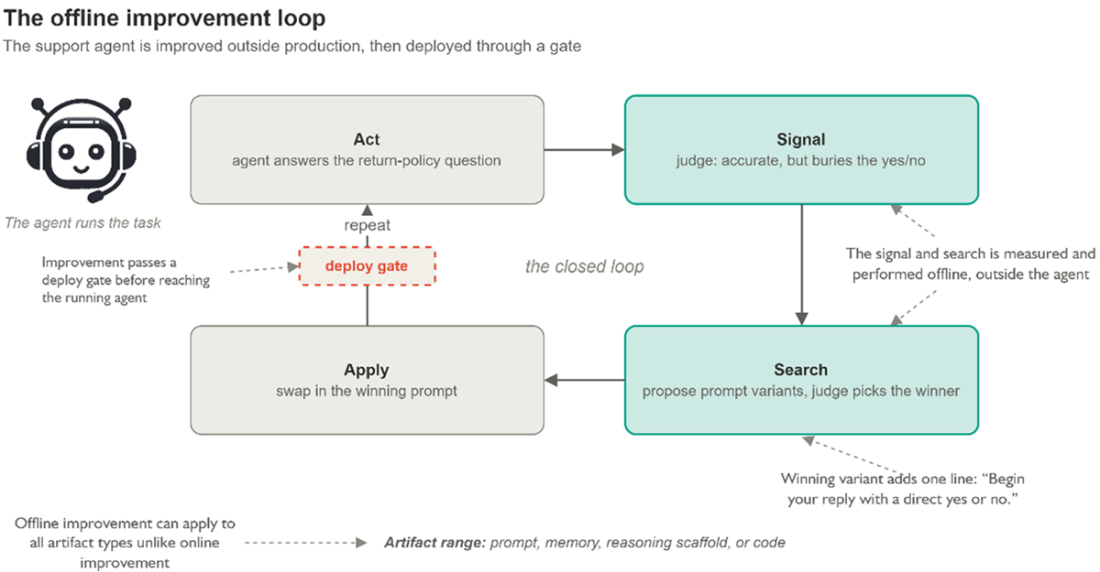
Shows an offline support-agent improvement loop, with the winning prompt passing a deployment gate before reaching the running agent. section 1.2.1