Microservices multiply the services, languages, frameworks, and moving parts that deployment must coordinate. Manual deployment in language-specific packages such as WAR files does not scale; an automated deployment platform applies and manages services. section 7.6.2
Prefer a platform that supports GitOps: developers update configuration in Git to define desired system state, and automation makes the running system match it. Platforms typically run on virtual machines, containers, or serverless technology. section 7.6.2
Figure 7.14 Several patterns for deploying microservices. The traditional approach is to deploy services in a language-specific packaging format. There are two modern approaches to deploying services. The first deploys services as VM or containers. The second is the serverless approach. You simply upload the service’s code and the serverless platform runs it. You should use a service deployment platform, which is an automated, self-service platform for deploying and managing services.
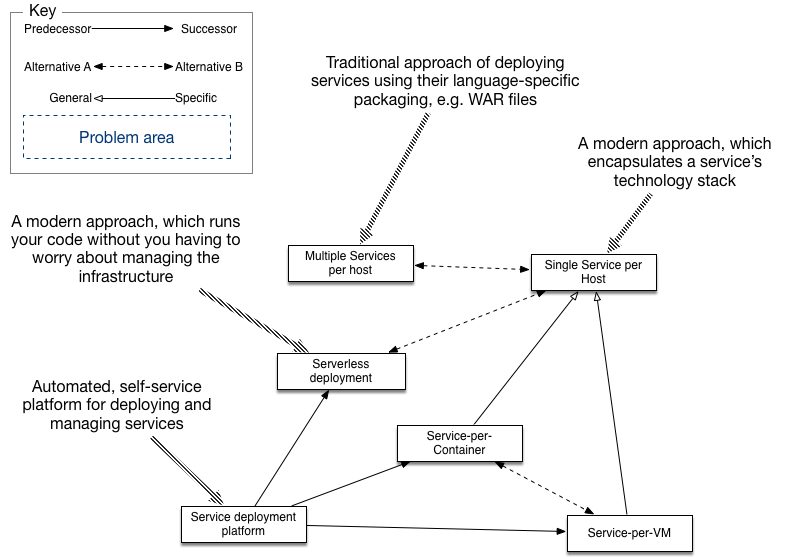
Compare manual package deployment with VM or container and serverless approaches, and see the role of an automated, self-service service deployment platform. section 7.6.2
