Cloud computing
Cloud computing is a model for on-demand network access to shared computing resources and services that can be provisioned and scaled as needed.
The Cloud at Your Service: The when, how, and why of enterprise cloud computing
A model for providing on-demand access to shared computing resources that can be dynamically scaled as demand changes.
- How it is used
- Frames cloud computing as an enterprise deployment choice whose agility and economics must be weighed against alternatives and risks.
- How deep it goes
- Defines five principles and compares service layers and deployment economics, while deferring detailed exploration of how clouds work.
- Examples
- Uses a growing corporate website and on-demand load testing to illustrate scaling and temporary capacity.
- What you can do after
- Evaluate cloud adoption by comparing deployment costs, service-layer flexibility, and operational risks.
Platform Engineering on Kubernetes
A platform is an integrated set of tools, services, workflows, and interfaces that enables teams to consume organizational capabilities through self-service.
- How it is used
- Frames cloud services as inputs to an organization-specific, self-service platform for software delivery.
- How deep it goes
- Develops API and architecture choices through a platform walking skeleton, but supplies no cloud-provider configuration commands here.
- Examples
- Uses a walking-skeleton platform and on-demand development environments provisioned with Crossplane and vcluster.
- What you can do after
- Build it from scratch: define a narrow platform API and use Crossplane and vcluster for on-demand development environments.
Read how Platform Engineering on Kubernetes explains cloud computing →
Think Like a CTO
Cloud computing is on-demand access to shared computing resources and services delivered over a network, typically billed according to consumption.
- How it is used
- Frames infrastructure selection and ongoing spending as technology leadership decisions tied to workload, growth, and available funds.
- How deep it goes
- Defines consumption-based resources and develops practical selection and budget checks, stopping short of provider-specific configuration.
- Examples
- Uses an electricity analogy, variable versus sustained workloads, and unused services versus customer-driven usage to make trade-offs concrete.
- What you can do after
- Evaluate cloud against on-premises for a workload and operate it with spending alerts, tags, and monthly resource reviews.

Grokking Software Architecture
The on-demand delivery of computing resources and services over a network, typically with scalable provisioning and usage-based billing.
- How it is used
- Frames cloud computing as the deployment environment that drives architectural decisions about elasticity, provisioning, and replaceable servers.
- How deep it goes
- Explains multi-tenancy, cost tradeoffs, and stateless design while leaving detailed cloud administration and operating-system configuration aside.
- Examples
- Uses an apartment-building analogy for multi-tenancy and contrasts a local profile-image upload with an external object-store upload.
- What you can do after
- Evaluate cloud architecture for shared-resource risks, usage costs, and the safe replacement of servers holding application state.
Read how Grokking Software Architecture explains cloud computing →
Fundamentals of Cybersecurity
Cloud infrastructure is the computing, storage, networking, and supporting services delivered through cloud environments.
- How it is used
- Frames an organization's choice between maintaining its own infrastructure and obtaining computing resources from a provider.
- How deep it goes
- Defines on-demand resources and tenants and compares deployment models without providing configuration steps.
- Examples
- Uses a hotel stay to explain rented infrastructure and peak traffic to illustrate a hybrid cloud.
- What you can do after
- Evaluate/understand deployment-model trade-offs and why security responsibilities differ between on-premises and cloud environments.
Read how Fundamentals of Cybersecurity explains cloud computing →
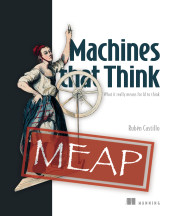
Machines that Think
A remotely accessed computing platform that provides elastic processing, storage, networking, or software services over a network.
- How it is used
- Situates cloud platforms as infrastructure for serving large language models to users at scale.
- How deep it goes
- Explains hosting, API access, physical constraints, and deployment trade-offs at an overview level.
- Examples
- Illustrates compute access through Anthropic workloads on Google Cloud TPUs and partnerships linking model developers with cloud platforms.
- What you can do after
- Evaluate cloud deployment trade-offs involving compute access, physical constraints, and portability.
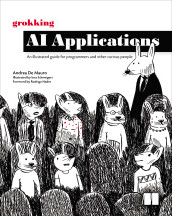
Grokking AI Applications
Cloud computing is the delivery of computing resources such as processing, memory, storage, and networking over the internet on a rented or usage-based basis.
- How it is used
- Supports deploying applications that people and systems can reach consistently over the internet.
- How deep it goes
- Defines the rental model and compares three deployment routes, but defers detailed virtual-machine setup.
- Examples
- Uses dedicated hardware, cloud virtual machines, managed hosting, and a deployed Langflow application as examples.
- What you can do after
- Evaluate deployment options by comparing control, scalability, cost, privacy, and operational responsibility.
Read how Grokking AI Applications explains cloud computing →
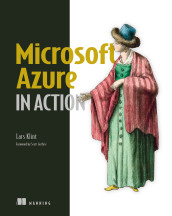
Microsoft Azure in Action
A cloud computing platform is an internet-accessible environment that provides managed computing resources and services for building and running applications.
- How it is used
- Frames Azure as internet-accessible resources for building and running applications without maintaining physical servers.
- How deep it goes
- Defines abstraction and distinguishes IaaS, PaaS, and SaaS by provider responsibility, without detailing their underlying implementations.
- Examples
- Uses website hosting, file storage, and an email-image storage and compression application as practical scenarios.
- What you can do after
- Evaluate/understand cloud service models and choose Azure resources with responsibility, location, and cost in mind.
Read how Microsoft Azure in Action explains cloud computing →
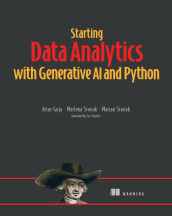
Starting Data Analytics with Generative AI and Python
Cloud computing is the delivery of computing resources and software services over the internet rather than from locally maintained hardware.
- How it is used
- Scales analytics beyond a personal computer by supplying on-demand remote computing resources.
- How deep it goes
- Defines providers, resources, virtual machines, and clusters, then stops short of distributed-systems internals.
- Examples
- Uses cloud VMs, Euclidean distances between point pairs, and deployment prompts involving AWS or serverless services.
- What you can do after
- Operate/configure a cloud VM and identify when managed services or cluster frameworks better fit a workload.
Read how Starting Data Analytics with Generative AI and Python explains cloud computing →
Fast Python: High performance techniques for large datasets
- How it is used
- Frames cloud architecture as a system-level factor in improving Python data-processing performance.
- How deep it goes
- Explains virtualization, proprietary services, and cost implications, but does not detail cloud-specific remedies.
- Examples
- Uses serverless computing, virtual-machine cache preemption, and proprietary compute and storage services as concrete cases.
- What you can do after
- Evaluate architecture trade-offs and implement changes suited to available computing resources and performance goals.
Read how Fast Python: High performance techniques for large datasets explains cloud computing →

Amazon Web Services in Action, Third Edition: An in-depth guide to AWS
A cloud resource is an infrastructure component or service instance provisioned and managed in a cloud environment.
- How it is used
- Explains how organizations provision and consume computing, storage, networking, and software resources for practical applications.
- How deep it goes
- Defines cloud characteristics and AWS service layers, then applies them to a web-shop architecture without detailing service implementation internals.
- Examples
- Uses an AWS-hosted web shop with virtual machines, a load balancer, CDN, object storage, DNS, and a managed database.
- What you can do after
- Evaluate/understand cloud architectures by relating elasticity, managed services, reliability, performance, maintenance, and pay-per-use billing.

Architecture Modernization: Socio-technical alignment of software, strategy, and structure
A cloud resource is a computing, storage, networking, or managed-service capacity provisioned from a cloud platform.
- How it is used
- Positions cloud computing as a way to delegate platform layers while curating reusable capabilities for product teams.
- How deep it goes
- Explains delegation, mixed platform layers, and build-versus-curate trade-offs, but stops short of implementation details.
- Examples
- Uses serverless adoption, AWS service curation, and cloud-provider management of hardware and operating systems.
- What you can do after
- Operate/configure cloud capabilities by combining provider-managed services with selectively managed platform layers.
Learn Docker in a Month of Lunches, Second Edition
Cloud computing is the on-demand delivery of computing resources and services over a network, typically with usage-based provisioning.
- How it is used
- Guides application migration and container-platform selection while reducing infrastructure management and preserving deployment portability.
- How deep it goes
- Explains IaaS, PaaS, and containers through migration trade-offs, then stops short of provider-specific deployment commands.
- Examples
- Uses virtual machines, managed services, Dockerfiles, Compose manifests, Kubernetes, AKS, Amazon ECS, datacenters, and laptops as migration examples.
- What you can do after
- Evaluate cloud container platforms and apply a Docker-based migration approach across clouds, datacenters, and local environments.
Read how Learn Docker in a Month of Lunches, Second Edition explains cloud computing →

Go in Practice, Second Edition
Cloud computing is the on-demand delivery of computing resources and services over a network, typically with usage-based provisioning and management.
- How it is used
- Frames deployment and operations for Go applications around abstracted, programmable infrastructure and managed application platforms.
- How deep it goes
- Defines cloud service models and IaaS resource management, while stopping short of detailed PaaS behavior and provider-specific implementation.
- Examples
- Uses bare-metal servers, virtual servers, REST APIs, command-line interfaces, storage, networking, AWS, Azure, and Google Cloud as examples.
- What you can do after
- Operate/configure cloud deployments by distinguishing stack responsibilities and managing IaaS resources through APIs or command-line tools.
Read how Go in Practice, Second Edition explains cloud computing →
Also covered in
- Acing the CCNA Exam: Volume 2 Advanced Networking and Security
- A Pythonic Adventure: From Python basics to a working web app
- Modern C
- Developer Experience on KubernetesIn early access (MEAP)
- Modern C, Third Edition
- Designing Deep Learning Systems: A guide for software engineers
- Think Distributed Systems
- Spring Microservices in Action
- Digital Twins in Action
- Azure Security
- The Complete Obsolete Guide to Generative AI
- Road to Kubernetes
What to know first
- cloud providerA cloud provider is an organization or service operator that supplies remotely accessible computing resources or services over a network, often on demand.
- containerA software container is an isolated execution environment that packages an application and its dependencies, typically sharing the host operating-system kernel.
- deployment pipelineA deployment pipeline is a repeatable sequence of stages that builds, tests or validates, packages, and delivers software changes toward release or deployment.
- serverA server is a computer system or software process that provides data, resources, or services to other systems, typically by responding to requests.
Related concepts
- Azureincludes · Microsoft Azure is Microsoft’s public cloud computing platform, providing on-demand infrastructure, application hosting, and managed services.
- AWSincludes · Amazon Web Services (AWS) is Amazon’s public cloud computing platform, providing on-demand infrastructure and managed services over the internet.
- deployment modelkind of · A deployment model is a specification of how a software system or workload is configured, provisioned, released, hosted, or operated in a target environment.
- Google Cloudincludes · Google Cloud is Google's public cloud computing platform, providing infrastructure, platform, and managed services for building and operating applications.
- virtual machineuses · A virtual machine is a software-defined execution environment that emulates or abstracts a computer system or machine model to run programs, often with isolation from its host.
- self-hostingcontrasts with · Self-hosting is deploying and operating software on infrastructure controlled or managed by the person or organization using it.
Questions about cloud computing
What is cloud computing?
Cloud computing is a model for on-demand network access to shared computing resources and services that can be provisioned and scaled as needed.
Which Manning books explain cloud computing?
The Cloud at Your Service: The when, how, and why of enterprise cloud computing, Platform Engineering on Kubernetes, Think Like a CTO, Grokking Software Architecture, Fundamentals of Cybersecurity, Machines that Think, Grokking AI Applications, Microsoft Azure in Action and 6 more.
What should I know before learning cloud computing?
Manning books that teach cloud computing usually introduce cloud provider, container, deployment pipeline and server first.
What is the difference between cloud computing and self-hosting?
Cloud computing is a model for on-demand network access to shared computing resources and services that can be provisioned and scaled as needed. Self-hosting is deploying and operating software on infrastructure controlled or managed by the person or organization using it.
What kinds of cloud computing are there?
Kinds of cloud computing include Azure, AWS and Google Cloud.
What is cloud computing a kind of?
Cloud computing is a kind of deployment model. A deployment model is a specification of how a software system or workload is configured, provisioned, released, hosted, or operated in a target environment.
These guides are generated from the text of Manning books by Manning's knowledge graph and link to the sections they draw on. The full books are available on liveBook and at manning.com.