liveBook · Manning

Design

As explained in Acing the Frontend Interview

System design is the practice of defining the architecture, components, interfaces, and operational characteristics of a software system.

System design defines how complex frontend systems address scalability, accessibility, user experience, performance, and cross-device or network constraints. It also requires collaboration across product, design, backend, DevOps, and platform concerns. section 1.0

A strong system-design discussion should connect architecture to:

  • REST APIs, caching strategies, database services, and backend performance. section 1.1
  • Component architecture, state management, reusable code, interaction handling, accessibility, testing, and failure paths. section 1.2
  • Trade-offs and reasoning, not only a working implementation. section 1.1

A frontend system-design scenario

A candidate builds a React star-rating component with functional components, hooks, hover state, and Flexbox. Follow-up discussion examines component architecture, accessibility, reusable code, testing, edge cases, happy and failure paths, and the connected API or performance concerns. section 1.1 section 1.2

Figure 1.1 Overview of a typical frontend interview process.
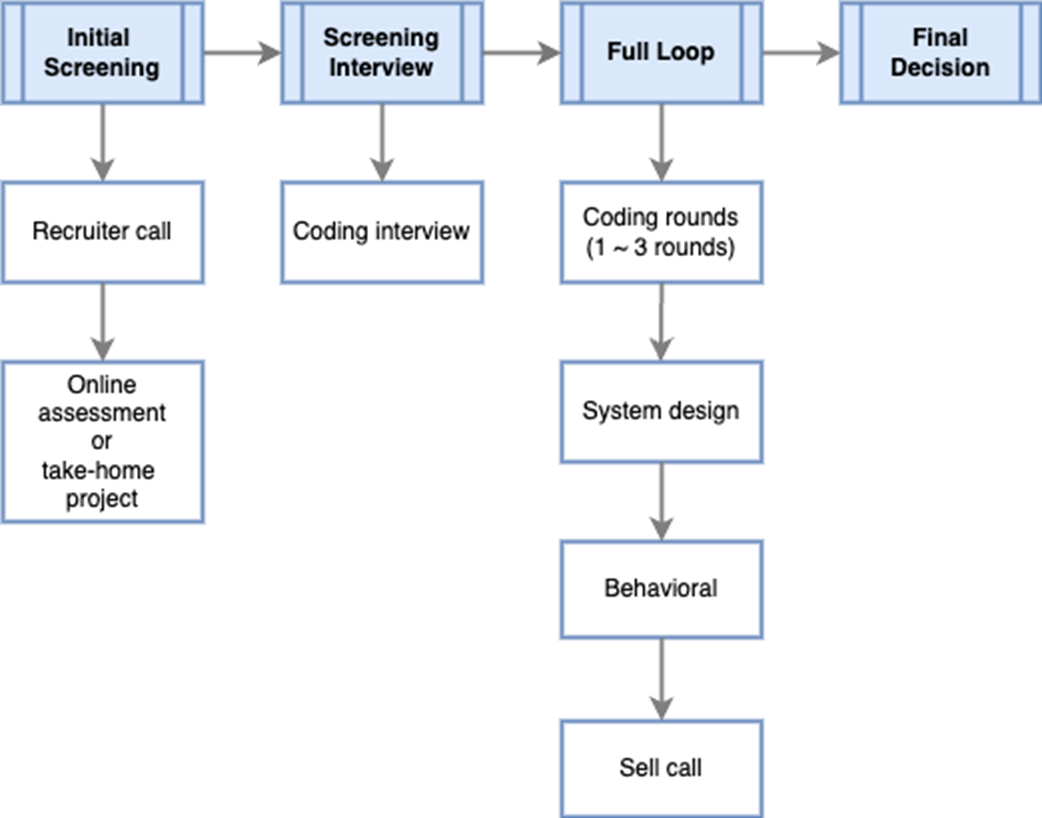
Use the interview-process overview to place system design among screening, full-loop, behavioral, and final-decision stages. section 1.2


How Acing the Frontend Interview covers it

How deep it goes
Extends beyond implementation into trade-offs, backend dependencies, edge cases, testing, and failure handling without specifying detailed internals.
Examples
Uses a React star-rating component, interview follow-up questions, and a four-stage frontend interview process.
What it assumes
Builds on HTML, CSS, JavaScript or TypeScript, and framework fundamentals such as React, hooks, components, and state management.
What you can do after
Evaluate/understand frontend architectures and articulate implementation reasoning, trade-offs, performance concerns, and failure paths.
How it connects
Connects system design with scalability, accessibility, performance, REST APIs, caching strategies, database services, React, and state management.

Also explained in

Compare how 6 books explain design →

Related concepts

This explainer was generated by Manning's knowledge graph from the text of Acing the Frontend Interview. The section links point to the parts of the book it draws on.



