A design decision is a deliberate choice about how a product looks, works, or feels. Developers make these choices too: technical constraints, performance, and interaction quality can change the user experience. section 1.1.1 section 12.0
Make design decisions more useful by:
- Starting with user research so decisions address a real user or business need. section 4.3
- Using shared design vocabulary to explain trade-offs and reduce unproductive back-and-forth. section 1.1.1
- Checking technical effects, such as slow-loading animation, before treating a visual idea as final. section 1.1.1 section 12.0
Travel website homepage
A wireframe turns requirements into visible decisions: place a hero image below the header, emphasize vacation-package search, show benefits immediately afterward, feature trending destinations, and give group travel lower priority. Review the wireframe before refining it into measured mock-ups. section 10.2
Figure 10.1 We loosely place our blocks of content to figure out how we will group content and the basic hierarchy of the page.
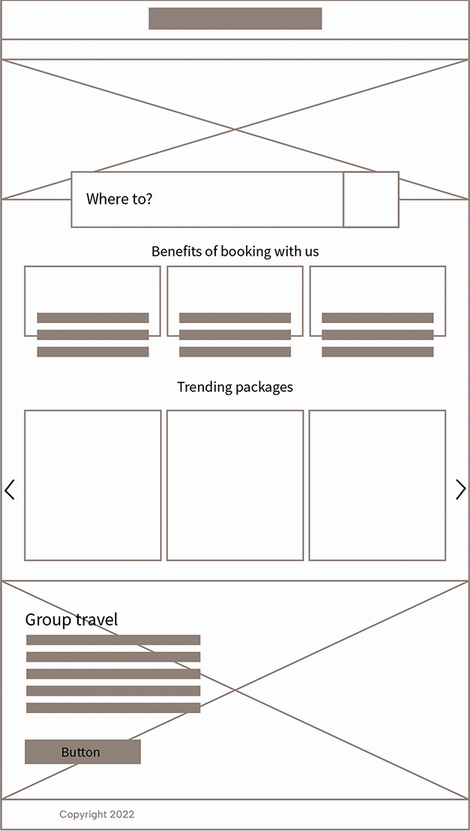
Inspect the loose content blocks to see how grouping and hierarchy make early design decisions concrete before visual refinement. section 10.2

