A detailed outcome model categorizes how chatbot conversations end, then groups specific reasons under higher-level outcomes such as success, failure, or not wanted. Unlike containment alone, it helps show what went right or wrong and where improvement may be needed. section 3.3.2
A transfer is not always a failure
A user may leave because the bot repeatedly fails to understand them, or may be transferred to a human as part of the intended business process. Classifying these outcomes separately distinguishes a failure from a successful handoff. section 3.3.2
After deployment, classify conversation logs against the model and count outcomes. Tailor the categories to the project, then use detailed breakdowns to investigate performance and guide improvements. section 3.3.2
Figure 3.11 The detailed outcome model depicts conversation outcomes and outcome details aggregated over a set time period. This provides much greater insight into bot performance than a binary “contained or not contained” model.
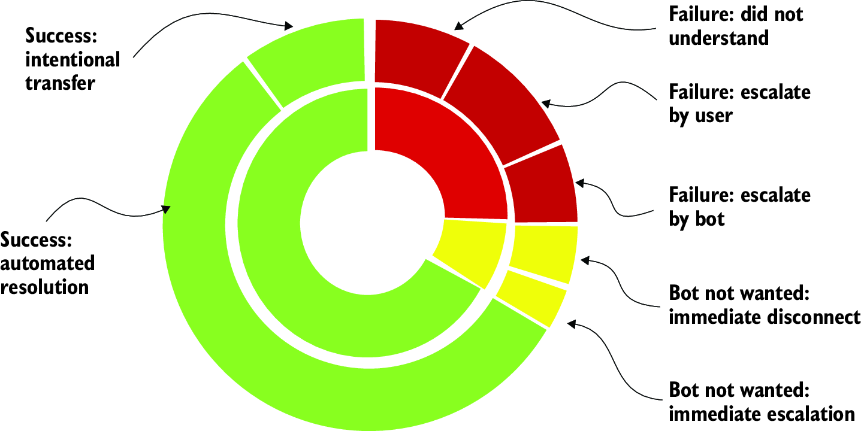
See how detailed outcomes aggregated over time provide more insight than a contained-or-not-contained count. section 3.3.2
